Is Qi Gong Enough Exercise?
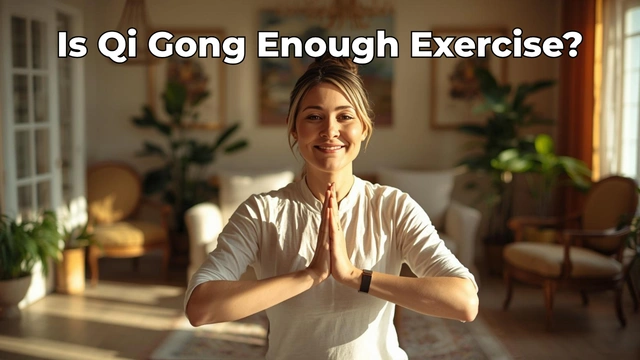
Qi Gong can be enough exercise for many people, especially if your goal is to improve mobility, balance, and overall wellbeing rather than high-intensity fitness.
The movements are slow and low-impact, which makes Qi Gong accessible and sustainable over time.
It supports circulation, flexibility, coordination, and helps regulate the nervous system.
However, if your goal is to build strength, increase cardiovascular endurance, or train at a higher intensity, you may choose to combine Qi Gong with other forms of exercise.
Qi Gong works best as a consistent, supportive practice that keeps the body moving, the mind calm, and the system balanced.
If you prefer to watch the video, click the screen below
How To Deepen Your Qi Gong Practise
If you would like to explore this more deeply, these pages will help you understand how Qi Gong works in practice and how to begin in a gentle, supported way.
Qi Gong for Beginners: The Complete Guide to Energy, Health, and Inner Balance
A clear starting point if you want to understand the foundations of Qi Gong and how to begin safely.The Healing Power of Qi Gong: Ancient Practice, Modern Benefits
A deeper look at why Qi Gong supports healing, balance, and long-term wellbeing.Live Online Korean Qi Gong Classes – Energy, Balance & Vitality
Join live guided classes if you would like support, structure, and real-time teaching as you build your practice.
If you would like to explore more common questions about Qi Gong, you can return to the main guide below.
Qi Gong FAQ: Answers to the Most Common Questions
Browse all questions and find clear, simple answers to help you understand Qi Gong more fully.
Your Qi Gong Journey At The Bright Beings Academy
Whether you are completely new to Qi Gong or ready to deepen your practice, the Bright Beings Academy offers a calm and structured pathway to support your growth at every stage.
Rather than overwhelming you with disconnected classes and courses, the Academy is designed to help you progress naturally from simple daily practices into deeper levels of embodiment, energy awareness and personal development.
Each stage of the pathway builds gently upon the one before it, helping you develop confidence, consistency and understanding at a pace that feels supportive, grounded and sustainable.
Begin
Start with gentle breathing practices, foundational movement and beginner-friendly guidance inside the free introduction and beginner membership.
Practise
Build consistency, confidence and energy awareness through guided courses and live online Qi Gong classes.
Deepen
Explore nervous system regulation, healing practices, embodiment and specialist Qi Gong training pathways.
Teach
Step into instructor development with mentoring, structured training and professional support.
Mastery Pathway
Continue your long-term cultivation through advanced Qi Gong practice, philosophy and energetic development.
A clear pathway for beginners, practitioners, highly sensitive people and future instructors.
Copyright Peter Paul Parker All Rights Reserved - Terms and conditions Privacy Support