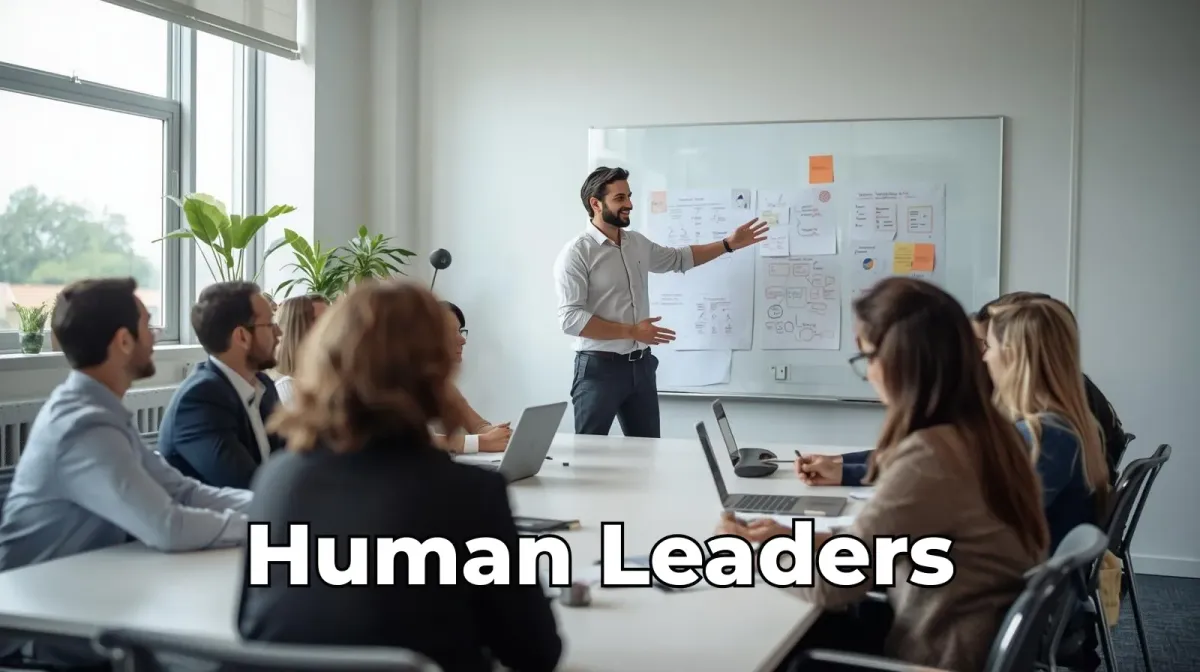
HR and L&D as Human Leaders: Equipping Culture Shapers for the Future
HR and L&D shape culture when they turn big intentions (wellbeing, inclusion, hybrid, safety) into what leaders actually do each day. In the future of work, your value is not just programmes and policies. It’s the practical leadership habits you help an organisation live by.
This article sits inside Health and wellbeing in the corporate world: The Human Leader playbook.
Explore Our Corporate Wellbeing Services
If your organisation is looking to strengthen resilience, improve wellbeing, reduce stress, and create a healthier workplace culture, explore our Corporate Wellbeing Hub.
From workshops and leadership development to nervous system regulation and team wellbeing programmes, you'll find practical solutions designed for modern organisations.
Explore the Corporate Wellbeing Hub

Why HR and L&D are now culture shapers
The world of work has changed fast.
Hybrid patterns are still settling. AI is reshaping tasks and expectations. And psychological health and safety is moving from “nice-to-have” to “risk to manage”.
In Great Britain, the HSE estimates 40.1 million working days were lost in 2024/25 due to work-related ill health and injuries, and stress, depression or anxiety accounted for 22.1 million days lost. (Health and Safety Executive)
At the same time, the CIPD’s Health and wellbeing at work 2025 report shows average absence rising to 9.4 days per employee, the highest in more than 15 years in their tracking. (CIPD)
And Deloitte estimates poor mental health costs UK employers £51bn a year, with an average return of about £4.70 for every £1 spent on supporting mental health and wellbeing. (Deloitte Italia)
Those numbers land on your desk.
Because HR and L&D are where strategy meets reality:
You see what managers struggle to implement.
You see where policies break under pressure.
You see what learning sticks, and what fades.
So yes. You’re still “support functions”.
But you’re also the bridge between intention and lived experience.
A simple reframe: HR and L&D as Human Leaders
When leaders are overwhelmed, they default to urgency.
When systems are unclear, people disconnect.
When trust drops, performance suffers.
A “Human Leader” approach doesn’t make work fluffy.
It makes work sustainable, safer, and more effective.
Your role becomes five things at once:
1) Architect
You design frameworks and pathways that make good leadership easier.
This connects strongly to psychosocial risk and ISO 45003. ISO 45003 gives guidance on managing psychosocial risks within an OH&S management system. (ISO)
And HSE is explicit that preventing work-related stress is a legal duty and stress risks must be assessed and managed like other health and safety risks. (HSE Media Centre)
If you want the practical “how” of this, pair this article with From Policy to Practice: Bringing ISO 45003 to Life in Your Culture.
2) Curator
You curate what gets attention.
Not everything can be a priority at once.
Your gift is helping an organisation choose the few leadership behaviours that change outcomes.
A strong companion here is Wellbeing as a Business Strategy: Embedding Health into Leadership.
3) Coach-maker
You don’t just “deliver training”.
You create coaching capacity across the organisation.
That looks like:
manager toolkits
practice labs
peer learning circles
short refreshers built into existing rhythms
4) Connector
You connect HR, L&D, H&S, leadership, and team reality.
This matters because psychosocial risk isn’t solved by one department.
It’s solved through joined-up design and consistent leadership habits.
5) Guardian of follow-through
Most organisations don’t fail because they lack ideas.
They fail because they don’t build repetition.
If you want a structure for that follow-through, use Creating Your Human Leader Roadmap: From One-Off Workshops to Lasting Change.
What “future-ready” HR and L&D actually do
They stop treating wellbeing as a perk
Wellbeing becomes future-ready when it lives inside:
meeting culture
workload norms
role clarity
psychological safety
hybrid rhythms
conflict repair
This is also how you protect delivery.
Not by asking people to cope harder.
By changing how work is designed and led.
They equip managers with state skills, not just soft skills
Most leadership programmes teach communication.
Future-ready leadership also teaches state:
how to notice overload early
how to regulate before difficult conversations
how to create calmer meetings
how to build recovery into the day
A strong practical pairing is Leading with Nervous System Awareness: Somatic Skills for Modern Managers.
They design hybrid culture, not just hybrid policy
Hybrid isn’t solved by “how many days in the office”.
It’s solved by rhythm:
how focus time is protected
how connection is created
how meetings are run
how boundaries are respected
Use Hybrid Teams Without Burnout: Designing Sustainable Work Rhythms as your practical blueprint.
They make psychological safety measurable
Psychological safety is not a slogan.
It’s a leading indicator.
Future-ready HR/L&D build it into:
leadership expectations
performance conversations
meeting norms
pulse checks
manager development
The “Human Leader toolkit” HR and L&D can deploy quickly
If you want this to be implementable, keep it tight.
Here is a clean toolkit you can roll out without creating a whole new universe of work.
Tool 1: A one-page leadership standard
Keep it short. Make it behavioural.
Example headings:
clarity (priorities, role, “what good looks like”)
capacity (workload visibility and realistic pace)
connection (check-ins, belonging, repair)
safety (voice, respect, boundaries)
recovery (meeting hygiene, breaks, end-of-day norms)
Then link it to your wider wellbeing strategy and leadership framework.
Tool 2: Meeting hygiene as default
A small change that creates big relief.
Start with:
25/50-minute meetings
agenda + decisions + actions
less status, more clarity
a simple “arrival question” to shift from rush to presence
Tool 3: A conflict reset script
Hybrid conflict often grows in silence.
Use a simple reset model and teach managers to practise it.
This pairs perfectly with Difficult Conversations in Hybrid Teams: A Five-Step Conflict Reset.
Tool 4: Micro-recovery (2 minutes, no awkwardness)
This is where “wellbeing” becomes real.
Offer leaders a tiny menu:
a short 4–6 breath (in for 4, out for 6)
shoulder drop and jaw release
stand and shake out hands for 20 seconds
60-second silent reset before tough meetings
It’s simple. It’s doable. It changes state.
A practical 90-day plan for HR and L&D
If you want momentum without overwhelm, run a focused 90-day cycle.
Days 1–14: Choose your two priorities
Use data and listening:
where is stress highest?
where is hybrid friction highest?
where is trust breaking down?
Keep it to two priorities only.
Days 15–45: Build manager capability in a pilot group
Choose one team, function, or level.
Use a combined approach:
one flagship experience
two short refreshers
peer practice sessions
simple measurement before and after
Days 46–90: Measure, refine, expand
Measure:
meeting load changes
clarity and workload confidence
psychological safety items
absence signals and pulse trends (where appropriate)
Then expand with proof, not persuasion.
This is also the most credible way to show you’re acting on psychosocial risk expectations in ISO 45003 terms. (ISO)
Common pitfalls (and how to avoid them)
Pitfall 1: Overloading managers with “one more thing”
Fix: build wellbeing into what already exists.
meetings
one-to-ones
goal setting
project rhythms
Pitfall 2: Too many initiatives, not enough repetition
Fix: fewer tools, more practice.
Use Creating Your Human Leader Roadmap: From One-Off Workshops to Lasting Change as the structure.
Pitfall 3: Treating psychosocial risk as a document exercise
Fix: make it visible in lived experience.
Use From Policy to Practice: Bringing ISO 45003 to Life in Your Culture to translate “policy” into “behaviour”.
FAQs as HR and L&D as Human Leaders
Are we expected to become therapists?
No. Managers need simple leadership skills and clear boundaries. HR/L&D need to design systems and learning that reduce risk and increase clarity. Professional support routes still matter, but leadership habits prevent many issues escalating.
How do we get senior buy-in?
Talk in risk and performance language. Use your own data. Then support it with credible UK sources like Working days lost in Great Britain (HSE) (Health and Safety Executive) and Health and wellbeing at work 2025 (CIPD). (CIPD)
How does ISO 45003 fit in?
ISO 45003 gives guidance for managing psychosocial risk in a structured way, alongside ISO 45001. ISO 45003:2021 – Psychological health and safety at work (ISO) explains the intent clearly. (ISO)
What if leaders resist “somatic” or nervous system tools?
Start with outcomes they already care about: presence, decision-making, conflict skill, and performance under pressure. Keep practices short and workplace-friendly.
If we can only do one thing this year, what’s the best start?
Pilot one group with one flagship intervention and measure it. The simplest anchor is The Human Leader Workshop.
Next steps on your Human Leader path
If you want to equip leaders with practical, embodied skills that improve meetings, hybrid rhythms, and psychological safety, explore:

I look forward to connecting with you in my next post.
Until then, be well and keep shining.
Peter. :)