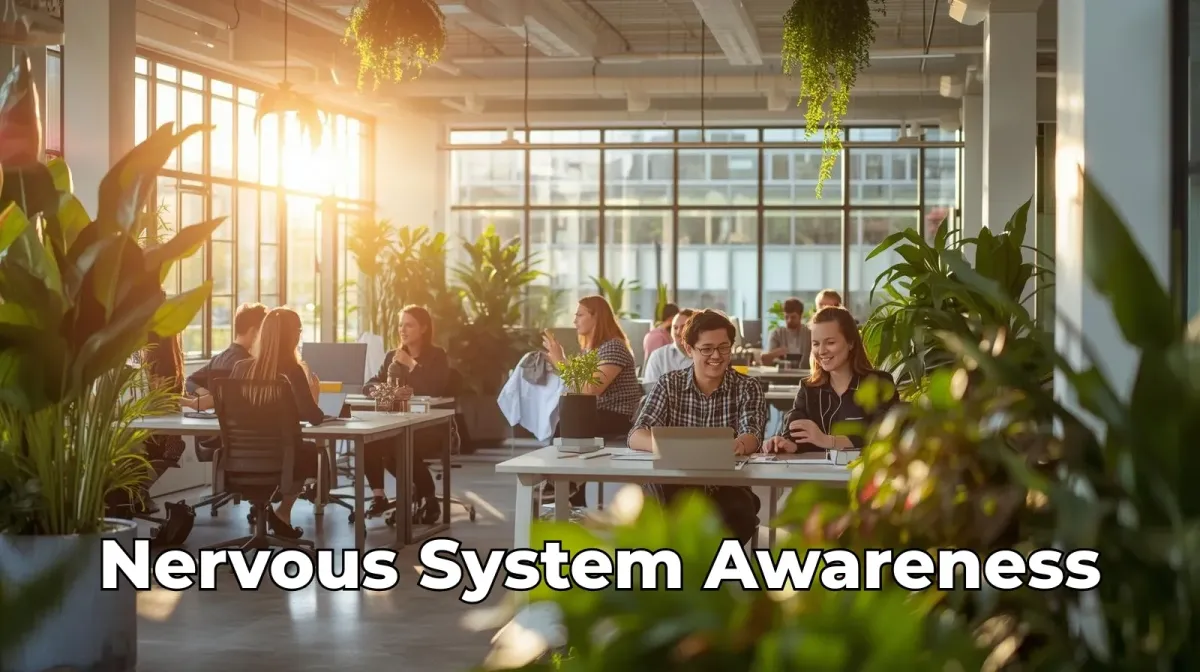
Leading with Nervous System Awareness: Somatic Skills for Managers
Leading with nervous system awareness means you can notice stress states early (in yourself and your team), regulate them in real time, and create conditions where people can think clearly, speak honestly, and work sustainably—especially under pressure.
This article sits inside Health and wellbeing in the corporate world: The Human Leader playbook.
Explore Our Corporate Wellbeing Services
If your organisation is looking to strengthen resilience, improve wellbeing, reduce stress, and create a healthier workplace culture, explore our Corporate Wellbeing Hub.
From workshops and leadership development to nervous system regulation and team wellbeing programmes, you'll find practical solutions designed for modern organisations.
Explore the Corporate Wellbeing Hub

Why this matters more than ever
Most managers are not struggling because they “don’t care”. They are struggling because modern work keeps pushing nervous systems into survival mode.
When stress is high, people become narrower in focus. More defensive. More reactive. Less creative. Less collaborative.
That shows up as:
Meetings where people speak carefully, or not at all.
Tension that leaks into email tone and Slack replies.
Small problems that stay hidden until they become expensive.
Burnout patterns that look like “performance issues”.
This is exactly why nervous-system awareness is a leadership skill. It is not “soft”. It is operational.
If you’re building this capability across your organisation, these related articles help you connect the dots across culture, meetings, and hybrid design:
Trust as your competitive edge: The science of psychological safety
Psychological safety in meetings: From silent screens to real dialogue
Hybrid teams without burnout: Designing sustainable work rhythms
Micro rituals for human connection: Daily practices for hybrid teams
The simplest model: threat vs safety
You don’t need to become a therapist to use this.
Just remember this:
Threat state: the system prioritises protection over connection.
Safety state: the system allows connection, learning, and problem-solving.
In a threat state, people do more of these:
Fight: argue, criticise, push harder.
Flight: avoid, delay, over-busy themselves, change the subject.
Freeze: go quiet, comply, dissociate, “fine” everything.
In safety, you see:
Clearer thinking.
More voice and initiative.
Better repair after mistakes.
Less hidden stress.
Human Leaders learn to shift the state before they try to shift the behaviour.
What nervous-system-aware leadership looks like in practice
Here are the observable behaviours.
1) You regulate first, then you communicate
You do not walk into a difficult conversation with a tight chest and a racing mind, then expect it to go well.
You take 60–90 seconds first. Then you speak.
2) You design meetings for humans, not machines
You start with arrival.
You set a clear purpose.
You invite voice on purpose.
You close properly.
If you want a practical meeting structure for this, use Psychological safety in meetings: From silent screens to real dialogue.
3) You build rhythm and recovery into the week
Nervous-system leadership is not just a moment-to-moment skill.
It’s also structural.
If diaries are permanently full, the nervous system never downshifts. People become brittle. Then tiny issues explode.
This is where Hybrid teams without burnout: Designing sustainable work rhythms becomes a leadership tool, not a wellbeing extra.
A manager’s somatic toolkit: small practices that actually stick
These are intentionally simple. They are designed for real workplaces.
Practice 1: The 6-breath reset (60–90 seconds)
Use this before meetings, feedback, or conflict.
Sit back. Feet on the floor.
Inhale gently through the nose.
Exhale slower than the inhale.
Repeat for six breaths.
On the last exhale, drop the shoulders and soften the jaw.
Why it works: a longer exhale signals “we are safe enough” to the body.
Practice 2: The “orienting” reset (30 seconds)
This is powerful in hybrid days where people feel trapped in screens.
Look up from the laptop.
Let your eyes slowly scan the room.
Name three neutral objects: “door, plant, window”.
Return to the call with a softer gaze.
Why it works: it reminds the system it is not in immediate danger.
Practice 3: Posture and pace (in the moment)
When you feel yourself speeding up:
Sit back.
Slow your speech by 10%.
Pause after key sentences.
This is leadership. People unconsciously co-regulate with your pacing.
Practice 4: The 2-minute transition (between meetings)
If you go from Zoom to Zoom, your nervous system never completes a stress cycle.
Try:
Stand up.
Shake out hands and arms for 20 seconds.
Roll shoulders slowly five times.
Two long exhales.
Sit down again.
If you want a fuller set of options for champions and internal facilitators, use Breath, movement and focus: A somatic toolkit for corporate wellbeing champions.
The leadership moments where this changes everything
1) Performance conversations
When someone is anxious, they hear threat even in neutral language.
Start with safety signals:
“My aim is to support you to succeed.”
“We’ll take this step by step.”
“You can pause at any time.”
Then keep your voice calm and your pace steady.
2) Conflict and repair
Most conflict is nervous-system conflict first, content conflict second.
So the first move is regulation, not persuasion.
If you want a clear structure for repair, use Difficult conversations in hybrid teams: A five-step conflict reset.
3) Team meetings where nobody speaks
This is rarely a “lack of ideas”.
It’s often a safety issue, a fatigue issue, or both.
Try one tiny ritual for four weeks:
One-word check-in at the start.
A “pass is always okay” norm.
A clear invitation: “I’d like to hear from two voices we haven’t heard yet.”
You’ll find more options in Micro rituals for human connection: Daily practices for hybrid teams.
What to measure so this doesn’t become “nice ideas”
Nervous-system work becomes real when it’s linked to outcomes.
Look for:
Fewer “surprise” escalations.
More participation in meetings.
Faster repair after tension.
Reduced rework caused by miscommunication.
Better retention in stressed teams.
If you want a simple way to evidence progress, pair this with Measuring what matters: Proving the ROI of wellbeing programmes.
A trauma-aware note for responsible leadership
Somatic leadership is not about pushing people to share personal stories.
It is about giving people more choice and more capacity.
Keep it simple:
Offer opt-outs.
Avoid forced vulnerability.
Use language that fits your culture.
Signpost support routes when needed.
And remember: the most powerful safety signal is what happens after someone speaks up.
That’s why nervous-system skills and psychological safety belong together. See Trust as your competitive edge: The science of psychological safety.
Next steps on your Human Leader path
If you want this to land inside your organisation in a way that’s practical, consistent, and measurable, take these two steps next:
Re-anchor the “why” and the wider system in Health and wellbeing in the corporate world: The Human Leader playbook.
Explore the Corporate Wellbeing Hub

Together, we can help your organisation treat wellbeing not as a cost centre or a perk, but as what it truly is:
A core business capability that protects your people and powers your performance.
I look forward to connecting with you in my next post.
Until then, be well and keep shining.
Peter. :)