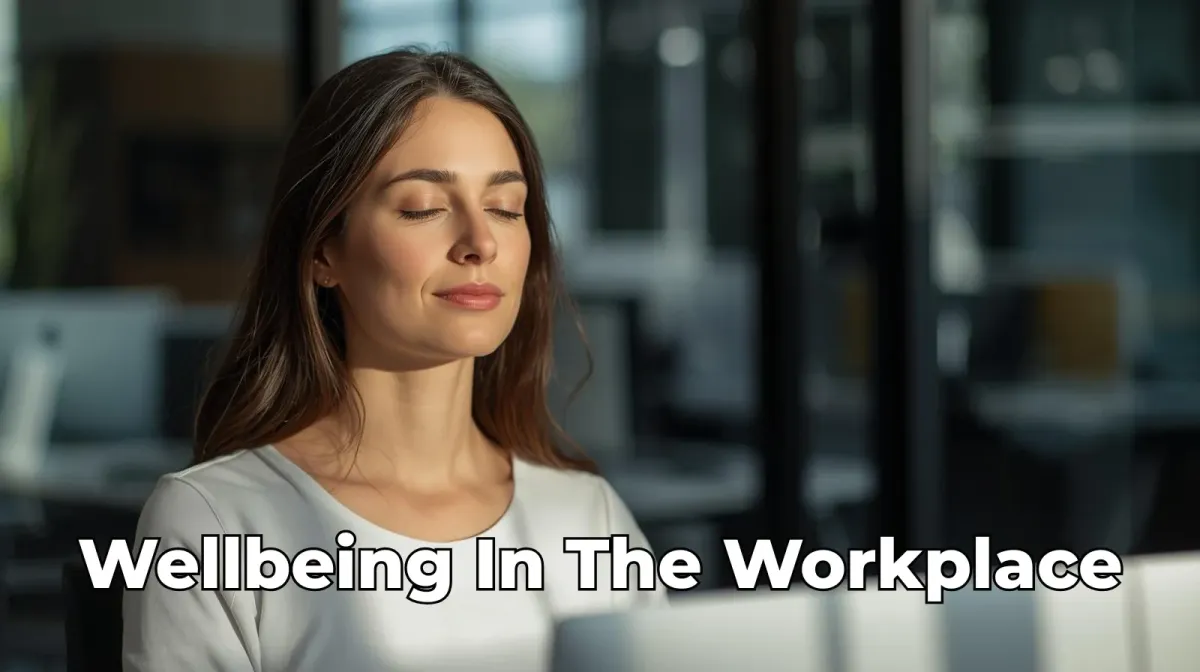
Designing a Wellbeing Workplace: Spaces that Support Focus & Connection
A wellbeing workplace isn’t about trendy furniture or a “nice vibe”. It’s about designing spaces that help people think clearly, connect easily, and recover quickly—so your culture becomes calmer, more human, and more productive.
This article sits inside Health and wellbeing in the corporate world: The Human Leader playbook.
If you want a ready-made, practical way to equip managers with the behaviours and tools in this article, start here: The Human Leader Workshop.

Why space matters more in hybrid work
Hybrid work changed the role of the workplace.
The office used to be the default place people did everything.
Now it must earn its place.
If your space doesn’t support focus, collaboration, and nervous-system steadiness, people will still come in… but they’ll feel drained, distracted, and disconnected.
And that shows up as:
“We’re in the office but we’re not really together.”
Too much noise for deep work.
Too little privacy for sensitive conversations.
Meeting rooms booked solid, while everyone else perches on laptops.
People leaving the office more tired than when they arrived.
A wellbeing workplace is a performance tool.
It reduces friction. It boosts clarity. It strengthens connection.
This also links directly to your hybrid rhythm design. If you haven’t read it yet, pair this with Hybrid teams without burnout: Designing sustainable work rhythms.
A wellbeing workplace is not only shaped by furniture, lighting and layout. It is also shaped by how leaders use those spaces.
A calm meeting room can still feel unsafe if the pace, tone and behaviour of leadership create pressure.
To bring the human element into workplace design, read Leading with Nervous System Awareness: Somatic Skills for Managers.
It explores how managers can use breath, posture, pacing and small somatic resets to support clearer thinking, psychological safety and healthier team dynamics.
The wellbeing workplace principle: give every space a job
Most offices fail because they try to be everything at once.
A Human Leader approach is simpler:
Every space should have a clear purpose.
And people should know what that purpose is the moment they walk in.
Think in “jobs”, not “rooms”.
Here are the four jobs that matter most:
Focus — quiet, low-interruption work
Connection — informal, human contact
Collaboration — thinking together, decisions, creativity
Recovery — downshifting, regulation, reset
If you design for these four jobs, you reduce stress and improve the quality of work.
Step 1: Build a simple space map (without spending money)
You don’t need renovations to start. You need clarity.
Walk your workplace and ask:
Where can someone work in silence for 45 minutes?
Where can two people have a private 1:1 without whispering?
Where can a team collaborate without disturbing others?
Where can people reset after a tough call?
If any answer is “nowhere”, your space is quietly fuelling burnout.
A quick win
Create a one-page “space map” for staff:
Quiet zones
Collaboration zones
Phone / video-call zones
Private conversation points
Reset corners
This reduces friction instantly. People stop guessing. And nervous systems settle.
Step 2: Design for focus (because focus is wellbeing)
Focus is not just productivity. It’s emotional stability.
When people can’t focus, they feel behind.
When they feel behind, they become reactive.
When they become reactive, relationships suffer.
Focus design essentials
Quiet zones that are truly quiet (no calls).
Visual cues (simple signage like “Quiet Work Area”).
Desk etiquette norms (headphones don’t mean “interrupt anyway”).
Small “focus pods” if possible, even if they’re just screened corners.
If your culture is currently struggling with meeting overload and constant switching, this focus work supports everything in Hybrid teams without burnout: Designing sustainable work rhythms.
Step 3: Design for connection (without forcing it)
Connection isn’t created by team-building activities.
It’s created by easy, natural contact.
Hybrid removed the “in-between moments”. The workplace must replace them.
Connection spaces that work
A simple coffee point with somewhere to stand and chat.
A warm, informal seating area near natural movement routes.
Small tables that invite two-minute conversations.
Noticeboards that share human wins (without becoming corporate cringe).
Connection zones should feel optional. Light. Normal.
Want daily connection habits that pair beautifully with space design? Use Micro rituals for human connection: Daily practices for hybrid teams.
Step 4: Design for collaboration (so office days have meaning)
The office should be the best place to do the work that’s hardest remotely:
creative thinking
problem-solving
decision-making
relationship repair
mentoring and learning
But collaboration collapses when meeting spaces are wrong.
Collaboration design essentials
Rooms that fit the team size (not too big, not too small).
Good acoustics (echo drains energy).
Easy screen sharing (friction kills momentum).
Whiteboards or simple visual tools (thinking needs surfaces).
A “stand and work” option (movement supports clarity).
If your meetings are flat, tense, or dominated by a few voices, fix the meeting design too. Pair with Psychological safety in meetings: From silent screens to real dialogue.
Step 5: Design for recovery (because regulation is now a work skill)
Recovery is the missing zone in most workplaces.
And it matters because people don’t just carry workloads.
They carry stress. They carry pressure. They carry emotional residue.
A wellbeing workplace gives people a place to downshift.
Recovery zones can be simple
A quiet corner.
A chair that faces away from foot traffic.
A sign: “Reset space. Quiet please.”
Soft lighting where possible.
Optional prompt card: “Two slow breaths. Drop shoulders. Return.”
This pairs perfectly with Breathe, reset, reconnect: Short breathwork practices for work and Leading with nervous system awareness: Somatic skills for managers.
A two-minute reset is not time wasted.
It prevents stress stacking. And it improves decisions.
The workplace isn’t just physical. It’s behavioural.
You can redesign space and still fail if behaviour stays chaotic.
So build a few gentle norms:
1) Quiet means quiet
If your quiet zone is full of calls, it becomes a stress zone.
2) Calls have a home
Create clear call spaces so people aren’t apologising for speaking all day.
3) Meetings have a standard
Start on time. End on time. Close with decisions and owners.
4) “Do not disturb” is respected
Focus is a wellbeing boundary.
These norms are easy to teach managers. Harder to enforce without training. That’s why the workshop exists.
A simple “wellbeing workplace” checklist
Use this as a quick audit.
Focus
We have at least one true quiet zone
People know calls don’t happen there
There are visual cues and etiquette norms
Connection
There are informal spaces where chat is normal
New joiners have easy ways to meet people naturally
Collaboration
Meeting spaces match how teams actually work
Tech friction is low
There are surfaces for thinking (whiteboards, pin boards)
Recovery
There is at least one calm reset space
People feel safe using it without judgement
If you score low, don’t panic. Pick one job. Improve it. Then repeat.
If you want leaders to stop guessing and start creating workplaces that genuinely support focus, connection, and calmer performance, this is exactly the kind of practical capability we build with managers:

A 30-day implementation plan that won’t overwhelm anyone
Week 1: Map the jobs
Create your one-page space map.
Clarify the purpose of each area.
Week 2: Fix one high-friction zone
Choose the biggest pain point:
noise,
lack of privacy,
meeting room chaos,
nowhere to reset.
Make one change. Even signage and norms count.
Week 3: Pair space with one ritual
Add a simple meeting opener:
30-second arrival, or
two slow breaths.
Use: Micro rituals for human connection.
Week 4: Train managers to hold the behaviour
This is the missing step.
Space changes stick when leaders model the norms:
respect focus,
protect recovery,
improve meeting quality,
build psychological safety.
Next steps on your Human Leader path
If you want a wellbeing workplace that actually works in the real world—where people can focus deeply, connect naturally, and recover quickly—make the next step practical.
Start by anchoring the wider strategy here:
Health and wellbeing in the corporate world: The Human Leader playbook
Then equip your managers with a ready-made, hands-on approach they can use immediately—so the space design becomes day-to-day behaviour, not a forgotten initiative:
The Human Leader Workshop

If you want your office days to feel worth the commute, and your hybrid culture to feel more human, this is one of the strongest upgrades you can make.
I look forward to connecting with you in my next post.
Until then, be well and keep shining.
Peter. :)