Leadership and Team Wellbeing
Stronger Leaders Create Stronger Teams
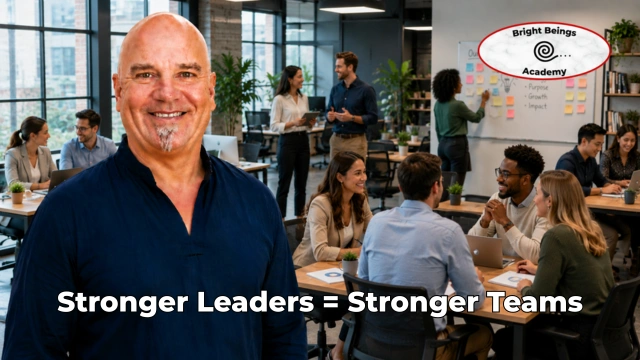
Modern leaders face increasing demands.
They are expected to deliver results, manage change, support employee wellbeing, maintain performance, navigate uncertainty, and create healthy workplace cultures, often while managing significant pressures of their own.
Yet leadership wellbeing is frequently overlooked.
When leaders operate in a constant state of stress, overwhelm, or exhaustion, the effects are often felt throughout the wider team. Communication becomes harder, decision-making suffers, resilience declines, and workplace culture can begin to deteriorate.
The wellbeing of a team rarely rises above the wellbeing of its leaders.
Our leadership wellbeing programmes help managers, senior leaders, and leadership teams develop the resilience, emotional intelligence, self-awareness, and practical wellbeing skills needed to lead effectively in today's workplace.
Through a combination of leadership development, emotional regulation, stress management, nervous system awareness, communication skills, and wellbeing education, leaders learn how to support both their own wellbeing and the wellbeing of those around them.
For a broader overview of how leadership, wellbeing, resilience, and employee support fit within a wider organisational strategy, explore our guide to Corporate Wellbeing and Employee Resilience.
The result is healthier leaders, stronger teams, and more sustainable workplace performance.
Ideal For
Senior leadership teams
Directors and executives
Team leaders and managers
HR and People Teams
Organisations developing leadership capability
Businesses seeking stronger team culture and wellbeing
Available throughout the UK and internationally, both in person and online
Why Leadership Wellbeing Matters

Leadership has never been more demanding.
Today's leaders are expected to balance performance, productivity, employee wellbeing, organisational change, team development, and commercial pressures, often while navigating their own workload and responsibilities.
In many organisations, leaders spend much of their time supporting others while neglecting their own wellbeing.
Over time, this can lead to chronic stress, emotional exhaustion, decision fatigue, reduced resilience, and a gradual decline in effectiveness.
The impact rarely stops with the individual leader.
Teams often take their emotional cues from those leading them. A stressed leader can unintentionally create tension within a team. A calm and regulated leader can help create stability, trust, and psychological safety.
This is why leadership wellbeing is not simply a personal issue.
It is a business issue.
Many organisations choose to incorporate leadership development into wider Corporate Wellbeing Programmes that support both employees and leaders over time.
The Ripple Effect of Leadership
The way leaders communicate, respond to pressure, manage emotions, and support others influences:
Team morale
Employee engagement
Workplace culture
Communication quality
Psychological safety
Employee retention
Team resilience
Overall organisational performance
When leaders are equipped with practical wellbeing skills, they are often better able to navigate challenges, support their teams, and maintain effectiveness during periods of pressure and change.
Moving Beyond Traditional Leadership Development
Many leadership programmes focus on strategy, communication, delegation, and performance management.
These skills are important.
However, leaders also need the ability to manage their own internal state.
Self-awareness, emotional regulation, resilience, and wellbeing are increasingly recognised as essential leadership capabilities in modern organisations.
Our leadership wellbeing programmes help leaders develop these skills through practical learning experiences that combine leadership development with wellbeing education, nervous system awareness, emotional intelligence, and resilience-building strategies.
The goal is not simply to create more productive leaders.
The goal is to help create healthier leaders who can build healthier, more resilient teams.
Challenges Facing Modern Leaders
Managing Stress and Pressure
Leaders are frequently responsible for balancing organisational demands, team needs, deadlines, budgets, and performance expectations.
Without effective strategies for managing stress, this pressure can gradually affect decision-making, communication, and resilience.
Supporting Employee Wellbeing
Many managers genuinely want to support their teams but feel uncertain about how to respond when employees are struggling with stress, burnout, overwhelm, or emotional challenges.
Leaders often find themselves carrying the emotional weight of the team without receiving adequate support themselves.
Emotional Regulation Under Pressure
During periods of uncertainty or challenge, emotions can influence communication, relationships, and leadership effectiveness.
Developing emotional awareness and regulation helps leaders respond more thoughtfully rather than reacting automatically under pressure.
Maintaining Team Culture
Hybrid working, organisational change, restructuring, and increasing workloads can make it difficult to maintain trust, connection, and engagement within teams.
Leaders play a critical role in shaping the culture people experience every day.
Preventing Burnout
Many leaders spend so much time supporting others that they overlook their own wellbeing.
Without adequate recovery and self-care, stress can accumulate over time and contribute to exhaustion, disengagement, and burnout.
Leading Through Change
Change is now a constant feature of many workplaces.
Whether managing growth, restructuring, technological change, or economic uncertainty, leaders need practical skills that help them remain steady while guiding others through periods of transition.
A Different Kind of Leadership Development
Traditional leadership training often focuses on external skills such as planning, communication, delegation, and strategy.
These remain important.
However, the ability to lead effectively is also influenced by a leader's internal state.
How leaders manage stress, regulate emotions, maintain resilience, and support their own wellbeing often determines how effectively they can support others.
This is where leadership wellbeing becomes a powerful foundation for stronger leadership, healthier teams, and more sustainable organisational performance.
Leadership and Team Wellbeing Solutions
Every organisation faces different leadership challenges.
Some need support with resilience and stress management. Others want to strengthen communication, improve team culture, develop emotional intelligence, or help leaders navigate change more effectively.
For this reason, our leadership wellbeing programmes can be tailored to address the specific needs of your organisation, leadership team, and workforce.
Leadership Resilience
Resilient leaders are better equipped to navigate pressure, uncertainty, and change while maintaining clarity and effectiveness.
This programme helps leaders develop practical strategies for sustaining wellbeing, recovering from setbacks, and maintaining performance during challenging periods.
Topics may include:
Understanding resilience
Managing pressure effectively
Recovery and restoration
Building sustainable performance
Developing self-awareness
Strengthening adaptability
Emotional Intelligence for Leaders
Emotional intelligence is increasingly recognised as one of the most important leadership capabilities.
Leaders who understand their own emotions and respond effectively to others often build stronger relationships, improve communication, and create healthier team cultures.
Topics may include:
Self-awareness
Emotional regulation
Empathy and understanding
Relationship management
Constructive communication
Responding effectively under pressure
Leadership Stress Management
Leadership roles often involve significant responsibility and pressure.
This programme helps leaders understand how stress affects performance and develop practical techniques for maintaining focus, clarity, and wellbeing.
Leaders interested in the science of stress, recovery, and resilience can explore our dedicated page on Nervous System Regulation at Work.
Topics may include:
Understanding stress responses
Stress management techniques
Nervous system awareness
Breathwork for focus and regulation
Sustainable workload management
Preventing leadership burnout
Team Communication and Connection
Strong communication is at the heart of effective leadership.
This programme helps leaders build stronger relationships, improve communication skills, and create environments where people feel heard, valued, and engaged.
Topics may include:
Effective communication
Active listening
Building trust
Managing difficult conversations
Strengthening team relationships
Creating psychological safety
Team Wellbeing and Culture
Healthy workplace cultures do not happen by accident.
They are created through consistent leadership behaviours, clear communication, and environments where people feel supported and valued.
Topics may include:
Workplace wellbeing culture
Psychological safety
Team resilience
Employee engagement
Building trust and connection
Supporting wellbeing within teams
Workplace Leadership Development
A holistic leadership development programme that combines traditional leadership skills with wellbeing, resilience, emotional intelligence, and communication.
This approach helps leaders strengthen both professional capability and personal wellbeing.
Topics may include:
Leadership effectiveness
Personal wellbeing
Emotional intelligence
Communication skills
Team development
Sustainable leadership practices
Each programme can be delivered as a workshop, leadership development series, team wellbeing programme, conference session, or ongoing organisational initiative, depending on your goals and requirements.
Organisations looking for shorter interventions may also wish to explore our Corporate Wellbeing Workshops.
Meet Peter Paul Parker
Speaker, Leadership Facilitator and Wellbeing Educator
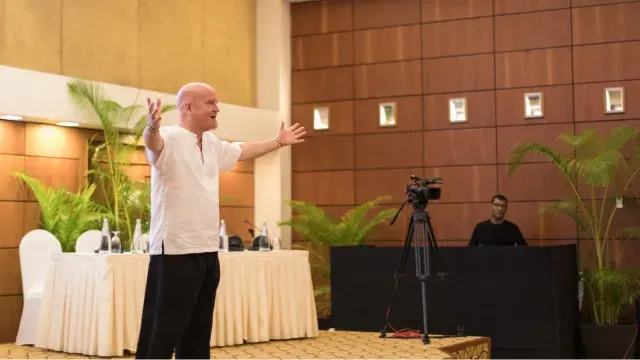
Peter Paul Parker is a speaker, Meraki Guide, Qi Gong instructor, and wellbeing educator with more than two decades of experience helping people develop greater self-awareness, emotional resilience, confidence, and personal effectiveness.
His work combines leadership development, communication skills, emotional wellbeing, nervous system awareness, and practical personal development to help individuals perform at their best without sacrificing their wellbeing in the process.
Peter is particularly passionate about helping leaders understand that sustainable performance begins with self-awareness.
When leaders learn how to manage their own internal state, they are often better equipped to communicate effectively, support others, navigate pressure, and create healthier workplace cultures.
Leadership and Speaking Experience
Peter's leadership experience extends beyond the wellbeing field.
He served as President of Epsom Speakers, one of the region's leading Toastmasters clubs, where he was awarded the organisation's highest presidential honour.
During his tenure, he helped members develop confidence, communication skills, and leadership capabilities in a supportive and growth-focused environment.
His speaking experience has also taken him internationally, including delivering presentations and workshops in the Maldives.
This combination of leadership experience, professional speaking, coaching, and wellbeing education gives Peter a unique perspective on the challenges faced by modern leaders.
A Practical Approach to Leadership Development
Many leadership programmes focus exclusively on external skills such as strategy, delegation, and performance management.
While these are important, leadership effectiveness is also shaped by factors such as:
Self-awareness
Emotional regulation
Stress management
Resilience
Communication
Presence and influence
Relationship building
Peter's programmes help leaders strengthen these often-overlooked foundations through practical learning experiences that can be applied immediately in the workplace.
Bridging Leadership and Wellbeing
Rather than treating wellbeing and leadership as separate topics, Peter's approach brings them together.
Leaders learn how their wellbeing influences communication, decision-making, team culture, resilience, and overall effectiveness.
The result is leadership development that not only improves professional performance but also helps create healthier leaders, stronger teams, and more sustainable workplace cultures.
Benefits for Leaders and Teams
When leadership wellbeing becomes a priority, the benefits are often felt throughout the entire organisation.
Leaders influence how people communicate, collaborate, respond to challenges, and experience workplace culture. As leaders develop greater self-awareness, resilience, and emotional intelligence, these qualities often ripple through the teams they support.
Benefits for Leaders
Greater Resilience Under Pressure
Leaders learn practical strategies for maintaining effectiveness during periods of uncertainty, change, and increased responsibility.
Improved Emotional Regulation
Developing awareness of emotional responses can help leaders respond thoughtfully rather than reacting automatically under pressure.
Better Decision-Making
A calmer and more regulated internal state often supports clearer thinking, stronger judgement, and improved problem-solving.
Increased Self-Awareness
Leaders gain a deeper understanding of their communication style, behavioural patterns, strengths, and growth opportunities.
Reduced Risk of Burnout
By learning practical wellbeing and recovery strategies, leaders can better manage their energy and sustain performance over time.
Benefits for Teams
Stronger Communication
Teams often benefit when leaders communicate with greater clarity, empathy, and consistency.
Greater Trust and Psychological Safety
Leaders who demonstrate self-awareness and emotional intelligence can help create environments where people feel valued, heard, and supported.
Improved Team Wellbeing
Leadership behaviours have a significant influence on workplace wellbeing. Healthier leadership often contributes to healthier teams.
Increased Engagement
Employees are generally more engaged when they feel connected to their leaders and supported within their working environment.
Better Team Resilience
Teams are often better equipped to navigate challenges when leaders model resilience, adaptability, and calm under pressure.
For Organisations
Stronger workplace culture
Improved employee retention
Greater leadership effectiveness
Enhanced collaboration and teamwork
Increased wellbeing awareness
Better support for organisational change
More sustainable performance
Greater alignment between leadership and wellbeing strategies
Leadership Wellbeing as a Competitive Advantage
Organisations that invest in leadership wellbeing are not simply supporting individual leaders.
They are investing in the quality of communication, culture, engagement, and performance throughout the organisation.
By helping leaders develop practical skills that strengthen resilience, emotional intelligence, communication, and wellbeing, organisations create stronger foundations for long-term success.
What Organisations Say
Leadership development is most effective when people leave with practical insights they can immediately apply in their professional lives.
Participants consistently describe Peter's approach as engaging, relatable, thought-provoking, and highly practical.
"Peter has a remarkable ability to connect with people and communicate complex ideas in a way that is engaging, clear, and memorable. His calm presence and authentic approach create an environment where people feel comfortable, involved, and inspired to take action."
"Peter's presentation style is professional, engaging, and thought-provoking. He combines practical knowledge with genuine warmth, helping people not only understand the material but also experience it for themselves. The feedback from attendees was overwhelmingly positive."
A common theme in feedback is Peter's ability to make leadership and wellbeing concepts accessible without oversimplifying them.
Leaders often leave sessions with a deeper understanding of themselves, greater awareness of how they influence others, and practical tools they can begin using immediately with their teams.
Why Organisations Choose This Approach
Organisations value programmes that combine leadership development with wellbeing because they address both the external and internal aspects of leadership.
Clients frequently highlight:
Practical and actionable learning
Strong engagement and participation
A balance of leadership and wellbeing content
Real-world relevance
Professional yet approachable delivery
Flexible programme design
Support for both leaders and teams
A focus on sustainable behavioural change
Whether working with managers, senior leadership teams, department heads, or emerging leaders, the objective remains the same:
To help leaders develop the resilience, emotional intelligence, communication skills, and wellbeing practices that enable them to lead effectively while creating healthier and more successful teams.
Explore Related Workplace Wellbeing Resources
Leadership wellbeing is closely connected to resilience, emotional regulation, communication, and workplace culture.
You may find these resources helpful:
Emotional Regulation for Leaders — Learn how leaders can stay calm under pressure and respond more effectively during challenging situations.
Emotional Regulation for Employees — Explore how emotional regulation supports communication, resilience, and workplace wellbeing.
Nervous System Regulation at Work — Discover how stress, recovery, and resilience influence leadership effectiveness and team performance.
Burnout and the Nervous System — Understand how prolonged stress can affect leaders, employees, and organisational performance.
Workplace Resilience Starts in the Body — Learn why resilience depends on recovery, regulation, and sustainable wellbeing habits.
Frequently Asked Questions About Leadership and Team Wellbeing
What is leadership wellbeing?
Leadership wellbeing refers to the physical, mental, emotional, and professional wellbeing of leaders.
It focuses on helping leaders manage stress, maintain resilience, develop self-awareness, and sustain their effectiveness while supporting the people around them.
Why is leadership wellbeing important?
Leaders have a significant influence on workplace culture, communication, employee engagement, and team performance.
When leaders are operating under excessive stress or experiencing burnout, the effects can often be felt throughout the wider team. Supporting leadership wellbeing helps create stronger foundations for both individual and organisational success.
Who are these programmes designed for?
Programmes are suitable for:
Senior leadership teams | Directors and executives | Department heads | Team leaders | Line managers | Emerging leaders | HR and People Teams
Content can be adapted to suit different levels of leadership responsibility.
Can programmes be delivered to entire leadership teams?
Yes.
Many organisations choose to involve entire leadership teams to create a shared understanding of wellbeing, communication, resilience, and leadership culture.
This often helps strengthen consistency and alignment across the organisation.
What topics can be included?
Programmes can include:
Leadership resilience | Emotional intelligence for leaders | Leadership stress management | Team communication | Psychological safety | Team wellbeing | Workplace leadership development | Burnout prevention | Nervous system regulation | Leadership wellbeing
Programmes can be tailored to meet the specific needs of your organisation.
Are these programmes leadership training or wellbeing programmes?
They are both.
The programmes bring together leadership development and wellbeing education, recognising that leadership effectiveness is influenced by factors such as resilience, emotional regulation, self-awareness, communication, and wellbeing.
Can sessions be delivered online?
Yes.
Programmes can be delivered in person, online, or through a hybrid format depending on organisational needs and team locations.
How long do leadership wellbeing programmes last?
Programmes can range from a single workshop to a multi-month leadership development initiative.
The structure is designed around your goals, workforce, and desired outcomes.
How many leaders can participate?
Programmes can be delivered to individual leadership teams, departments, cohorts of managers, or larger groups of leaders across an organisation.
How do we get started?
The first step is a discovery conversation.
This allows us to understand your leadership challenges, organisational goals, and desired outcomes before recommending the most appropriate programme or workshop format.
Are You Ready to Strengthen Leadership and Team Wellbeing?
Great leadership is not simply about strategy, targets, and performance.
It is also about resilience, communication, emotional intelligence, self-awareness, and the ability to create environments where people can perform at their best.
When leaders are supported, teams often benefit. When teams benefit, workplace culture becomes stronger. And when workplace culture becomes stronger, organisations are better positioned for sustainable success.
Our leadership and team wellbeing programmes are designed to help leaders develop the practical skills needed to navigate pressure, support their people, and lead with greater confidence, clarity, and effectiveness.
Whether you are looking to support senior leaders, strengthen management capability, improve team culture, develop emotional intelligence, or enhance leadership resilience, we can create a tailored solution that meets your organisation's needs.
Let's Start the Conversation
A discovery call gives us the opportunity to explore:
Your leadership development goals
Current organisational challenges
Team culture and wellbeing priorities
Leadership programme options
Delivery formats and timescales
Desired outcomes and measures of success
Simply an opportunity to explore how leadership wellbeing can help strengthen your leaders, support your teams, and contribute to a healthier and more effective workplace culture.
Let's discuss how we can help your leaders thrive, your teams flourish, and your organisation build a stronger foundation for long-term success.
Leadership Development Areas Include
Leadership Wellbeing
Leadership Resilience
Emotional Intelligence for Leaders
Leadership Stress Management
Team Wellbeing
Team Communication
Psychological Safety
Workplace Leadership Development
Burnout Prevention
Nervous System Regulation
Available throughout the UK and internationally, both in person and online
Copyright Peter Paul Parker All Rights Reserved - Terms and conditions Privacy Support