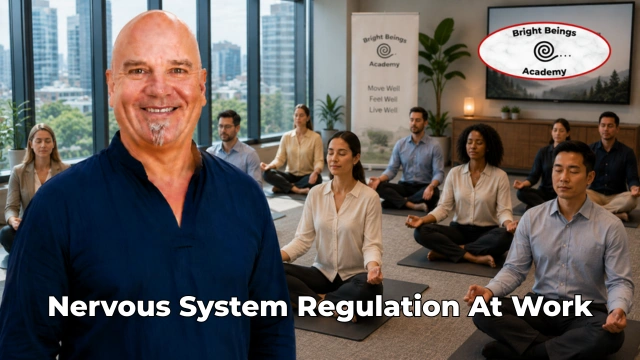
Nervous System Regulation at Work
The Missing Piece in Modern Workplace Wellbeing
Many workplace wellbeing programmes focus on managing symptoms.
They provide wellbeing resources, resilience training, mental health awareness sessions, or stress-management techniques designed to help employees cope with increasing demands.
While these initiatives can be valuable, many organisations still find that employees remain stuck in patterns of stress, overwhelm, exhaustion, emotional reactivity, and burnout.
Why?
Because information alone does not always change how people feel. The nervous system learns primarily through experience.
An employee may understand stress intellectually, yet their body may still be operating in a state of chronic tension, hypervigilance, emotional exhaustion, or shutdown.
This is where nervous system regulation at work becomes so important.
When employees learn practical ways to support nervous system wellbeing, they often become better equipped to recover from stress, regulate emotions, maintain focus, improve resilience, and respond more effectively to workplace challenges.
Our nervous system regulation programmes combine practical wellbeing education with breathing techniques, gentle movement, Qi Gong, stress recovery practices, and nervous system awareness to help employees develop healthier and more sustainable responses to pressure.
For a broader understanding of how nervous system wellbeing supports employee wellbeing, resilience, leadership development, and workplace culture, explore our guide to Corporate Wellbeing and Employee Resilience.
The result is not simply greater wellbeing.
It is a workforce that is better able to adapt, recover, collaborate, and perform in the face of modern workplace demands.
Ideal For
HR and People Teams
Leadership teams
High-pressure workplaces
Organisations experiencing burnout and stress
Employee wellbeing programmes
Workplace resilience initiatives
Organisations seeking innovative wellbeing solutions
Available throughout the UK and internationally, both in person and online
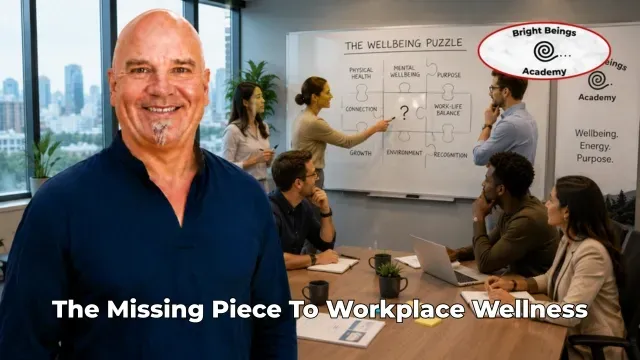
The Missing Piece in Workplace Wellbeing
Over the past decade, organisations have invested heavily in workplace wellbeing.
Many now offer wellbeing resources, employee assistance programmes, resilience training, mental health awareness initiatives, wellbeing apps, and workplace wellness campaigns.
These efforts are often well intentioned and can provide genuine value.
Yet despite this investment, many employees continue to report high levels of stress, burnout, emotional exhaustion, disengagement, and overwhelm.
This raises an important question.
Why do so many people understand stress yet still struggle to recover from it?
Understanding Is Not Always Enough
Most wellbeing initiatives focus on providing information.
Employees learn about stress, resilience, healthy habits, mindfulness, and self-care. While this knowledge is useful, information alone does not necessarily create change.
Most people already know they should sleep well, take breaks, move more, breathe deeply, and manage stress more effectively.
The challenge is not usually a lack of knowledge.
The challenge is that the body may still be operating from patterns that have been reinforced through months or even years of chronic stress.
The Nervous System Learns Through Experience
The nervous system constantly monitors both internal and external environments. When stress becomes prolonged, the body can become accustomed to operating in states of heightened alertness, tension, emotional reactivity, or exhaustion.
Over time, these patterns can begin to feel normal.
This is why many employees continue to experience stress even when there is no immediate threat or crisis. The body has simply become practised at responding in a particular way.
Changing these patterns requires more than information.
It requires repeated experiences of safety, calm, regulation, recovery, and self-awareness.
A Different Approach to Workplace Wellbeing
Nervous system regulation focuses on helping employees develop these experiences through practical and repeatable techniques.
Rather than simply talking about stress, participants learn how to recognise stress responses within themselves and practise skills that help support recovery and regulation.
This may include:
Breathing techniques
Gentle movement practices
Nervous system awareness
Stress recovery strategies
Emotional regulation skills
Qi Gong-based wellbeing practices
Mind-body awareness exercises
Over time, these practices can help employees develop greater resilience, improve stress recovery, and build healthier responses to workplace challenges.
From Managing Symptoms to Supporting Recovery
Many wellbeing programmes focus on helping people manage stress.
Nervous system regulation adds another layer.
It helps employees understand how stress affects the body and provides practical tools that support recovery, regulation, and long-term wellbeing.
For organisations seeking a deeper and more sustainable approach to employee wellbeing, this often becomes the missing piece that helps transform awareness into meaningful change.
What Is Nervous System Regulation?
Nervous system regulation refers to the body's ability to adapt to challenges, recover from stress, and return to a balanced state after periods of pressure.
It influences how we think, feel, communicate, make decisions, and respond to the demands of everyday life.
When the nervous system is functioning well, people are often better able to remain calm under pressure, think clearly, regulate emotions, connect with others, and recover more effectively from stressful situations.
When it becomes overwhelmed, the effects can be felt across many areas of workplace performance and wellbeing.
The Nervous System's Role in Workplace Performance
The nervous system constantly gathers information from both the external environment and the body itself.
It is continually asking questions such as:
Am I safe?
Am I under threat?
Do I need to prepare for action?
Can I relax and recover?
These responses happen largely outside conscious awareness and can influence behaviour long before a person has time to think logically about a situation.
This is why two employees can experience the same workplace challenge yet respond in completely different ways.
What Regulation Often Looks Like
Employees experiencing greater nervous system wellbeing may demonstrate:
Improved focus and concentration
Greater emotional resilience
Clearer decision-making
Better communication
Increased adaptability
Healthier responses to stress
Stronger workplace relationships
Greater capacity for recovery
What Dysregulation Can Look Like
When the nervous system remains under prolonged pressure, employees may experience:
Chronic stress
Emotional reactivity
Difficulty concentrating
Increased anxiety
Fatigue and exhaustion
Irritability and frustration
Reduced resilience
Burnout symptoms
Difficulty switching off after work
These experiences do not necessarily indicate weakness or lack of capability.
They are often signs that the body's stress response systems have been under sustained pressure for an extended period.
Why This Matters in the Workplace
Modern workplaces often ask people to process large amounts of information, manage competing priorities, respond to constant communication, and adapt to ongoing change.
Without opportunities for recovery, the nervous system can struggle to keep pace.
This is why nervous system resilience is becoming an increasingly important part of workplace wellbeing conversations.
By helping employees understand how stress affects the body and providing practical tools that support recovery and regulation, organisations can create environments that support both wellbeing and sustainable performance.
Nervous system regulation is not about eliminating stress.
It is about helping people develop the capacity to respond to stress more effectively and recover more efficiently when challenges arise.
How Stress Affects the Nervous System
Stress is not inherently bad.
In fact, the body's stress response is designed to help us respond to challenges, solve problems, meet deadlines, and navigate demanding situations.
The difficulty arises when stress becomes constant and the body has too few opportunities to recover.
Many employees are not experiencing isolated moments of stress.
They are experiencing repeated cycles of pressure, urgency, information overload, interruptions, and ongoing demands that can keep the nervous system in a prolonged state of activation.
The Modern Workplace Challenge
Today's workplace often includes:
Constant notifications and communication
High workloads and tight deadlines
Back-to-back meetings
Organisational change
Hybrid and remote working pressures
Increased performance expectations
Difficulty disconnecting after work
While any one of these factors may be manageable, their cumulative effect can place significant demands on the nervous system over time.
When Recovery Becomes Limited
The nervous system is designed to move between periods of activation and recovery.
Healthy functioning depends on this natural rhythm.
However, many employees spend long periods preparing for the next task, solving the next problem, or responding to the next demand without allowing sufficient time for recovery.
When this pattern continues, people may begin to notice:
Persistent fatigue
Reduced concentration
Increased emotional reactivity
Sleep difficulties
Lower motivation
Greater feelings of overwhelm
Difficulty switching off
Reduced capacity to cope with challenges
Why Information Alone Often Falls Short
Many employees understand that they should take breaks, rest more, or manage stress differently.
Yet knowledge does not automatically change nervous system patterns.
The body responds most effectively to repeated experiences that signal safety, recovery, and regulation.
This is one reason why practical approaches such as breathing exercises, movement practices, Qi Gong, and nervous system awareness techniques can be valuable.
They provide opportunities for employees to repeatedly experience states that support recovery rather than simply learning about them.
Building Workplace Resilience Through Recovery
Resilience is often misunderstood as the ability to tolerate more stress.
A more sustainable perspective is that resilience involves developing the ability to recover effectively after periods of stress.
Employees who have opportunities to regulate, recover, and restore themselves are often better equipped to maintain focus, communicate effectively, adapt to change, and sustain performance over time.
This is why workplace nervous system regulation is becoming an increasingly important part of modern wellbeing strategies.
It shifts the conversation from simply helping people endure pressure to helping them recover from it.
Signs of Nervous System Dysregulation at Work
Nervous system dysregulation is not always obvious.
Many employees continue to perform well, meet deadlines, and fulfil their responsibilities while quietly operating under significant levels of stress.
Because these patterns can develop gradually, they are often mistaken for personality traits, motivation issues, or simply "part of the job."
In reality, they may be signs that the nervous system has been carrying more pressure than it can comfortably recover from.
Common Signs in Employees
Constant Busyness
Some employees find it difficult to slow down, rest, or switch off.
Even during breaks, they may feel compelled to remain productive or mentally engaged with work-related concerns.
Difficulty Concentrating
Prolonged stress can affect attention, memory, focus, and decision-making.
Employees may find themselves becoming more easily distracted or struggling to think as clearly as they once did.
Emotional Reactivity
People may become more irritable, impatient, frustrated, or emotionally sensitive than usual.
Minor challenges can begin to feel disproportionately difficult to manage.
Persistent Fatigue
A common sign of nervous system strain is feeling tired even after rest.
Employees may report low energy, reduced motivation, or a sense of constantly running on empty.
Feeling Overwhelmed
Tasks that once felt manageable may begin to feel increasingly difficult.
Employees can find themselves experiencing greater levels of overwhelm when faced with routine workplace demands.
Difficulty Switching Off
Many people continue carrying workplace stress long after the working day has ended.
This can affect relaxation, family life, recovery, and sleep quality.
Signs Leaders May Notice in Teams
Managers and leaders may observe:
Reduced engagement
Increased absenteeism
Lower morale
Communication difficulties
Greater conflict within teams
Reduced adaptability during change
Increased reports of stress or burnout
Declining energy and motivation
These signs do not necessarily indicate poor performance or lack of commitment.
In many cases, they reflect the body's attempt to cope with sustained pressure.
Recognising the Signs Early
One of the most valuable aspects of nervous system wellbeing education is helping people recognise these patterns before they become more significant challenges.
Early awareness creates opportunities for intervention, recovery, and support before stress develops into longer-term wellbeing concerns.
By helping employees understand how stress can affect the nervous system, organisations create a culture where wellbeing conversations become more proactive rather than reactive.
This allows people to access practical support earlier and develop healthier strategies for managing workplace demands.
Nervous System Regulation Solutions
Understanding stress is important.
However, awareness alone rarely changes how the body responds under pressure.
Lasting change typically occurs when people are given practical opportunities to experience regulation, recovery, and resilience for themselves.
Our nervous system regulation programmes focus on simple, accessible practices that employees can use throughout the working day to support wellbeing and workplace performance.
Breathwork for Regulation and Recovery
Breathing is one of the few bodily processes that operates both automatically and consciously.
This makes it a powerful bridge between the mind and body.
Employees learn practical breathing techniques that can help support:
Focus and concentration
Emotional regulation
Recovery after stressful situations
Greater awareness of stress responses
Calm and clarity under pressure
The techniques are simple, practical, and suitable for workplace environments.
Qi Gong for Workplace Wellbeing
Qi Gong combines gentle movement, breathing, and focused awareness. It provides employees with a practical way to release physical tension, improve body awareness, and support nervous system wellbeing.
The repetitive nature of Qi Gong is particularly valuable because it allows employees to repeatedly experience states of calm, presence, and regulation.
Over time, these experiences can help create healthier responses to workplace stress.
Movement-Based Wellbeing Practices
Stress often accumulates within the body.
Simple movement practices can help employees reconnect with their bodies, improve awareness, and create opportunities for recovery throughout the day.
These exercises are designed to be accessible regardless of age, fitness level, or previous experience.
Emotional Regulation Skills
Emotions play an important role in workplace communication, decision-making, and relationships.
Employees learn practical approaches that help them recognise emotional responses earlier and respond more effectively during challenging situations.
Topics may include:
Emotional awareness
Managing difficult emotions
Responding rather than reacting
Building emotional resilience
Developing self-awareness
Workplace Stress Recovery Practices
Many wellbeing programmes focus heavily on stress management. Recovery is equally important.
Employees learn practical strategies that help support recovery before, during, and after periods of pressure.
This includes recognising early warning signs, building recovery habits, and developing sustainable wellbeing practices.
Leadership Regulation and Team Culture
Leaders have a significant influence on the emotional climate of their teams. When leaders develop greater self-awareness and regulation, they often create environments that feel calmer, safer, and more supportive for others.
This is why nervous system awareness is becoming an increasingly important component of effective Leadership and Team Wellbeing programmes.
This is why leadership nervous system wellbeing is often an important component of wider workplace wellbeing strategies.
Creating Sustainable Workplace Resilience
The goal is not to eliminate stress. Stress is a natural part of working life.
The goal is to help employees and leaders develop the skills, awareness, and practices that allow them to recover more effectively, respond more thoughtfully, and maintain wellbeing in the face of modern workplace demands.
This is where nervous system regulation moves beyond theory and becomes a practical tool for building healthier people, stronger teams, and more resilient organisations.
Why Traditional Wellbeing Initiatives Often Fall Short
Most workplace wellbeing initiatives are created with good intentions.
Organisations invest significant time, effort, and resources into supporting employee wellbeing through workshops, wellbeing campaigns, mental health awareness programmes, resilience training, and wellbeing resources.
Many of these initiatives provide genuine value.
However, organisations are often left asking the same question:
Why do employees still feel stressed, overwhelmed, and burned out despite all this support?
The Information Gap
One reason is that many wellbeing initiatives focus primarily on increasing awareness.
Employees learn:
What stress is
Why wellbeing matters
How burnout develops
The importance of healthy habits
Techniques that may support wellbeing
This information is useful. But awareness does not always translate into behavioural change.
Most employees already know that sleep, movement, rest, healthy boundaries, and stress management are important.
The challenge is not necessarily knowing what to do.
The challenge is consistently doing it when the nervous system is already under pressure.
The Missing Role of Experience
The nervous system changes most effectively through repeated experience.
This is why someone can understand stress management intellectually while still finding themselves becoming overwhelmed during difficult situations.
Knowledge and experience are not always the same thing.
Traditional wellbeing initiatives often provide education without creating enough opportunities for employees to practise regulation, recovery, and resilience in real time.
From Awareness to Embodiment
A growing number of organisations are beginning to recognise the importance of embodied wellbeing approaches.
These approaches help employees:
Notice stress responses as they occur
Develop greater self-awareness
Practise regulation skills repeatedly
Experience recovery directly
Build resilience through application rather than theory alone
This is one reason practices such as breathwork, movement, nervous system education, and Qi Gong are gaining increasing attention within workplace wellbeing programmes.
They provide practical experiences that support learning at both a cognitive and physiological level.
A More Sustainable Approach
Traditional wellbeing initiatives often ask:
"How can we teach employees about stress?"
Nervous system regulation asks:
"How can we help employees experience recovery?"
This subtle shift can create a significant difference.
When employees repeatedly experience states of calm, focus, regulation, and resilience, they begin building new reference points that can influence how they respond to future challenges.
Supporting Long-Term Change
This does not mean traditional wellbeing initiatives should be abandoned. Rather, nervous system regulation complements and strengthens them.
Many organisations choose to integrate these approaches within wider Corporate Wellbeing Programmes that provide ongoing support, learning, and reinforcement over time.
By combining wellbeing education with practical regulation and recovery experiences, organisations can create programmes that support deeper learning, greater resilience, and more sustainable wellbeing outcomes.
For many organisations, this becomes the missing link between wellbeing awareness and meaningful long-term change.
Meet Peter Paul Parker
Speaker, Meraki Guide and Nervous System Wellbeing Facilitator

Peter Paul Parker is a speaker, Meraki Guide, Qi Gong instructor, and wellbeing educator with more than two decades of experience helping people understand the connection between stress, emotions, behaviour, wellbeing, and personal transformation.
His work sits at the intersection of nervous system regulation, emotional wellbeing, resilience, personal development, and embodied practices that help people move beyond insight and into meaningful change.
Through his work with individuals, groups, and organisations, Peter has repeatedly observed that many people understand stress intellectually yet continue to struggle with overwhelm, emotional reactivity, exhaustion, and burnout.
This insight became one of the foundations of his approach to nervous system wellbeing.
A Practical Understanding of Human Behaviour
Peter's background includes:
Qi Gong instruction
Nervous system regulation education
Emotional wellbeing and resilience training
Personal development coaching
Shadow work facilitation
Public speaking and leadership development
This unique combination allows him to bridge the gap between wellbeing theory and practical application.
Rather than focusing solely on information, Peter helps people understand how stress is experienced within the body and how simple, repeatable practices can support greater regulation, resilience, and recovery.
Why Nervous System Regulation Matters
Throughout his work, Peter has seen a recurring pattern. People often know what they should do to improve their wellbeing.
They know they need more rest, healthier boundaries, greater balance, and better stress management.
Yet knowing and doing are not always the same thing.
The nervous system learns through repeated experience.
This is why Peter's programmes focus on helping people repeatedly experience states of calm, awareness, regulation, and recovery through practical techniques that can be applied in everyday life.
Bringing This Work Into Organisations
Increasingly, organisations are recognising that employee wellbeing is about more than providing information.
It is about helping people develop the capacity to navigate pressure, recover effectively, and maintain wellbeing in demanding environments.
Peter's nervous system regulation programmes bring together wellbeing education, breathwork, Qi Gong, emotional regulation, stress recovery practices, and leadership development to create experiences that support both employees and organisations.
These approaches can be delivered through standalone Corporate Wellbeing Workshops or incorporated into longer-term wellbeing programmes.
The result is a practical, evidence-informed approach that helps people understand stress more deeply while developing the skills needed to respond to it more effectively.
Benefits of Nervous System Regulation at Work
When employees understand how stress affects the body and learn practical ways to support recovery, the benefits often extend far beyond individual wellbeing.
Nervous system regulation influences how people think, communicate, collaborate, make decisions, and respond to challenges. As employees develop greater awareness and resilience, organisations often see positive effects across teams and workplace culture.
Benefits for Employees
Improved Stress Recovery
Employees learn practical techniques that help them recover more effectively after periods of pressure rather than carrying stress from one task, meeting, or day into the next.
Greater Emotional Resilience
Developing nervous system resilience can help people navigate challenges with greater steadiness and adaptability.
Better Focus and Concentration
When the nervous system is less overwhelmed, employees often find it easier to maintain attention, prioritise effectively, and think clearly.
Enhanced Emotional Regulation
Employees become better able to recognise stress responses and respond more thoughtfully during difficult situations.
Increased Self-Awareness
Understanding how stress is experienced within the body helps people recognise early warning signs before they develop into larger wellbeing challenges.
Improved Wellbeing
Many employees report feeling calmer, more balanced, and better equipped to manage the demands of modern working life.
Benefits for Leaders
More Effective Leadership Under Pressure
Leaders who understand nervous system regulation are often better able to remain calm, make sound decisions, and support their teams during challenging periods.
Stronger Team Relationships
Self-aware and regulated leaders often create environments characterised by trust, communication, and psychological safety.
Reduced Leadership Burnout
Practical recovery strategies can help leaders sustain their wellbeing while managing significant responsibilities.
Benefits for Organisations
Greater workplace resilience
Improved employee engagement
Stronger wellbeing culture
Better communication across teams
Enhanced psychological safety
Increased awareness of stress and recovery
Improved support for organisational change
More sustainable performance and productivity
From Stress Management to Stress Recovery
Many organisations focus on helping employees manage stress. Nervous system regulation adds another important dimension.
It helps people understand how to recover from stress.
This distinction matters because resilience is not simply about enduring pressure. It is about developing the capacity to return to balance after periods of challenge.
By supporting employee stress recovery alongside traditional wellbeing initiatives, organisations can help create healthier workplaces where people are better equipped to thrive, adapt, and perform over the long term.
What Organisations Say
One of the most common observations people make after experiencing nervous system regulation practices is that the learning feels different.
Rather than simply understanding stress intellectually, participants often gain a direct experience of what calm, focus, regulation, and recovery feel like within their own bodies.
This practical element is what many organisations find particularly valuable.
"Peter has a remarkable ability to connect with people and communicate complex ideas in a way that is engaging, clear, and memorable. His calm presence and authentic approach create an environment where people feel comfortable, involved, and inspired to take action."
"Peter's presentation style is professional, engaging, and thought-provoking. He combines practical knowledge with genuine warmth, helping people not only understand the material but also experience it for themselves. The feedback from attendees was overwhelmingly positive."
Organisations appreciate that nervous system wellbeing sessions move beyond theory and provide employees with practical techniques they can use immediately.
Participants often leave with a deeper understanding of stress, greater awareness of their own patterns, and simple tools that can be integrated into everyday working life.
Why Organisations Are Exploring Nervous System Regulation
Many organisations are looking for wellbeing approaches that go beyond traditional awareness campaigns and information-based training.
They want practical solutions that help employees:
Recover more effectively from stress
Build resilience over time
Improve emotional regulation
Strengthen focus and concentration
Support mental and emotional wellbeing
Develop healthier workplace habits
Nervous system regulation provides a framework that helps connect these goals through practical, repeatable experiences.
A Different Conversation About Wellbeing
Traditional workplace wellbeing often focuses on reducing stress. Nervous system wellbeing expands the conversation.
It explores how employees can develop the capacity to recover, regulate, adapt, and thrive in demanding environments.
For organisations seeking a more innovative and sustainable approach to employee wellbeing, this perspective is increasingly becoming an important part of the conversation.
Explore Related Workplace Wellbeing Resources
Nervous system regulation is closely connected to stress recovery, resilience, emotional wellbeing, and sustainable workplace performance.
You may find these resources helpful:
Why Stress Management Often Fails in the Workplace — Discover why information alone does not always create lasting wellbeing change.
Burnout and the Nervous System — Learn how prolonged stress and insufficient recovery can contribute to burnout.
Workplace Resilience Starts in the Body — Explore why resilience depends on recovery, regulation, and nervous system health.
Emotional Regulation for Employees — Understand how emotional regulation supports communication, resilience, and workplace wellbeing.
Breathwork for Workplace Stress — Discover simple breathing techniques that support calm, focus, and stress recovery.
Frequently Asked Questions About Nervous System Regulation at Work
What is nervous system regulation at work?
Nervous system regulation at work refers to practices and strategies that help employees manage stress more effectively, recover from pressure, regulate emotions, and maintain wellbeing during the working day.
The goal is not to eliminate stress entirely but to help people develop healthier responses to workplace challenges.
Why is nervous system regulation important in the workplace?
Modern workplaces often place significant demands on employees.
Prolonged stress can affect concentration, communication, resilience, wellbeing, and performance. Nervous system regulation helps employees build greater awareness of stress responses and develop practical skills that support recovery and resilience.
Is this the same as mindfulness?
Not exactly.
While mindfulness can support nervous system wellbeing, nervous system regulation is a broader approach that may include breathing techniques, movement practices, Qi Gong, emotional regulation skills, stress recovery strategies, and nervous system education.
What is the difference between stress management and stress recovery?
Stress management focuses on helping people cope with pressure.
Stress recovery focuses on helping people return to a more balanced and regulated state after experiencing pressure.
Both are important, but recovery is often the missing element in many workplace wellbeing programmes.
Can nervous system regulation improve workplace resilience?
Yes.
Resilience is closely linked to an individual's ability to recover after stress and adapt to changing circumstances.
Nervous system regulation practices can help employees develop the capacity to recover more effectively and maintain wellbeing during demanding periods.
Is this approach evidence-informed?
Yes.
Many of the concepts explored within nervous system wellbeing programmes draw on research relating to stress physiology, emotional regulation, behavioural change, breath work, mind-body practices, resilience, and wellbeing.
Sessions are delivered in a practical and accessible way that is suitable for workplace environments.
What role does Qi Gong play?
Qi Gong is one of the practical approaches that may be included within nervous system regulation programmes.
Its combination of gentle movement, breathing, and focused awareness provides employees with a simple and accessible way to support regulation, recovery, and wellbeing.
No previous experience is required.
Is this suitable for leadership teams?
Absolutely.
Leaders often influence the emotional climate of their teams.
Helping leaders understand nervous system wellbeing can strengthen communication, emotional regulation, resilience, and workplace culture.
Can programmes be delivered online?
Yes.
Sessions can be delivered online, in person, or through a hybrid format depending on the needs of the organisation.
How do we get started?
The first step is a discovery conversation.
We will discuss your organisation's goals, current wellbeing challenges, and desired outcomes before recommending the most appropriate workshop, programme, or wellbeing initiative.
Are You Ready to Bring Nervous System Regulation Into Your Workplace?
Many organisations are investing in wellbeing.
Fewer are exploring the role the nervous system plays in stress, resilience, communication, performance, and recovery.
Yet for many employees, this is the missing piece.
When people understand how stress affects the body and learn practical ways to support recovery, they are often better equipped to manage pressure, regulate emotions, maintain focus, and sustain their wellbeing over time.
Our nervous system regulation programmes help organisations move beyond awareness and towards practical, embodied wellbeing experiences that employees can use in everyday working life.
Whether you are looking to strengthen workplace resilience, support employee stress recovery, reduce burnout, enhance leadership wellbeing, or develop a more comprehensive wellbeing strategy, we can create a tailored solution that meets the needs of your organisation.
Let's Start the Conversation
A discovery call gives us the opportunity to explore:
Your wellbeing objectives
Current workplace challenges
Employee stress and resilience concerns
Leadership wellbeing priorities
Workshop and programme options
Delivery formats and organisational requirements
There is no obligation and no hard sell.
Simply an opportunity to explore whether nervous system regulation could become a valuable part of your organisation's wellbeing strategy.
Let's discuss how nervous system wellbeing can help your employees recover more effectively, strengthen resilience, and create a healthier, more sustainable workplace culture.
Areas of Focus Include
Nervous System Regulation at Work
Workplace Nervous System Regulation
Employee Stress Recovery
Workplace Stress Recovery
Nervous System Resilience
Workplace Resilience
Breathwork for Wellbeing
Qi Gong for Workplace Wellbeing
Leadership Wellbeing
Emotional Regulation
Available throughout the UK and internationally, both in person and online
Copyright Peter Paul Parker All Rights Reserved - Terms and conditions Privacy Support