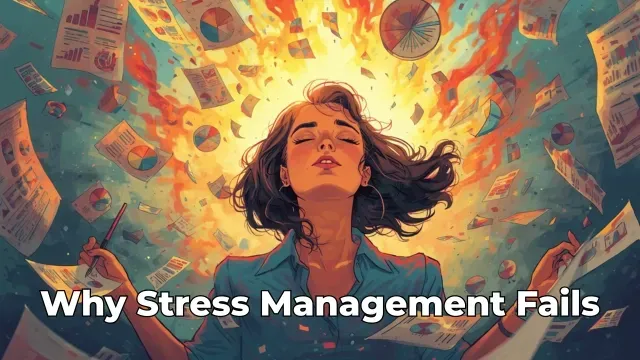
Why Stress Management Often Fails in the Workplace
Workplace stress management often fails because it focuses on helping employees cope with stress rather than helping them recover from it.
Many organisations invest in wellbeing initiatives with good intentions. They provide stress awareness training, wellbeing resources, employee assistance programmes, and occasional wellbeing events. While these can be valuable, many employers still report rising levels of stress, burnout, absenteeism, and disengagement.
The challenge is not necessarily a lack of information. Most employees already know that stress can affect their health and wellbeing. The real challenge is that understanding stress and recovering from stress are two very different things.
As discussed in What Is Nervous System Regulation at Work?, the body's stress response plays a major role in how employees experience pressure, recover from challenges, and maintain resilience over time.
This article explores why many workplace stress management programmes produce limited results and what organisations can do differently to create more sustainable wellbeing outcomes.
"Many stress management initiatives teach people about stress. Far fewer teach people how to recover from it."
Explore Our Corporate Wellbeing Services
If your organisation is looking to strengthen resilience, improve wellbeing, reduce stress, and create a healthier workplace culture, explore our Corporate Wellbeing Hub.
From workshops and leadership development to nervous system regulation and team wellbeing programmes, you'll find practical solutions designed for modern organisations.
Explore the Corporate Wellbeing Hub

The Problem With Information-Based Wellbeing Programmes
Many workplace stress management initiatives are built around education. Employees attend a workshop, complete an online course, read a wellbeing guide, or listen to a presentation about stress.
Education is important. People need to understand how stress affects their health, performance, and wellbeing. However, information alone rarely creates lasting behavioural change.
Most employees already know that sleep is important, exercise is beneficial, and chronic stress can be harmful. Yet many still struggle with stress, exhaustion, and burnout.
This happens because stress is not purely an intellectual experience. It is also a physiological experience. When people are overwhelmed, the nervous system can shift into patterns that are difficult to change through knowledge alone.
An employee may understand exactly what they should do to manage stress, but still find themselves unable to switch off, relax, prioritise recovery, or establish healthier habits.
This is why some organisations become frustrated when wellbeing initiatives fail to deliver the expected results. The issue is often not a lack of awareness. The issue is that awareness alone does not always change how the body responds to pressure.
Organisations that achieve stronger wellbeing outcomes often combine education with practical tools, supportive leadership, healthy workplace culture, and opportunities for employees to develop new recovery habits.
"Knowledge can increase awareness, but awareness alone does not always create change. Lasting wellbeing often requires practical experiences that help people respond to stress differently."
Stress Is Often Treated as an Individual Problem
Another reason workplace stress management can fail is that stress is sometimes viewed as an issue that employees must solve on their own.
Employees may be encouraged to become more resilient, attend wellbeing sessions, practise mindfulness, or improve their work-life balance. While these approaches can be helpful, they do not always address the workplace conditions contributing to stress in the first place.
For example, an employee may attend a stress management workshop on Friday but return on Monday to unrealistic workloads, constant interruptions, unclear expectations, or a culture that rewards overwork.
In these situations, the organisation may be attempting to treat the symptoms while leaving the underlying causes unchanged.
This does not mean that personal wellbeing practices are unimportant. Rather, it highlights the need for a balanced approach. Sustainable workplace wellbeing requires both individual support and organisational responsibility.
As explored in What Should Be Included in a Workplace Wellbeing Strategy? and Is Employee Wellbeing the Responsibility of HR?, effective wellbeing strategies involve leadership, culture, communication, workload management, and employee support working together.
When organisations recognise that workplace stress is influenced by both people and systems, they are often able to create more meaningful and lasting change.
"Employees play a role in managing their wellbeing, but organisations also play a role in creating conditions that support or undermine it."
Many Stress Management Approaches Ignore Recovery
A common assumption in workplace stress management is that reducing stress should be the primary goal.
While reducing unnecessary stress is important, it is not always possible. Most organisations will continue to experience deadlines, change, growth, uncertainty, and periods of increased demand.
The question is not whether employees will experience pressure. The question is whether they have opportunities to recover from that pressure.
Recovery is often the missing piece.
Employees may spend hours moving from one meeting to another, responding to emails, solving problems, and managing competing priorities. Even when the workload is manageable, the nervous system may receive very few signals that it is safe to relax and reset.
Over time, this can create a cycle where employees become increasingly tired, reactive, and overwhelmed despite participating in wellbeing initiatives.
This is one reason why nervous system regulation is becoming an important part of modern workplace wellbeing. Rather than focusing solely on reducing stress, it also focuses on improving recovery.
As discussed in How Do You Promote Wellbeing in the Workplace?, wellbeing is often strengthened when organisations create regular opportunities for movement, breathing, reflection, connection, and meaningful breaks throughout the working day.
The most effective workplace stress management strategies recognise that resilience is built not only through challenge but also through recovery.
"Pressure is part of working life. Recovery is what helps people remain healthy, engaged, and resilient in the face of that pressure."
The Missing Role of the Nervous System
Traditional workplace stress management programmes often focus on thoughts, behaviours, and coping strategies. While these areas are important, they may overlook a crucial part of the stress response: the nervous system itself.
When people experience ongoing pressure, the body can become conditioned to remain alert, vigilant, and prepared for potential threats. This response is not a conscious choice. It is an automatic survival mechanism designed to keep us safe.
The challenge is that the nervous system does not always distinguish between a genuine physical threat and a demanding inbox, difficult conversation, organisational change, or heavy workload.
As a result, employees may continue to experience symptoms of stress even when they understand what is happening and genuinely want to feel calmer.
This is why some people leave a stress management workshop feeling inspired but struggle to apply what they have learned once they return to a busy working environment.
Nervous system regulation approaches recognise that sustainable wellbeing often involves more than changing mindset alone. It may also involve helping the body experience greater safety, balance, and recovery through practical techniques and supportive workplace environments.
This growing understanding is one reason why organisations are increasingly exploring Nervous System Regulation at Work as part of their wider Corporate Wellbeing strategy.
"People do not always struggle because they lack knowledge. Sometimes they struggle because their nervous system has not yet had the opportunity to recover from prolonged stress."
What Effective Workplace Stress Management Looks Like
Effective workplace stress management is rarely built around a single workshop, wellbeing day, or awareness campaign.
Instead, it is usually created through a combination of culture, leadership, education, practical skills, and ongoing support.
Successful organisations recognise that wellbeing is not a one-off event. It is something that develops through daily experiences and workplace habits.
This may include providing employees with practical recovery tools, encouraging healthy boundaries, promoting psychological safety, reviewing workload expectations, and helping leaders model sustainable behaviours.
It also involves creating opportunities for employees to build resilience before stress becomes overwhelming rather than waiting until problems become severe.
Many organisations are now moving towards a more integrated approach that combines traditional wellbeing initiatives with practical stress recovery techniques, leadership development, and nervous system awareness.
As explored in Corporate Wellbeing Programmes, long-term wellbeing improvements are often achieved when wellbeing becomes part of the organisational culture rather than an occasional intervention.
The goal is not to eliminate every source of pressure. The goal is to help employees navigate challenges more effectively while maintaining their health, wellbeing, and performance.
"The most effective stress management strategies do not simply teach employees how to cope. They help create workplace cultures that support resilience, recovery, and sustainable performance."
Related Workplace Wellbeing Resources
If you would like to explore additional approaches that support stress recovery, resilience, nervous system regulation, and workplace wellbeing, these resources may be helpful:
What Is Nervous System Regulation at Work? — Learn how the nervous system influences stress, recovery, resilience, and workplace wellbeing.
Burnout and the Nervous System: What Every Employer Should Know — Understand how prolonged stress and insufficient recovery can contribute to burnout.
Workplace Resilience Starts in the Body — Explore why resilience depends on recovery, regulation, and nervous system health.
Emotional Regulation for Employees: A Practical Workplace Guide — Discover how emotional regulation supports resilience, communication, and wellbeing.
Breathwork for Workplace Stress: Simple Techniques for Busy Teams — Learn practical breathing techniques that help employees recover from stress and regain focus.
How the Bright Beings Academy Supports Workplace Stress Management
At the Bright Beings Academy, we believe that effective workplace stress management begins with understanding how stress affects both the mind and the body.
Many employees already know that stress can impact their wellbeing. What they often need are practical tools that help them recognise stress earlier, recover more effectively, and build resilience over time.
Our Corporate Wellbeing Workshops provide practical and engaging experiences that help employees understand stress, improve self-awareness, and develop healthier responses to workplace pressure.
For organisations seeking a more strategic approach, our Corporate Wellbeing Programmes support long-term wellbeing through education, leadership development, wellbeing planning, and culture change.
We also offer dedicated Nervous System Regulation at Work services that help employees and leaders understand the connection between stress, recovery, resilience, and performance.
Rather than focusing solely on stress reduction, our approach helps organisations create environments where employees can recover effectively, adapt to challenges, and sustain their wellbeing over the long term.
"Sustainable wellbeing is built when organisations support both performance and recovery, helping employees remain resilient through the realities of modern working life."
Final Thoughts
Many workplace stress management initiatives fail not because organisations do not care about employee wellbeing, but because they focus on only part of the problem.
Providing information about stress is valuable. Offering wellbeing resources is valuable. Running workshops can also be valuable. However, these approaches are often most effective when they are supported by healthy workplace culture, practical recovery strategies, and an understanding of how the nervous system responds to pressure.
As organisations continue to face changing demands, the conversation around workplace wellbeing is evolving. More employers are recognising that resilience is not simply about helping employees tolerate more stress. It is about helping them recover from stress more effectively.
When wellbeing strategies address both the causes of stress and the body's response to stress, they are often more likely to create meaningful and lasting results.
This shift from stress management alone towards stress recovery and nervous system regulation may be one of the most important developments in workplace wellbeing today.
Support Your Workplace Wellbeing Journey
If your organisation is looking to move beyond traditional workplace stress management and create a more sustainable approach to employee wellbeing, the Bright Beings Academy can help.
Our services are designed to support employees, managers, and leadership teams with practical tools that help improve resilience, stress recovery, emotional wellbeing, and workplace performance.
Explore our services:
Corporate Wellbeing — Discover a whole-organisation approach to employee wellbeing and resilience.
Nervous System Regulation at Work — Learn how stress affects the body and how employees can develop healthier recovery patterns.
Corporate Wellbeing Workshops — Interactive workshops covering stress management, resilience, emotional wellbeing, breathwork, and workplace wellbeing.
Corporate Wellbeing Programmes — Longer-term wellbeing solutions designed to create lasting organisational change.
Leadership and Team Wellbeing — Support leaders in creating healthier, more resilient workplace cultures.

Frequently Asked Questions About Workplace Stress Management
What is workplace stress management?
Workplace stress management refers to the strategies, practices, and support systems organisations use to help employees manage pressure, maintain wellbeing, and reduce the negative effects of stress at work.
Why do many workplace stress management programmes fail?
Many programmes focus on raising awareness about stress without addressing recovery, workplace culture, workload pressures, or nervous system regulation. Employees may understand stress but still struggle to recover from it effectively.
Is stress always harmful in the workplace?
No. Short periods of stress can help people focus, solve problems, and meet challenges. Difficulties often arise when stress becomes prolonged and employees have insufficient opportunities to recover.
What is the difference between stress management and nervous system regulation?
Stress management often focuses on coping with pressure. Nervous system regulation focuses on how the body responds to stress and how employees can recover, regain balance, and build resilience over time.
How can organisations reduce workplace stress?
Organisations can support employee wellbeing by creating psychologically safe workplaces, managing workloads effectively, encouraging healthy boundaries, providing wellbeing support, and helping employees develop practical recovery skills.
What role do leaders play in workplace stress management?
Leaders have a significant influence on workplace culture. Their communication style, expectations, behaviours, and approach to wellbeing can affect how employees experience and respond to workplace pressure.
Can workplace wellbeing workshops reduce stress?
Workshops can be highly valuable when they provide practical tools and form part of a wider wellbeing strategy. They are often most effective when combined with leadership support, organisational commitment, and ongoing wellbeing initiatives.
Why is recovery important for workplace resilience?
Recovery allows employees to restore energy, maintain focus, and reduce the long-term effects of stress. Without recovery, pressure can accumulate over time and increase the risk of burnout and disengagement.
Further Reading
What Is Nervous System Regulation at Work? — Learn how the nervous system influences stress, recovery, resilience, and workplace wellbeing.
What Is Workplace Wellbeing? — Explore the foundations of workplace wellbeing and why it matters for modern organisations.
What Is Employee Wellbeing and Why Does It Matter? — Understand the key factors that influence employee wellbeing, engagement, and performance.
What Should Be Included in a Workplace Wellbeing Strategy? — Discover the essential elements of an effective wellbeing strategy.
How Do You Promote Wellbeing in the Workplace? — Practical ways to encourage healthier workplace habits and behaviours.
How Do You Measure Wellbeing in the Workplace? — Learn how organisations can assess wellbeing outcomes and track progress.
Is Employee Wellbeing the Responsibility of HR? — Explore the shared responsibilities of HR, leaders, managers, and employees.
Evidence Sources
World Health Organization (WHO) — Guidance on mental health, stress, and wellbeing in the workplace.
Health and Safety Executive (HSE) — UK guidance on managing workplace stress and promoting healthy working environments.
Chartered Institute of Personnel and Development (CIPD) — Research and best practice relating to employee wellbeing and organisational culture.
National Institute for Health and Care Excellence (NICE) — Evidence-based recommendations for workplace health and wellbeing.
UK Health Security Agency (UKHSA) — Information on public health, prevention, and workforce wellbeing.
I look forward to connecting with you in my next post.
Until then, be well and keep shining.
Peter. :)