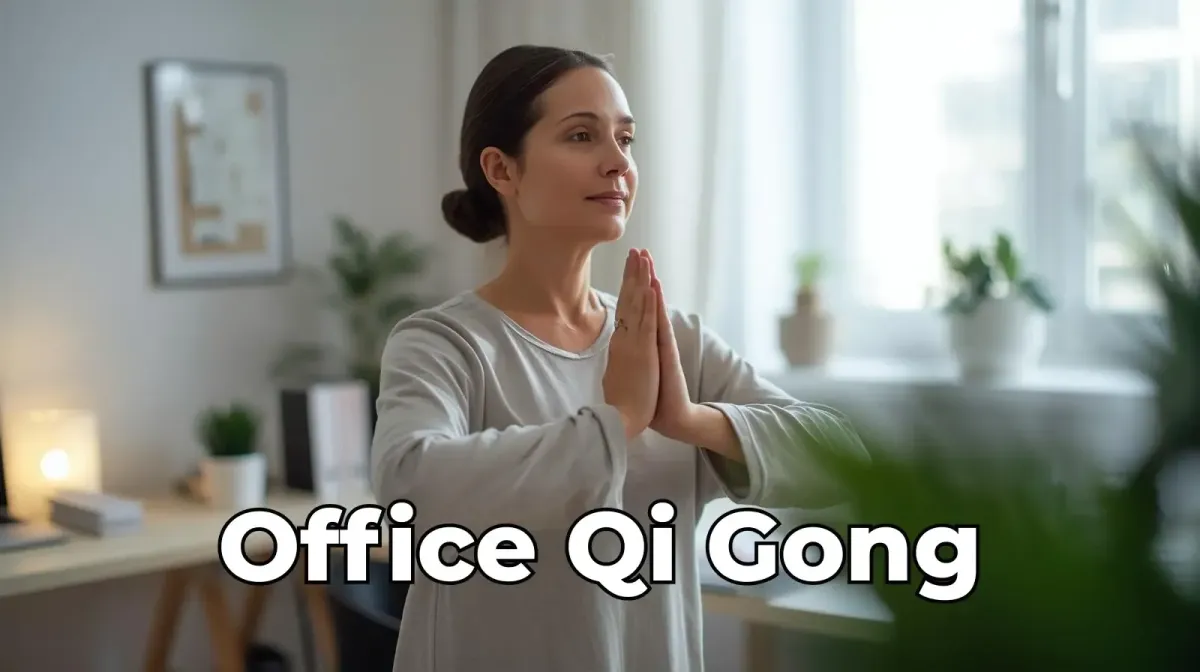
Desk Qigong Office Breaks: Simple Ways to Reset Tension During the Workday
Desk qigong office breaks are a simple way to release tension, improve posture, and restore energy during the working day. If you spend hours at a desk, it is natural to feel stiffness in the shoulders, tightness in the back, and a gradual loss of focus. These short, gentle movements give your body a chance to reset without needing to leave your workspace.
Qi Gong itself is a gentle practice that combines movement, breath, and awareness to support the body’s natural balance. If you would like a deeper understanding of where it comes from and how it works, you can explore What Is Qi Gong? Origins, Principles & Benefits.
Rather than waiting until the end of the day to recover, desk qigong helps you bring small moments of balance back into your routine. Just a few minutes at a time can ease physical strain, calm the nervous system, and help you return to your work with more clarity and steadiness.
If you are looking for a fuller seated practice you can follow more consistently, you can explore Chair Qi Gong for Office.
If you are completely new to Qi Gong, you may also find it helpful to begin with Qi Gong for Beginners: The Complete Guide to Energy, Health, and Inner Balance.
Learn Qi Gong at home at the Bright Beings Academy

Why Desk Work Drains Your Energy
Spending long hours at a desk may feel mentally demanding, but it also places a quiet strain on the body. Over time, this creates patterns that reduce both physical comfort and overall energy.
Most desk work leads to a gradual collapse in posture. The shoulders round forward, the head moves slightly ahead of the spine, and the chest becomes compressed. This position restricts natural breathing, making each breath shallower and less supportive.
At the same time, the body becomes still for extended periods. Circulation slows, muscles tighten, and the natural rhythm of movement is interrupted. This can lead to stiffness in the neck and back, heaviness in the limbs, and a sense of fatigue that builds throughout the day.
There is also a subtle effect on the nervous system. Continuous screen focus and mental effort can keep the mind in a heightened state, while the body remains inactive. This imbalance often leaves you feeling both tired and wired at the same time.
Desk qigong office breaks work by gently interrupting these patterns. Instead of pushing through discomfort, they offer small moments of movement and breath that help restore balance before tension builds too far.
If you are looking for even more simple workplace practices, you may also enjoy Office Desk Qi Gong: 5-Minute Breaks for Energy and Focus at Work
How Desk Qigong Helps During the Workday
Desk qigong office breaks offer a simple way to restore balance without interrupting your workflow. Instead of waiting until discomfort builds, these short moments of movement and breath help you reset throughout the day.
The first shift often comes through posture. Gentle movements open the chest, soften the shoulders, and allow the spine to return to a more natural alignment. This alone can ease tension and reduce the strain that builds from prolonged sitting.
Breathing also begins to change. As the body opens, the breath deepens naturally. This supports better oxygen flow, steadies the nervous system, and helps the mind settle. Many people notice that even a minute or two of slower breathing can bring a sense of calm and clarity.
There is also a benefit to circulation. Small, repeated movements encourage blood flow and reduce the stiffness that comes from staying in one position. This can leave the body feeling lighter and more responsive, rather than heavy or sluggish.
Perhaps most importantly, desk qigong creates a rhythm in your day. Instead of pushing through long periods of tension, you begin to include small resets that help you stay steady. Over time, these short breaks can support both focus and wellbeing in a way that feels sustainable rather than forced.
Simple Desk Qigong Exercises You Can Do at Work
These desk qigong office breaks are designed to be simple, gentle, and easy to return to throughout your day. You do not need to complete them all at once. Even one or two movements can create a noticeable shift.
1. Centring Breath
Sit comfortably with your feet grounded and your hands resting on your lower abdomen.
Breathe in slowly through the nose, allowing the belly to expand.
Breathe out gently through the mouth, letting the shoulders soften.
Let your attention settle into the rhythm of your breath.
Why it helps:
This brings the mind out of constant activity and supports a calmer, more stable nervous system.
2. Shoulder Release
As you inhale, slowly lift your shoulders towards your ears.
As you exhale, roll them back and down.
Repeat this movement slowly several times, keeping the motion smooth and unforced.
Why it helps:
This releases the tension that builds across the upper back and chest during desk work.
3. Spinal Wave
Place your hands lightly on your thighs.
As you inhale, gently lift the chest and allow the spine to arch slightly.
As you exhale, round the back softly and let the head follow.
Move slowly, like a wave travelling through the spine.
Why it helps:
This restores movement to the spine and relieves pressure in the lower back.
4. Gentle Seated Twist
Place one hand on the opposite thigh and the other behind you.
Inhale to lengthen the spine.
Exhale and gently rotate, only as far as feels comfortable.
Return to centre and repeat on the other side.
Why it helps:
This supports spinal mobility and helps counter the stillness of desk work.
5. Palm Warming and Eye Rest
Rub your hands together until they feel warm.
Gently place your palms over your closed eyes without pressing.
Take a few slow breaths and allow the muscles around the eyes to soften.
Why it helps:
This reduces screen fatigue and helps the mind settle.
You can return to these movements at any point in your day. There is no need to follow a strict order. The value comes from small, consistent resets rather than doing everything perfectly.
How to Build Desk Qigong Into Your Daily Routine
Desk qigong office breaks work best when they become a natural part of your day, rather than something extra you feel you have to remember. The aim is not to do more, but to gently interrupt long periods of tension with small moments of movement and breath.
A simple way to begin is to link these breaks to moments that already exist in your routine. For example, you might pause for a few breaths before opening your emails, after finishing a meeting, or when you notice your shoulders tightening. This removes the need to rely on motivation or memory.
You can also keep the practice very small. One movement, one breath cycle, or a brief reset is enough. Over time, these small moments begin to add up, creating a steady rhythm through your day rather than a single effort at the end of it.
It can help to notice how your body feels before and after each break. A slight release in the shoulders, a deeper breath, or a clearer mind is often enough to reinforce the habit naturally. There is no need to measure or track progress. The experience itself becomes the guide.
The key is consistency without pressure. Gentle, regular resets will always be more supportive than occasional effort.
From Desk Breaks to a Deeper Practice
Desk qigong office breaks are a simple and supportive way to care for your body during the working day. They help reduce tension, improve posture, and bring moments of calm back into your routine. For many people, this is where the journey begins.
Over time, you may notice that these short breaks create a desire for something a little more consistent. Instead of only resetting when discomfort appears, you may feel drawn to a practice that builds steadiness and balance more deeply.
This is where a more structured, seated approach can be helpful. A regular practice allows the breath, movement, and awareness to work together more fully, supporting not only physical ease but also mental clarity and emotional balance.
If you would like to explore that next step, you can continue with Chair Qi Gong for Office. This will guide you through a more complete seated routine designed specifically for office workers and home environments.
If you are new to Qi Gong and would like a broader foundation, you can also return to Qi Gong for Beginners: The Complete Guide to Energy, Health, and Inner Balance to understand how these simple practices fit into a wider system.
There is no need to rush. These small desk breaks are already a meaningful step. When you are ready, you can simply allow the practice to grow naturally from there.
Final Thoughts
Desk qigong office breaks do not need to be complicated to be effective. Small, consistent moments of movement and breath can gently shift how your body feels throughout the day. Rather than waiting for tension to build, you begin to meet it early with simple, supportive practices.
Over time, these short pauses can help restore a sense of balance in both body and mind. The key is not intensity or perfection, but regular, steady attention. Even a few mindful breaths or a gentle movement can bring you back to yourself in the middle of a busy day.
Next Steps
If you are ready to take this a little further, the next step is to move from short desk breaks into a more consistent and supportive practice.
You can begin by exploring Chair Qi Gong for Office, where you will find a more complete seated routine designed specifically for work and home environments.
If you are looking for a deeper foundation, you may also find it helpful to follow Qi Gong for Beginners: The Complete Guide to Energy, Health, and Inner Balance, which brings together the core principles, movements, and understanding behind the practice.
From there, you can gently build a rhythm that supports your energy, posture, and wellbeing in a way that feels natural and sustainable.
FAQs: Desk Qigong Office Breaks
What are desk qigong office breaks?
Desk qigong office breaks are short, simple movements and breathing practices you can do at your desk to reduce tension, improve posture, and restore energy during the working day.
How often should I practise desk qigong at work?
You can practise whenever you feel tension building. Even one or two short breaks during the day can make a noticeable difference over time.
Do I need special clothing or space?
No. Desk qigong is designed to be done in everyday work clothes, using the space you already have.
Can desk qigong replace a full practice?
It is a helpful starting point, but a more structured routine will offer deeper benefits. You can explore this in Chair Qi Gong for Office.
Is desk qigong suitable for beginners?
Yes. These practices are gentle, accessible, and ideal for those new to Qi Gong. For a full introduction, you can follow Qi Gong for Beginners: The Complete Guide to Energy, Health, and Inner Balance.
Further Reading
If you would like to explore this practice more deeply, these articles will help you build gently from short desk breaks into a more consistent and supportive routine:
This is the natural next step from desk qigong office breaks. It offers a more structured, fully seated routine that you can follow regularly, helping you build consistency, improve posture, and develop a deeper connection between breath and movement throughout your workday.
Qi Gong for Beginners: The Complete Guide to Energy, Health, and Inner Balance
If you are new to Qi Gong, this guide will help you understand the foundations behind the practice. It explains how breath, movement, and awareness work together, giving you the context to make your desk qigong practice feel more meaningful and effective over time.
What Is Qi Gong? Origins, Principles & Benefits
This cornerstone article offers a broader view of Qi Gong, including its history, principles, and the benefits it can bring to both body and mind. It is helpful if you want to understand the deeper roots of the simple practices you are using during your workday.
I look forward to connecting with you in my next post.
Until then, be well and keep shining.
Peter. :)