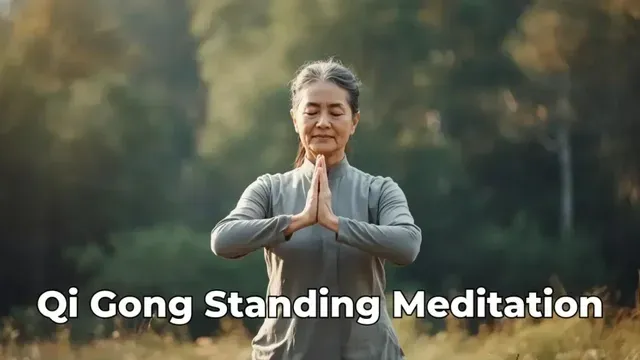
Standing Meditation (Zhan Zhuang): Build Calm, Strength and Energy in 5 Minutes
Standing meditation Qi Gong, often known as Zhan Zhuang, is the stillness side of practice. If you are new to this world, it helps to begin with What Is Qi Gong? Origins, Principles & Benefits, because standing practice makes more sense when you understand the wider purpose of Qi Gong.
Unlike flowing forms, standing meditation Qi Gong asks you to become still. You hold a relaxed, aligned posture and allow subtle internal adjustments to happen naturally.
From the outside, it looks very simple. You stand. You breathe. You soften. Yet inside, a great deal begins to change. Your joints stack more cleanly, your muscles release unnecessary effort, and your breath starts to deepen without force.
This is why the practice is so powerful. Standing meditation Qi Gong teaches the body to organise itself efficiently. Strength develops without strain, and the mind settles because the body is no longer bracing in the same way.
You can think of it as standing like a tree—steady through the feet, gently rising through the spine, and soft through the arms and chest. Rooted, calm, and quietly alive.
Over time, this practice builds posture, balance, internal awareness, and a more grounded relationship with your own energy. It is especially supportive on days when you want depth without intensity.
If you are new and want a structured path, the Qi Gong for Beginners: The Complete Guide to Energy, Health, and Inner Balance will guide you step by step.
"Standing meditation Qi Gong is a still, grounded practice that helps your body align, your mind settle, and your energy build, without force or complexity."
Learn Qi Gong at home at the Bright Beings Academy
5 ⭐⭐⭐⭐⭐ Rating On Google Reviews

Why Standing Meditation Qi Gong Works So Effectively
Standing meditation Qi Gong works because it brings the body back into natural alignment, where less effort is needed to function well. When your structure improves, everything else begins to follow.
Firstly, alignment frees energy. When your bones are stacked correctly, your muscles no longer need to grip and compensate. This reduces unnecessary tension and allows your breath to move more freely through the body.
Secondly, stillness builds strength in a gentle, sustainable way. Small stabilising muscles begin to activate, particularly in the legs, hips, and core. Over time, this creates a feeling of quiet strength rather than forceful effort.
Your breath also plays a key role. A soft, slightly longer exhale signals safety to the nervous system. As the body settles, the mind naturally follows. Thoughts begin to slow, not because you are trying to stop them, but because there is less internal pressure driving them.
Another reason this practice is so effective is its simplicity. There is nothing to remember, no choreography to follow. This removes performance from the equation and allows you to simply be present in your body.
This is where standing meditation Qi Gong becomes deeply accessible. Even on low-energy days, you can stand, breathe, and allow the system to recalibrate itself.
"Standing meditation Qi Gong works by aligning your body, calming your breath, and gently activating strength—so your mind and energy can settle naturally."
Standing Meditation Qi Gong Posture Fundamentals (The Stack)
Good posture is the foundation of standing meditation Qi Gong. You do not need to be perfect, but you do need to be aligned enough that the body can relax into itself rather than hold itself up through tension.
Think of this as a simple five-point map you return to each time you practise.
Feet and Grounding
Stand with your feet around hip-width apart. Let your toes relax and spread naturally. Your weight should feel centred—not leaning forward onto the toes or back into the heels.
Imagine your feet gently widening into the floor, as if roots are growing beneath you. This creates stability without stiffness.
Knees and Hips
Keep a soft bend in the knees. Never lock them. The knees should track in line with the middle of your feet.
Let your hips settle slightly back and down, as if you are sitting on a tall stool. Your pelvis stays neutral—not tucked tightly, not pushed forward.
Lower Belly (Lower Dahn Jon)
Bring your awareness to the space just below your navel. Let this area soften and expand naturally with the breath.
Avoid holding or bracing the belly. In standing meditation Qi Gong, this area acts as your centre of gravity and your energetic anchor.
Spine and Upper Body
Allow the spine to lengthen gently upwards. Imagine the crown of your head being lifted lightly, creating space through the neck.
Let the ribs soften downwards on the exhale so the chest does not puff or collapse. The back of the body should feel wide and supported.
Shoulders, Arms and Hands
Relax the shoulders so they drop naturally. Let the elbows feel heavy and slightly away from the body.
Your hands can rest by your sides or float in front of you as if holding a soft ball. Keep the fingers relaxed and gently curved.
Breath and Gaze
Breathe quietly through the nose. Let the exhale be slightly longer than the inhale, without forcing it.
Your gaze can be soft at eye level, or your eyes can close if that feels safe and steady.
Take a moment to scan your whole body. Where can you release just a little more effort?
"Standing meditation Qi Gong posture is about soft alignment—feet grounded, knees relaxed, spine lengthened, and breath flowing without force."
5-Minute Standing Meditation Qi Gong (Follow-Along Foundation)
You do not need a long session to feel the benefits of standing meditation Qi Gong. Even five minutes can begin to settle the mind, organise the body, and build quiet energy.
Set a gentle timer, stand comfortably, and follow this simple structure.
Minute 0–1 — Arrive and Settle
Stand in your posture. Let your attention move slowly from your feet up to your head.
Breathe in through the nose for a count of four, and out for a count of six to eight. With each exhale, release a little tension from the jaw, shoulders, and belly.
Minute 1–2 — Soften and Align
Check your knees again—soft, not locked. Let your hips settle slightly.
Feel your feet spreading into the ground. Allow your weight to drop down rather than hold yourself up.
Minute 2–3 — Hold the Ball
Bring your arms up in front of your chest, as if gently holding a ball.
Keep the shoulders relaxed and the elbows slightly away from the body. Your hands should feel light, not tense.
Let your breath stay quiet and steady.
Minute 3–4 — Release the Upper Body
With each exhale, allow your ribs to soften downward.
Let your face relax. Your tongue rests gently in the mouth. If thoughts arise, notice them and return to the feeling of your breath.
Minute 4–5 — Gather and Settle
Bring one or both hands to your lower belly.
Feel your breath moving into this space. Imagine your attention and energy gently collecting here.
Allow a sense of warmth or calm to build naturally.
Closing (15–30 seconds)
Lower your arms slowly. Take a small pause before moving.
Notice how your body feels now compared to when you started.
If your legs feel shaky or heavy, soften the shoulders and jaw again. Let the body release rather than push through.
"A 5-minute standing meditation Qi Gong practice gently relaxes your body, steadies your breath, and gathers your energy without effort."
Common Mistakes in Standing Meditation Qi Gong (and How to Fix Them)
Standing meditation Qi Gong looks simple, but small habits can make it feel uncomfortable or ineffective. The good news is that each mistake has a gentle correction.
Locked Knees
One of the most common issues is locking the knees. This creates stiffness and can restrict circulation.
Instead, keep a soft micro-bend. Your legs should feel springy and alive, not rigid.
Lifting the Chest
Many people unconsciously lift the chest, thinking it improves posture. In reality, this creates tension and blocks natural breathing.
Allow the front ribs to soften down on the exhale. Let the breath move into the lower belly and back.
Tight Shoulders
Holding tension in the shoulders can quickly lead to fatigue.
Imagine the shoulders melting downward. Let the elbows feel slightly heavy so the upper body can relax.
Clenched Hands
If your hands are tight, the rest of your body often follows.
Keep the fingers gently curved, as if holding something soft and delicate.
Over-Focusing
Trying too hard to “do it right” can create mental tension.
Instead of narrowing your focus, widen it. Feel both feet, both hands, and your whole body at once. Let awareness be open rather than forced.
Holding the Breath
Sometimes the breath becomes controlled or restricted without you noticing.
Return to a natural rhythm. Quiet, smooth, and slightly longer on the exhale.
These small adjustments make a big difference. Standing meditation Qi Gong is not about holding a perfect shape, but about allowing the body to settle into ease.
"Most mistakes in standing meditation Qi Gong come from tension—soften the body, ease the breath, and let the practice support you."
A Gentle 4-Week Progression for Standing Meditation Qi Gong
Standing meditation Qi Gong works best when it is approached with patience and consistency. You do not need to push for long sessions. A gradual build allows your body and nervous system to adapt safely.
Here is a simple way to grow your practice over four weeks.
Week 1 — Establish the Habit
Start with 3 to 5 minutes, most days of the week.
Focus on posture rather than duration. Let your body learn the feeling of standing with softness and alignment. Stop before you feel strain or resistance.
Week 2 — Build Familiarity
Increase to 5 to 7 minutes.
You can begin to explore different hand positions, such as holding the arms at chest level or resting them around the lower belly. Keep everything relaxed and unforced.
Week 3 — Add Depth
Extend to 8 to 10 minutes.
At this stage, you may notice your breath becoming quieter and your mind settling more easily. You can also begin to include a short standing meditation at the end of a moving Qi Gong session.
Week 4 — Create Stability
Practise for 10 to 12 minutes.
Alternate between eyes open and softly closed. Pay attention to your balance, breath depth, and overall sense of calm. Let the practice feel steady rather than effortful.
Consistency matters more than duration. A few minutes each day will take you further than occasional long sessions.
Standing meditation Qi Gong becomes powerful when it is part of your rhythm, not something you have to force yourself into.
"Build your standing meditation Qi Gong practice gradually—short, consistent sessions create lasting calm, strength, and stability."
When and How Often to Practise Standing Meditation Qi Gong
One of the strengths of standing meditation Qi Gong is its flexibility. You do not need the perfect time or long sessions to benefit. What matters most is choosing moments that feel supportive and repeatable.
Morning — Set a Steady Tone
Practising in the morning can help you begin the day feeling grounded and clear.
Even a few minutes of standing meditation Qi Gong can improve posture, steady your breath, and create a sense of calm focus before the day begins.
Evening — Unwind and Settle
In the evening, this practice can gently shift your body out of a heightened state.
A soft, longer exhale helps your system down-regulate, making it easier to release tension and prepare for rest.
During the Day — Reset and Re-centre
You can also use standing meditation Qi Gong as a short reset during the day.
Two or three minutes before a meeting, after a stressful moment, or when your mind feels scattered can make a noticeable difference.
How Long Is Enough?
Start with 3 to 5 minutes.
Many people begin to feel calmer and more stable within a couple of weeks of daily practice. Over time, 10 to 15 minutes becomes a natural and comfortable range.
There is no need to push beyond this unless it genuinely feels supportive.
The key is not to find more time, but to create a small, consistent rhythm that your body begins to trust.
"Standing meditation Qi Gong fits easily into your day—short, consistent moments in the morning, evening, or between tasks are enough to create real change."
How Standing Meditation Qi Gong Fits with the Wider Practice
Standing meditation Qi Gong is not separate from the rest of your practice. It is the foundation that supports everything else.
If movement is the flow, standing is the anchor.
In many traditions, stillness comes either before or after movement. Movement helps release surface tension, open the joints, and circulate energy. Standing meditation then gathers and stabilises that energy, allowing it to settle more deeply in the body.
If you are exploring different styles, this balance becomes clearer through Dynamic vs Meditative Qi Gong, where both approaches are shown to complement each other rather than compete.
Standing meditation Qi Gong is also closely connected to internal development. As your posture improves and your breath deepens, your awareness begins to settle into the body. This is where practices such as Qi Gong Energy Cultivation naturally evolve—less about doing, and more about feeling and refining.
For many beginners, it can feel tempting to skip stillness and focus only on movement. But in reality, standing meditation Qi Gong is what gives depth to everything else you do.
A simple structure might look like this:
A few minutes of gentle movement to release tension
A short standing meditation to gather and stabilise
A quiet close with awareness in the lower belly
This creates a complete practice without needing complexity or long sessions.
Over time, you may find that standing becomes the most valuable part—not because it is difficult, but because it is honest. It shows you exactly where tension is held, and gives you space to release it.
Not every useful form of exercise has to involve vigorous movement. Standing practices can gently challenge posture, balance and muscular endurance while remaining accessible for many people. What Is the Best Exercise to Boost the Immune System? explains how different types of physical activity can contribute to immune health and why the most suitable approach depends on your needs, fitness and ability to recover well.
"Standing meditation Qi Gong anchors your practice—movement creates flow, but stillness gathers, stabilises, and deepens your energy."
Final Thoughts
Standing meditation Qi Gong reminds us that depth does not come from doing more, but from allowing more.
There is nothing complicated here. You stand, you breathe, and you soften. Yet within that simplicity, your body begins to reorganise, your mind becomes quieter, and your energy steadies in a way that feels natural rather than forced.
This practice meets you exactly where you are. On busy days, it gives you a reset. On low-energy days, it offers support without demand. Over time, it becomes something you can return to again and again—a quiet place of balance within yourself.
You do not need to chase progress. You simply need to show up, gently and consistently, and let the practice do its work.
Standing meditation Qi Gong is not about perfection. It is about presence.
Next Steps
If standing meditation Qi Gong resonated with you, the most helpful next step is to keep things simple and consistent.
Start with just five minutes a day. Let your body become familiar with stillness. Let your breath settle naturally. Over time, this small practice can create a steady foundation for both your health and your energy.
If you would like a clear, supportive path to follow, the 7-Day Qi Gong for Beginners Course gives you a simple structure to build your practice step by step. You will be guided through gentle routines, posture, and breath so everything feels safe and easy to follow.
From there, you can deepen your journey through the Bright Beings Academy membership. Inside, you will find:
Step-by-step Qi Gong programmes
Standing and moving practices for different energy levels
Weekly live sessions for guidance and support
A structured path you can return to again and again
This allows you to move at your own pace while staying consistent, which is where real change begins.
Take one small step. Keep it steady. Let the practice unfold naturally.
FAQs — Standing Meditation Qi Gong
How long should I practise standing meditation Qi Gong?
Start with 3 to 5 minutes a day. As your body becomes more comfortable, you can gradually increase to 10–15 minutes. Consistency matters far more than duration.
Should I feel my legs working during standing meditation Qi Gong?
Yes, a gentle warmth or light trembling in the legs is common. This shows your stabilising muscles are engaging. It should feel active but not painful. If it becomes uncomfortable, soften your knees and reduce the time.
Is standing meditation Qi Gong safe for beginners?
Yes, it is one of the safest entry points into Qi Gong when practised gently. Keep your knees slightly bent, avoid forcing your posture, and take breaks if needed. If you have medical concerns, adapt the practice or seek advice.
Can I do standing meditation Qi Gong every day?
Yes. Daily practice is ideal, even if it is only a few minutes. Short, regular sessions help your body and nervous system adapt more naturally than occasional longer ones.
What should I focus on during standing meditation Qi Gong?
Keep your attention simple. Feel your feet on the ground, your breath moving in the body, and your posture softening. If your mind wanders, gently return to your breath without judgement.
Can standing meditation Qi Gong help with stress and anxiety?
Yes, many people find it deeply calming. The combination of soft posture, steady breathing, and stillness helps the nervous system settle, which can reduce feelings of stress over time.
Further Reading — Standing Meditation Qi Gong
Internal (Deepen Your Practice)
What Is Qi Gong? Origins, Principles & Benefits
A clear foundation of Qi Gong principles so you understand how standing meditation fits into the bigger picture.Qi Gong for Beginners: The Complete Guide to Energy, Health, and Inner Balance
A step-by-step starting point to build a safe, structured practice beyond standing meditation.Dynamic vs Meditative Qi Gong
Understand how stillness (Zhan Zhuang) and movement complement each other in a complete practice.Qi Gong Energy Cultivation
Explore how practices like standing meditation support deeper internal energy development.
Scientific Evidence — Standing Meditation & Qi Gong
Here are carefully selected, relevant and real studies that support the benefits of standing meditation Qi Gong and closely related practices.
1. Qi Gong and Balance / Postural Control
Wayne et al. (2014) – Tai Chi and Qigong for Health: Patterns of Practice and Evidence
https://www.ncbi.nlm.nih.gov/pmc/articles/PMC3996151/This large review found consistent improvements in balance, postural control, and fall prevention across Qi Gong and Tai Chi practices, which include standing-based training.
2. Qi Gong and Mental Health / Stress Reduction
Wang et al. (2013) – The Effect of Qigong on Anxiety, Depression, and Psychological Well-Being
https://pubmed.ncbi.nlm.nih.gov/23357365/This meta-analysis showed that regular Qi Gong practice significantly reduced stress, anxiety, and depressive symptoms, supporting the calming effects seen in standing meditation.
3. Qi Gong and Physical Function / Strength
Jahnke et al. (2010) – A Comprehensive Review of Health Benefits of Qigong and Tai Chi
https://pubmed.ncbi.nlm.nih.gov/20594090/Findings include improved physical function, gentle strength development, and enhanced body awareness—all key outcomes of standing meditation practice.
4. Mind-Body Practices and Nervous System Regulation
Pascoe et al. (2017) – Psychobiological Effects of Meditation and Mind-Body Exercises
https://pubmed.ncbi.nlm.nih.gov/28470925/This review highlights how slow breathing and mindful stillness practices regulate the nervous system and reduce stress markers.
5. Qi Gong and Sleep / Wellbeing
Irwin et al. (2008) – Tai Chi and Sleep Quality in Older Adults
https://pubmed.ncbi.nlm.nih.gov/18567526/While focused on Tai Chi, the findings translate to Qi Gong: improved sleep quality and reduced inflammation markers through regular mind-body practice.
I look forward to connecting with you in my next post.
Until then, be well and keep shining.
Peter. :)