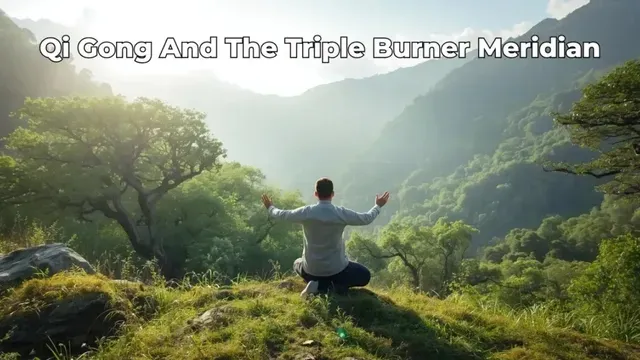
Triple Burner Meridian: Balance Heat, Fluids and Harmony
The triple burner meridian is often described as the body’s internal regulator. Rather than being a single physical organ, it works as a system that coordinates heat, fluids, and energy flow across the upper body (chest and lungs), the middle (digestion), and the lower (elimination).
When the triple burner meridian is flowing well, you may notice a sense of balance. Your body temperature feels steady. Your digestion feels lighter. Your mind begins to settle more easily in the evening. There is a quiet sense that things are working together, rather than pulling in different directions.
When this system becomes disrupted, the opposite can happen. You might feel overheated in the head but cold in the feet. You may experience bloating, fluid retention, or a sense of restlessness that appears as the day winds down. Emotionally, this can show up as feeling scattered or unable to fully switch off.
In Qi Gong, the triple burner is not something you force into balance. It is something you gently guide. Through breath, movement, and awareness, you begin to support the body’s natural ability to regulate itself.
If you are new to this way of understanding the body, it can help to begin with the foundations. What Is Qi Gong? Origins, Principles & Benefits offers a clear and grounded introduction to how energy, breath, and movement work together to restore balance.
"The triple burner meridian is your body’s way of coordinating heat, fluids, and energy across the whole system. When supported gently, it helps you move from restlessness and imbalance into a more settled, steady state of harmony."
Learn Qi Gong at home at the Bright Beings Academy
5 ⭐⭐⭐⭐⭐ Rating On Google Reviews

What Does the Triple Burner Meridian Do?
The triple burner meridian plays a unique role in the body. Rather than controlling a single function, it helps everything work together. It regulates how heat moves, how fluids are distributed, and how different systems communicate with each other.
In traditional terms, it is divided into three “burners”:
Upper burner (chest) — supports breathing, circulation, and the distribution of energy through the lungs and heart area
Middle burner (digestive system) — helps transform food into energy and fluids
Lower burner (pelvis) — supports elimination, fluid balance, and grounding
When the triple burner meridian is balanced, these three areas feel connected. Breath flows smoothly. Digestion feels steady. The body can release what it no longer needs without strain.
This is why the triple burner is often described as a bridge. It connects the work of other meridians so they can function as one coordinated system. If this coordination weakens, you may feel symptoms in multiple areas at once rather than in a single, clear place.
For example, you might notice digestive discomfort alongside tension in the ribs or restlessness in the evening. These are not separate issues. They are often signs that the body is struggling to regulate itself as a whole.
To understand this more deeply, it helps to see how the meridians work together as a system. The Qi Gong & the Meridian System: A Complete Guide (12 Primary + Ren & Du) explains how each channel supports the others and why balance is always a full-body experience.
"The triple burner meridian does not work in isolation. It coordinates the whole system, helping breath, digestion, and elimination move together in a steady and balanced way."
Pathway of the Triple Burner Meridian
The triple burner meridian follows a pathway that reflects its role in coordination and communication. It begins at the ring finger, travels along the back of the hand and arm, moves through the shoulder, and rises up the side of the neck to the ear and temple.
This outer pathway mirrors its internal function. As it moves along the side of the body, it connects the upper, middle, and lower regions, helping to regulate how energy, heat, and fluids move between them.
You may notice that many of the points along this channel sit in areas where tension often builds. The forearm can feel tight from overuse. The shoulders can hold stress. The sides of the neck and head can become congested when the system is overwhelmed. These are not random locations. They are places where the body expresses imbalance in regulation.
The pathway also works closely with its paired meridian. The Pericardium Meridian: Shield Your Heart supports emotional protection and chest openness, while the triple burner helps disperse excess heat and pressure. Together, they create a sense of calm circulation rather than internal build-up.
When you begin to gently stimulate this pathway through Qi Gong or acupressure, you are not just working on the arm or the head. You are supporting the body’s ability to communicate across its systems.
"The pathway of the triple burner meridian reflects its deeper role—connecting the body from hand to head while helping energy, heat, and fluids move smoothly throughout the whole system."
Signs of Triple Burner Meridian Imbalance
When the triple burner meridian is not flowing smoothly, the signs are often spread across the body rather than located in one clear place. This is because its role is to coordinate multiple systems at once.
You may begin to notice subtle patterns rather than one strong symptom.
Physical signs
Feeling warm or flushed in the face, especially in the evening
Cold feet despite heat in the upper body
Bloating or discomfort after meals
Puffiness in the fingers, face, or ankles
Tightness along the ribs or sides of the body
Tension in the shoulders, neck, or temples
Restlessness or difficulty settling at night
Emotional and mental signs
Feeling scattered or ungrounded
Difficulty switching off in the evening
Irritability when overwhelmed or overheated
A sense of internal pressure building without release
These signs often appear together. For example, you might feel bloated after eating, notice tightness in your ribs, and then struggle to relax later in the evening. This is a pattern of dysregulation rather than isolated issues.
The triple burner also works closely with how your body manages and stores energy. If this feels unfamiliar, it can help to understand the broader picture of how Qi is cultivated and moved through the body. The Qi Gong Energy Cultivation: What It Means And How It Works guide offers a grounded explanation of how these processes support overall balance.
Rather than seeing these symptoms as problems to fix, it can be helpful to see them as signals. They are the body’s way of showing that coordination and flow need gentle support.
"Triple burner imbalance rarely shows up as one clear issue. It appears as patterns across the body, signalling that heat, fluids, and energy are no longer moving in harmony."
How to Support the Triple Burner Meridian with Qi Gong
Supporting the triple burner meridian is less about intensity and more about gentle regulation. The aim is to help the body release excess heat, move fluids smoothly, and settle into a more balanced rhythm, especially in the evening.
A simple daily practice can begin to restore this coordination.
1. Gentle shaking to release tension
Start with a light bounce through the body. Let the wrists, shoulders, and jaw soften. This helps release built-up tension and begins to open the pathway of the meridian.
2. Forearm sweeping
Using your opposite hand, gently stroke from elbow down to wrist along the outer forearm. Move slowly and breathe out as you sweep. This directly stimulates the triple burner channel and encourages flow.
3. Rib-side loosening
Place your hands on the sides of your ribs and make small, soft circles. This helps free the middle burner and reduce that feeling of tightness or pressure in the flanks.
4. Simple breath regulation
Use a steady breathing pattern such as a slow inhale, gentle pause, and longer exhale. Let the out-breath feel like a release of heat and tension. This supports the upper burner and helps the nervous system begin to settle.
5. Closing awareness
Finish by placing one hand on the chest and one on the lower abdomen. Breathe slowly and allow the body to feel connected as one system again.
Consistency matters more than duration. Even five to ten minutes each evening can begin to shift how your body regulates itself.
If you already have a regular practice, you may notice this work pairs naturally with broader Qi Gong training. Over time, these small movements support deeper awareness and coordination across all systems.
"Supporting the triple burner meridian through Qi Gong is a gentle process of releasing tension, regulating breath, and restoring connection between the upper, middle, and lower body."
Triple Burner and Its Relationship with Other Meridians
The triple burner meridian does not work alone. Its role is to coordinate and regulate, which means it is constantly interacting with other meridians to maintain balance across the body.
Its closest relationship is with its paired channel. The Pericardium Meridian: Shield Your Heart supports emotional protection and chest openness, while the triple burner helps disperse excess heat and pressure. Together, they create a sense of calm circulation rather than internal build-up.
Beyond this pairing, the triple burner also supports how other systems communicate:
It helps the upper body regulate breath and heat, working alongside the Lung and Heart systems
It supports the middle burner, allowing digestion to feel lighter and more efficient
It assists the lower body in releasing fluids and maintaining a sense of grounding
When this coordination is strong, the body feels integrated. Each system supports the others, rather than competing for energy.
When it is weak or disrupted, the body can feel fragmented. You may notice tension in one area, heaviness in another, and restlessness elsewhere. This is not a lack of effort from the body. It is a sign that communication between systems needs support.
This is why working with the triple burner can feel so different from focusing on a single organ or symptom. You are helping the whole system reconnect.
"The triple burner meridian brings the body into cooperation, helping different systems communicate so energy, heat, and fluids move together rather than in conflict."
Daily Rhythm of the Triple Burner Meridian
The triple burner meridian is most active between 21:00 and 23:00. This is a natural window for the body to regulate heat, settle the nervous system, and prepare for rest.
If this time is supported well, you may notice that sleep comes more easily. The mind begins to quiet. The body feels less reactive. It is as if the system has been given permission to switch off.
If this time is disrupted, the opposite can happen. You may feel restless, overheated, or mentally active just as you are trying to wind down. This is often a sign that the body has not fully released the day.
A simple evening rhythm can help support the triple burner meridian:
Dim lights gradually as the evening approaches
Reduce stimulation from screens or intense conversations
Take a warm shower to help regulate temperature
Use slow breathing or gentle movement to release tension
Allow the body to settle rather than pushing for sleep
These small shifts create the conditions for the body to regulate itself.
If you would like to understand how this time fits into the full daily flow of energy, the Qi Gong & the Meridian System: A Complete Guide (12 Primary + Ren & Du) offers a wider view of the organ clock and how each meridian supports you throughout the day.
"The evening window of the triple burner meridian is a natural time to release heat, calm the system, and prepare the body for rest through gentle, consistent habits."
Simple Acupressure Points for the Triple Burner Meridian
Working with a few key points along the triple burner meridian can gently support regulation without needing a long practice. These points help release heat, ease tension, and encourage smoother flow of energy and fluids.
You do not need to apply strong pressure. A slow, steady touch combined with a relaxed breath is enough.
TB-5 (Outer Gate)
Located about two finger-widths above the wrist on the outer forearm.
This point is often used to release heat and calm restlessness. It can be especially helpful in the evening when the mind feels active or unsettled.
Gently press and make small circles while breathing out slowly.
TB-3 (Central Islet)
Found on the back of the hand, between the ring finger and little finger.
This point supports the release of tension in the head and upper body. It can help with feelings of pressure in the temples or a sense of being “overheated”.
Use a light press and allow the breath to soften as you hold the point.
TB-17 (Behind the Ear)
Located just behind the earlobe in a small hollow.
This point helps ease tension in the neck and jaw, and can support a sense of release in the upper burner. It is often useful if you feel tight or restricted around the head and neck.
Apply gentle pressure and breathe slowly, allowing the area to soften.
Temple and Ear Area (TB-21 to TB-23)
These points sit around the ear and temple.
Soft circular movements here can help “vent” built-up pressure and heat, especially after a long day or periods of mental strain.
Move slowly and avoid any force.
These points can be used on their own or combined with simple breathing. Over time, they help the body learn how to release tension rather than hold onto it.
"Simple acupressure along the triple burner meridian supports the release of heat and tension, helping the body return to a more balanced and settled state."
Emotional Balance and the Triple Burner Meridian
The triple burner meridian is closely connected to how you handle pressure. Not just physical pressure, but emotional and mental load as well.
When this system is balanced, there is a sense of cooperation within you. Thoughts feel clearer. Emotions move without becoming overwhelming. You are able to respond rather than react.
When the triple burner meridian is under strain, emotions can feel scattered or difficult to settle. You may notice irritability, especially in the evening, or a sense that your system is still “on” even when you want to rest. This is not a personal failing. It is often a sign that the body has not fully released the day.
Because this meridian helps regulate heat and pressure, emotional build-up can mirror physical patterns. Just as heat rises in the body, stress can rise into the head, creating tension, overthinking, or restlessness.
Supporting this does not require suppression. It requires gentle regulation.
One simple approach is to pause and name what is present. Even a quiet acknowledgement such as “there is pressure here” can begin to shift the experience. Pair this with a slow exhale, allowing the body to soften rather than brace.
You may also notice that working with the paired channel deepens this process. The Pericardium Meridian: Shield Your Heart supports emotional protection and helps create a sense of safety in the chest, which allows the triple burner to release excess pressure more easily.
Over time, this becomes less about managing emotions and more about allowing them to move through without becoming stuck.
"The triple burner meridian supports emotional balance by helping the body release internal pressure, allowing thoughts and feelings to move more freely without becoming overwhelming."
Lifestyle Tips to Support the Triple Burner Meridian
Supporting the triple burner meridian often comes down to simple, consistent habits. Small adjustments in how you move through your day can help the body regulate heat, fluids, and energy more naturally.
1. Soften the evening transition
The hours before sleep are especially important. Gradually reduce stimulation rather than stopping abruptly. Lower lighting, quieter environments, and gentle movement can help the body shift from activity into rest.
2. Eat in a way that supports balance
Heavy, late meals can create internal heat and stagnation. Lighter evening meals and steady hydration support the middle and lower burners, allowing the system to settle more easily.
3. Support fluid movement
Rather than large amounts of water at once, sip steadily throughout the day. This helps the body distribute fluids more evenly and reduces feelings of heaviness or retention.
4. Release tension regularly
Short moments of movement during the day can prevent build-up. Gentle shoulder rolls, forearm stretches, or rib-side loosening can help keep the pathway open.
5. Stay connected to your breath
A longer, slower exhale helps release internal pressure. Even a few conscious breaths during the day can begin to regulate the system.
These habits are not about control. They are about creating the right conditions for the body to regulate itself.
Over time, these small shifts begin to support a deeper sense of balance across all systems.
"Consistent, gentle lifestyle habits help the triple burner meridian regulate heat, fluids, and energy, allowing the body to settle into a more natural state of balance."
7-Day Triple Burner Meridian Reset
Sometimes the body does not need more information. It needs a simple structure it can follow.
This gentle reset is designed to support the triple burner meridian by creating small, consistent signals of safety and regulation. Each day builds on the last, without adding pressure.
Day 1 — Awareness and release
Focus on forearm sweeping and gentle shaking. Notice where heat or tension is sitting in the body.
Day 2 — Open the ribs
Add rib-side circles and soft stretching. Allow space to return to the sides of the body.
Day 3 — Settle the upper body
Include temple and ear massage. Pair this with slow breathing to release pressure from the head and neck.
Day 4 — Support the evening
Dim lights earlier. Reduce stimulation. Give the body time to transition into rest.
Day 5 — Lighten the load
Choose a simpler, lighter evening meal. Notice how the body responds when digestion is not overloaded.
Day 6 — Pair the system
Work alongside the Pericardium Meridian: Shield Your Heart to support emotional ease and chest openness.
Day 7 — Reflect and adjust
Pause and notice what has changed. Has your body felt calmer in the evening? Has tension reduced? Let this guide your next steps.
If you would like to deepen your understanding of how these small practices build over time, the Qi Gong Energy Cultivation: What It Means And How It Works article explains how consistent, gentle work creates lasting change in the body.
There is no need to complete this perfectly. Even partial consistency can begin to shift how the system regulates.
"A simple, consistent rhythm over seven days can help the triple burner meridian release pressure, regulate heat and fluids, and restore a sense of calm balance."
Final Thoughts
The triple burner meridian reminds us that the body is not a collection of separate parts. It is a connected system that is constantly adjusting, regulating, and responding to what we experience.
When this coordination is supported, things begin to feel simpler. Heat settles. Fluids move more freely. The body finds its own rhythm again. There is less effort, and more ease.
It is easy to overlook this kind of balance because it does not demand attention when it is working well. Yet when it is disrupted, the effects can be felt across many areas at once.
This is why gentle, consistent practice matters. Not to force change, but to give the body the conditions it needs to return to harmony in its own time.
"The triple burner meridian supports the quiet coordination of the whole body, and when nurtured gently, it helps restore a steady, balanced sense of ease."
Next Steps
If this guide has helped you understand the triple burner meridian, the next step is to bring this into gentle, consistent practice.
You do not need to do more. You simply need to do a little, often.
Start by choosing one small element from this article. It might be the forearm sweeping, the evening breathing, or the simple lifestyle shifts. Let that become part of your daily rhythm.
If you are ready to go deeper, you can begin building a more structured and supported practice. The 7-Day Qi Gong for Beginners Course offers a clear, step-by-step path to help you develop consistency, regulate your nervous system, and feel more connected in your body.
As you continue, you will also see the membership options just below. These are designed to give you ongoing guidance, live sessions, and a supportive space to deepen your practice over time.
There is no need to rush this process. What matters is that you begin, and that you continue in a way that feels steady and supportive for you.
FAQs About the Triple Burner Meridian
What is the triple burner meridian?
The triple burner meridian (also known as the San Jiao meridian) is a functional system in traditional Chinese medicine that helps regulate heat, fluid movement, and energy flow across the upper, middle, and lower parts of the body. It supports coordination rather than acting as a single physical organ.
What does the triple burner meridian do?
The triple burner meridian helps the body maintain balance by coordinating breathing, digestion, and elimination. It ensures that energy, heat, and fluids move smoothly between these systems rather than becoming stuck or uneven.
Where is the triple burner meridian located?
The triple burner meridian begins at the ring finger, travels along the back of the hand and arm, passes through the shoulder, and moves up the side of the neck to the ear and temple. It also connects internally to the upper, middle, and lower burners.
What are the symptoms of triple burner meridian imbalance?
Common signs of triple burner meridian imbalance include feeling overheated in the head, cold in the feet, bloating, fluid retention, rib-side tension, and difficulty settling in the evening. Emotional signs can include restlessness, irritability, or feeling scattered.
How can I balance the triple burner meridian?
You can support the triple burner meridian through gentle Qi Gong practices, slow breathing, light acupressure, and simple lifestyle changes such as calming the evening routine and eating lighter meals at night. Consistency is more important than intensity.
When is the triple burner meridian most active?
The triple burner meridian is most active between 21:00 and 23:00. This is a natural time for the body to release heat, regulate fluids, and prepare for rest, making it an ideal window for gentle practice.
Further Reading
To deepen your understanding of the triple burner meridian and how it fits within the wider system, these guides will support your next steps:
Qi Gong & the Meridian System: A Complete Guide (12 Primary + Ren & Du) Understand how all meridians work together as one coordinated system
Pericardium Meridian: Shield Your Heart — Explore the paired meridian that helps regulate emotional pressure and chest openness
Qi Gong Energy Cultivation: What It Means And How It Works Learn how consistent practice builds balance across heat, fluids, and energy over time
What Is Qi Gong? Origins, Principles & Benefits Return to the foundations of Qi Gong and how it supports the whole body system
Each of these articles will help you move from understanding into embodied practice, one step at a time.
Scientific Studies on Qi Gong, Regulation, and Whole-Body Balance
The triple burner meridian is a Traditional Chinese Medicine framework, so modern studies do not test “the triple burner” as a biomedical organ. What they do study are the same kinds of functions this meridian is said to influence: autonomic regulation, cardiovascular balance, stress reduction, inflammation, and sleep. (PubMed)
Qigong for Hypertension: A Systematic Review
This review examined Qi Gong for hypertension and found evidence of blood pressure benefits, which is relevant here because the triple burner is traditionally associated with whole-body regulation and the smooth coordination of internal processes. (PubMed)
Managing Stress and Anxiety Through Qigong Exercise in Healthy Adults: A Systematic Review and Meta-Analysis of Randomized Controlled Trials
This is a strong fit for the article because it looks directly at stress and anxiety outcomes in adults practising Qi Gong. That supports the section of your article dealing with evening restlessness, emotional pressure, and difficulty switching off. (PubMed)
Effect of Tai Chi and Qigong on Heart Rate Variability: A Meta-Analysis
This meta-analysis is especially relevant because heart rate variability is a useful marker of autonomic nervous system balance. If you want to connect the triple burner to regulation, settling, and system-wide coordination, this is one of the best modern evidence links to use. (PubMed)
The Effects of Tai Chi and Qigong on Immune Responses: A Systematic Review and Meta-Analysis
This review found evidence that Tai Chi and Qi Gong positively affect immune responses and inflammation-related pathways. That makes it relevant to the triple burner theme of fluid movement, internal balance, and whole-system coordination. (PubMed)
The Effect of Mind-Body Therapies on Insomnia: A Systematic Review and Meta-Analysis
This review included Qi Gong and found beneficial effects on insomnia outcomes. That makes it particularly useful for your article because the triple burner time window is traditionally linked with evening regulation and preparing the body for rest. (PubMed)
How These Studies Support This Article
These papers do not prove the triple burner model in biomedical terms. What they do show is that Qi Gong can improve several measurable areas that closely match the traditional functions described in this article: stress regulation, autonomic balance, sleep quality, cardiovascular regulation, and broader immune or inflammatory responses. (PubMed)
"Modern research does not measure the triple burner meridian directly, but it does support the same broad outcomes this system points to: better regulation, smoother internal balance, improved sleep, and a calmer nervous system."
I look forward to connecting with you in my next post.
Until then, be well and keep shining.
Peter. :)