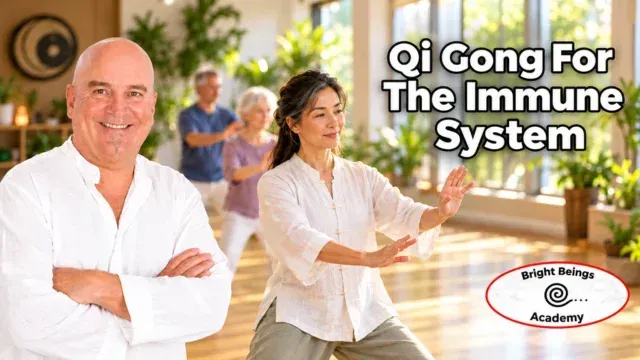
Can Qi Gong Help Boost My Immune System?
Yes, Qi Gong may support immune health by helping to regulate stress, encourage gentle movement, deepen breathing and support overall wellbeing, but it should not be described as a guaranteed way to “boost” the immune system or prevent illness.
The immune system is complex. It is not a simple switch that can be turned up quickly, and more immune activity is not always better.
What Qi Gong can offer is a gentle, whole-body practice that brings together movement, breath, relaxation and awareness.
If you are new to the practice and would like a fuller introduction first, you can read What Is Qi Gong? to explore how Qi Gong works, its foundations and how it supports overall wellbeing.
These elements may support some of the wider conditions that contribute to general health, including regular physical activity, calmer breathing, better stress regulation, body awareness and more consistent self-care.
For many people, this is where Qi Gong can become valuable.
Rather than trying to force the body into a particular state, the practice encourages you to slow down, move with awareness and create a steadier relationship with your own energy and wellbeing.
This article will explore how Qi Gong may support immune health, what current research suggests, how traditional Qi Gong understands concepts such as Wei Qi, and where the limits of the evidence currently lie.
“Qi Gong may support immune health through gentle movement, breathing, relaxation and regular practice, but it is better understood as a supportive wellbeing practice than as a quick way to ‘boost’ immunity.”
What Does “Boosting the Immune System” Actually Mean?
“Boosting” the immune system is not really about making it work harder all the time. It is better understood as supporting healthy immune function and helping the body maintain balance.
The immune system is a highly complex network involving cells, tissues, organs and signalling processes that work together to protect the body.
Because of this, the idea of simply “boosting” immunity can be misleading.
A healthy immune system needs to respond appropriately when there is a genuine threat, while also avoiding unnecessary or excessive reactions.
That balance matters.
In some situations, an overactive immune response can itself become problematic, which is one reason why the goal is not simply to make the immune system stronger.
A more useful approach is to support the wider foundations of health that help the immune system function well.
These include areas such as:
regular movement
adequate sleep and recovery
balanced nutrition
healthy stress regulation
appropriate medical care when needed
reducing behaviours that place unnecessary strain on the body
Qi Gong can sit within this wider picture as a gentle practice combining movement, breathing, relaxation and body awareness.
Rather than forcing a particular outcome, the practice encourages steadiness, consistency and a more supportive relationship with the body.
“Supporting immune health is less about making the immune system work harder and more about helping the body maintain healthy balance and resilience.”
What Does “Boosting the Immune System” Actually Mean?
“Boosting” the immune system is not really about making it work harder all the time. It is better understood as supporting healthy immune function and helping the body maintain balance.
The immune system is a highly complex network involving cells, tissues, organs and signalling processes that work together to protect the body.
Because of this, the idea of simply “boosting” immunity can be misleading.
A healthy immune system needs to respond appropriately when there is a genuine threat, while also avoiding unnecessary or excessive reactions.
That balance matters.
In some situations, an overactive immune response can itself become problematic, which is one reason why the goal is not simply to make the immune system stronger.
A more useful approach is to support the wider foundations of health that help the immune system function well.
These include areas such as:
regular movement
adequate sleep and recovery
balanced nutrition
healthy stress regulation
appropriate medical care when needed
reducing behaviours that place unnecessary strain on the body
Qi Gong can sit within this wider picture as a gentle practice combining movement, breathing, relaxation and body awareness.
If you would like to explore this broader relationship in more depth, read Qi Gong for Immune Health: Support Your Immune System Naturally.
Rather than forcing a particular outcome, the practice encourages steadiness, consistency and a more supportive relationship with the body.
“Supporting immune health is less about making the immune system work harder and more about helping the body maintain healthy balance and resilience.”
How Might Qi Gong Support Immune Health?
Qi Gong may support immune health indirectly by combining gentle movement, breathing, relaxation and regular practice in ways that support the body’s wider wellbeing.
Qi Gong is not an immune treatment, but several parts of the practice may be relevant to the systems that help the body stay balanced.
Gentle Movement
Regular movement supports circulation, mobility and general physical health.
Qi Gong uses slow, controlled movements rather than strenuous exercise, which can make it easier to practise consistently, especially for people who do not feel drawn to high-intensity exercise.
If low energy is part of the picture for you, you may also find Qi Gong for Fatigue: Restore Your Energy and Vitality Naturally helpful.
Breathing
Breathing is central to Qi Gong.
The practice encourages slower, more relaxed breathing and greater awareness of how the breath moves through the body.
You can explore this in more depth in Qi Gong Breathing Techniques: Unlock the Power of Your Breath.
Stress Regulation
Long periods of stress can affect many aspects of physical and emotional wellbeing.
Qi Gong offers a way to slow the pace of both movement and attention, helping the body move towards a calmer state.
For a deeper look at this aspect of practice, read Qi Gong for Stress: Calm the Mind, Relax the Body.
Sleep And Recovery
Rest and recovery are also important parts of general health.
A gentle evening practice may help you create a calmer transition towards sleep, particularly when stress or mental activity make it difficult to settle.
You can explore a practical approach in Qi Gong for Sleep Routine: Gentle Evening Practice for Relaxation.
None of these areas works in isolation.
The value of Qi Gong is that movement, breathing, relaxation and awareness are brought together within one practice, helping you support your overall wellbeing in a steady and sustainable way.
“Qi Gong may support immune health by strengthening the foundations of wellbeing through gentle movement, breathing, relaxation and consistent practice.”
What Does the Research Say About Qi Gong and Immune Health?
Research suggests that Qi Gong may influence some immune and inflammatory markers, but the evidence is still developing and does not support claiming that Qi Gong can reliably “boost” immunity or prevent illness.
Studies of Qi Gong and related traditional Chinese exercises have explored changes in immune cells, inflammatory markers, stress responses and quality of life.
Some findings are encouraging.
A systematic review of randomised controlled trials reported favourable changes in several immune-related measures, although the results were not consistent across every marker or every study. This means the research points towards possible immune-regulating effects, but stronger and more standardised studies are still needed.
This distinction is important.
Research into Qi Gong tends to support the idea of regulation and wider wellbeing more strongly than the idea of simply making the immune system “stronger”.
There are also practical challenges when studying Qi Gong. Different studies use different styles, practice durations, frequencies and participant groups, making it difficult to compare results directly.
If you would like to explore the wider scientific picture, read Qi Gong Evidence: What Research Says About Mental Health, HRV and Heart Health. This looks more broadly at how Qi Gong is being studied and where the evidence is currently strongest.
Inflammation is another area receiving increasing attention.
Some research has reported changes in inflammatory markers and improvements in fatigue, pain and quality of life, particularly in people living with longer-term health conditions. However, the findings remain mixed and should not be interpreted as evidence that Qi Gong treats inflammatory or autoimmune disease.
For a closer look at that subject, you can read Qi Gong for Autoimmune Conditions and Inflammation: Evidence (2020–2025).
The most grounded conclusion at present is that Qi Gong appears promising as a supportive practice, particularly when practised regularly, but it should remain part of a wider approach to health rather than being treated as a medical intervention.
“Current research suggests Qi Gong may support immune regulation and wider wellbeing, but the evidence is still developing and does not support claims that it can simply ‘boost’ immunity or treat disease.”
What Role Do the Lungs and Wei Qi Play in Traditional Qi Gong?
In traditional Qi Gong theory, the lungs are closely associated with breathing, vitality and Wei Qi, often described as the body’s defensive energy.
This is a traditional energetic framework rather than a modern medical explanation of the immune system, but it remains an important part of how Qi Gong has historically understood health and resilience.
In traditional Chinese medicine and Qi Gong practice, the lungs are associated with the movement of Qi through the body and with the rhythm of breathing.
Wei Qi is often described as a protective form of Qi that circulates around the surface of the body and is traditionally linked with the body’s ability to respond to environmental influences.
From this perspective, practices that encourage fuller breathing, gentle movement and relaxed awareness are used to support the smooth movement of Qi and strengthen the body’s overall energetic resilience.
This does not mean that Wei Qi is the same thing as the modern immune system.
They come from two different systems of understanding.
However, the traditional language can still offer a useful way of exploring how breathing, movement and body awareness are brought together within Qi Gong practice.
If you would like to explore the relationship between breathing, the lungs and gentle Qi Gong practice in more depth, read Qi Gong for Lung Health: Gentle Support for COPD and Asthma.
The specialist Qi Gong For The Immune System course also explores the lungs, Wei Qi and breathing as part of a wider five-module approach to immune health and whole-body wellbeing.
“In traditional Qi Gong, the lungs and Wei Qi are associated with breathing, protection and energetic resilience, but these concepts should not be confused with the modern medical understanding of the immune system.”
Can Qi Gong Help Reduce Inflammation?
Qi Gong may support some of the wider factors associated with inflammation, particularly stress regulation, gentle movement and recovery, but it should not be presented as a treatment for inflammatory conditions.
Inflammation is part of the body’s natural protective response.
Short-term inflammation can be useful when the body is responding to injury or infection, while longer-term inflammation can be associated with a wide range of health conditions.
Qi Gong may be relevant because it combines several gentle practices that can support overall wellbeing, including:
slow, controlled movement
relaxed breathing
reduced physical tension
stress regulation
regular low-impact activity
greater body awareness
Research has explored whether practices such as Qi Gong can influence inflammatory markers, with some promising findings, but the evidence is still mixed.
This means it is more accurate to say that Qi Gong may support the wider conditions associated with healthy regulation rather than claim that it directly “reduces inflammation” in everyone.
If you would like to explore this subject in more depth, read Qi Gong for Autoimmune Conditions and Inflammation: Evidence (2020–2025).
You can also read Qi Gong for Autoimmune Conditions: Gentle Support for Flares, Fatigue and Regulation for a gentler, practice-focused look at how Qi Gong may fit alongside appropriate medical care.
The important point is that Qi Gong should remain a supportive wellbeing practice, not a replacement for diagnosis, treatment or professional healthcare.
“Qi Gong may support the wider foundations of healthy regulation, but it should not be presented as a direct treatment for inflammation or autoimmune disease.”
A Simple Qi Gong Practice for Immune Health
A simple Qi Gong practice for immune health can combine gentle movement, relaxed breathing and a few minutes of steady awareness each day.
You do not need a long or complicated routine to begin.
A short practice can be enough to help you slow down, reconnect with your breathing and bring gentle movement into the body.
You might begin with:
standing comfortably with the knees soft
allowing the shoulders and jaw to relax
breathing slowly and naturally through the nose
gently opening and closing the arms with the breath
adding light tapping around the chest, ribs and abdomen
finishing with the hands resting over the lower Dahn Jon
The aim is not to force the breath or create strong sensations.
Instead, allow the practice to feel steady, comfortable and easy to repeat.
Consistency is usually more helpful than intensity.
If you would like more guidance with breathing, you can explore Qi Gong Breathing Techniques: Unlock the Power of Your Breath.
For a more structured approach, Qi Gong For The Immune System takes these ideas much further through five modules covering breathing, the lungs, Wei Qi, digestion, Kidney Qi, the Five Elements and guided Qi Gong routines.
“A useful Qi Gong practice does not need to be complicated; gentle movement, relaxed breathing and regular practice can create a steady foundation for supporting overall wellbeing.”
When Should I Seek Medical Advice?
You should seek medical advice if you have ongoing symptoms, frequent infections, unexplained fatigue, significant inflammation, breathing difficulties or any other concern about your immune health.
Qi Gong can be a supportive wellbeing practice, but it should not replace medical assessment when something does not feel right.
This is especially important if symptoms are:
persistent or getting worse
affecting your breathing, energy or daily functioning
accompanied by fever, pain or unexplained weight changes
related to an existing autoimmune or inflammatory condition
causing concern because they are unusual for you
If you are living with a diagnosed health condition, it is also sensible to check whether any new movement or breathing practice is appropriate for your circumstances.
For people managing autoimmune conditions, Qi Gong for Autoimmune Conditions: Gentle Support for Flares, Fatigue and Regulation offers a more focused look at how gentle Qi Gong may fit alongside appropriate medical care.
The intention is to let Qi Gong support your wider wellbeing while keeping diagnosis and treatment where they belong: with appropriately qualified healthcare professionals.
“Qi Gong can support your wellbeing, but persistent, worsening or unexplained symptoms should always be discussed with an appropriate healthcare professional.”
Final Thoughts
Qi Gong may support immune health most meaningfully when it is approached as part of a wider pattern of movement, breathing, rest, stress regulation and consistent self-care.
The immune system is complex, so it is more helpful to think in terms of supporting healthy function and resilience rather than searching for a quick way to “boost” it.
Qi Gong offers a gentle way to bring together several supportive elements at once: movement, breath, relaxation, body awareness and regular practice.
For some people, that may mean feeling calmer and more connected to their body. For others, it may simply provide a sustainable way to keep moving, breathing and creating space for recovery.
If you would like to explore this in a more structured way, the Qi Gong For The Immune System course brings together breathing, the lungs, Wei Qi, digestion, Kidney Qi, the Five Elements and practical guided routines across five modules.
You can also continue exploring the wider subject through Qi Gong for Immune Health: Support Your Immune System Naturally
“Qi Gong is best understood not as a way to force the immune system to work harder, but as a gentle practice that may support the wider foundations of health and resilience.”
Next Steps
If you would like to move from reading about immune health into a structured Qi Gong practice, the next step is to explore the full Qi Gong For The Immune System course.
This five-module specialist course brings together the key themes explored throughout this article, including breathing, the lungs, Wei Qi, digestion, Kidney Qi, the Five Elements and practical Qi Gong routines.
It is designed to help you move beyond theory and begin applying these ideas through guided practice at a steady, manageable pace.
Your enrolment includes:
the complete five-module Qi Gong For The Immune System course
guided specialist practices and routines
supporting course materials
14 days of Tteuda live online Qi Gong classes
Choboja membership if you are not already a member
Qi Gong For The Immune System — £195
Explore Qi Gong For The Immune System
If you are not quite ready for the specialist course, you can still continue your Qi Gong journey through the Academy’s membership pathway, with options for beginning, regular practice and deeper ongoing support.
“When you are ready to go deeper, Qi Gong For The Immune System gives you a clear, structured way to turn the ideas in this article into an embodied practice.”
Continue Your Qi Gong Journey
Bright Beings Academy offers three membership pathways to support you at different stages of your practice.
Choboja is the free starting point for beginners, Tteuda supports regular practice through live online Qi Gong classes, and Jonjae provides deeper continuity with weekly flows and one-to-one support.
You can explore the three membership options below and choose the level of support that feels most appropriate for where you are now.
Frequently Asked Questions: Qi Gong And The Immune System
Can Qi Gong help boost my immune system?
Qi Gong may support immune health through gentle movement, breathing, relaxation and regular practice, but it should not be presented as a guaranteed way to “boost” immunity or prevent illness.
A better way to understand it is as a practice that may support some of the wider foundations of healthy immune function.
Can Qigong help reduce inflammation?
Research has explored Qi Gong in relation to inflammation, with some encouraging findings, but the evidence is still developing.
Qi Gong should therefore be understood as a supportive wellbeing practice rather than a treatment for inflammatory conditions.
What is the best exercise to boost the immune system?
There is no single exercise that can guarantee a stronger immune system.
Regular, appropriate physical activity is generally more important than finding one perfect exercise. Qi Gong can be a useful option because it combines gentle movement, breathing and relaxation in a sustainable practice.
How can I make my immune system healthy?
Supporting immune health usually involves looking after the wider foundations of wellbeing, including regular movement, adequate sleep, balanced nutrition, stress regulation and appropriate healthcare.
Qi Gong can complement these through gentle movement, breathing and relaxation.
Is Qi Gong suitable if I feel tired or low in energy?
Qi Gong can be adapted to a gentle level, which may make it suitable when more strenuous forms of exercise feel difficult.
Persistent or unexplained fatigue should always be discussed with an appropriate healthcare professional.
Can Qi Gong replace medical treatment?
No.
Qi Gong is a supportive wellbeing practice and should not replace medical diagnosis, treatment or professional healthcare.
Where can I learn Qi Gong for immune health?
The Qi Gong For The Immune System course provides a structured five-module pathway exploring breathing, the lungs, Wei Qi, digestion, Kidney Qi, the Five Elements and practical Qi Gong routines.
Further Reading
If you would like to explore some of the themes in this article in greater depth, these related Bright Beings Academy articles may be helpful:
What Is Qi Gong?: A clear introduction to the foundations, principles and practice of Qi Gong.
Qi Gong for Immune Health: Support Your Immune System Naturally: A broader look at how Qi Gong may support immune health and general wellbeing.
Qi Gong Breathing Techniques: Unlock the Power of Your Breath: Explore breathing practices and their role within Qi Gong.
Qi Gong for Lung Health: Gentle Support for COPD and Asthma: A closer look at gentle lung-focused Qi Gong practice.
Qi Gong for Autoimmune Conditions: Gentle Support for Flares, Fatigue and Regulation: Explores how gentle Qi Gong may sit alongside appropriate medical care.
Qi Gong for Autoimmune Conditions and Inflammation: Evidence (2020–2025): A more research-focused look at inflammation, autoimmune conditions and the available evidence.
Qi Gong for Fatigue: Restore Your Energy and Vitality Naturally: Gentle practice ideas for people experiencing low energy or fatigue.
These articles help connect immune health with the wider themes of breathing, energy, movement, regulation and recovery explored throughout Qi Gong practice.
Scientific Studies and Research
These studies are relevant to the relationship between Qi Gong, immune function and inflammation.
The Effects of Tai Chi and Qigong on Immune Responses: A Systematic Review and Meta-Analysis
This 2020 systematic review and meta-analysis included 19 randomised controlled trials involving 1,686 participants. It found a small significant overall effect on immune-cell measures, while the pooled effect on inflammatory markers was not significant. The authors concluded that the evidence suggests physiological effects on immune function, but that more rigorous research is needed.
The Effect of Qigong Exercise on Immunity and Infections: A Systematic Review of Controlled Trials
This systematic review examined controlled clinical studies of Qi Gong in relation to immunity and infectious disease. Seven studies met the inclusion criteria, and the authors found some potentially positive immune-related results while also highlighting the limited quality and size of the evidence base.
Effects of Qigong on Immune Cells
This randomised controlled study investigated acute changes in immune-cell counts following Qi Gong practice. It reported changes in white blood cells, lymphocytes and monocytes following some of the Qi Gong interventions, although not every immune measure changed in the same direction. PubMed
Acute Effects on the Counts of Innate and Adaptive Immune Response Cells After 1 Month of Taoist Qigong Practice
This randomised controlled trial involved 43 healthy participants. The Qi Gong group completed daily practice for one month before researchers assessed acute changes in immune-cell counts after training. PubMed
Impact of Medical Qigong on Quality of Life, Fatigue, Mood and Inflammation in Cancer Patients: A Randomized Controlled Trial
This study involved 162 people with cancer and examined quality of life, fatigue, mood and C-reactive protein. The Qi Gong group showed improvements in quality of life, fatigue and mood, together with changes in CRP. Because this was a specific clinical population, the findings should not be generalised to healthy adults or treated as evidence that Qi Gong treats cancer.
A Pilot Randomized Clinical Trial Examining the Effects of Qigong on Inflammatory Status and Sleep Quality in People with Parkinson’s Disease
This 2024 pilot randomised controlled trial involved 17 participants who completed a 12-week intervention. Researchers reported a decreasing trend in IL-1β and IL-6 in the Qi Gong group and found associations between changes in inflammatory status and sleep quality. The authors emphasised that further studies are needed to confirm the findings.
I look forward to connecting with you in my next post.
Until then, be well and keep shining.
Peter. :)