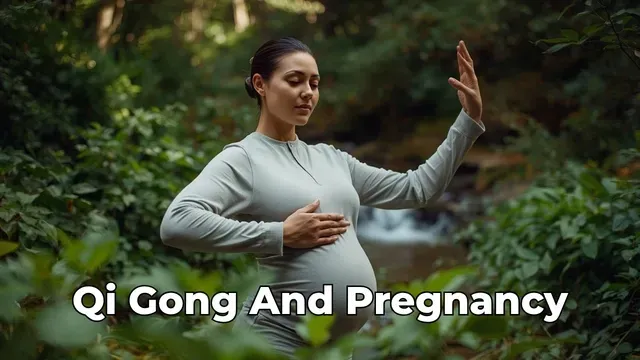
Pregnancy and Qi Gong: What We Know So Far
Pregnancy and Qi Gong can come together in a gentle and supportive way, helping you move, breathe, and feel more at ease as your body changes week by week. Many women are drawn to this softer approach because it offers calm, stability, and a sense of connection during a time that can feel both beautiful and overwhelming.
At the same time, pregnancy and Qi Gong must be approached with care. Research specifically focused on pregnancy is still limited, so the emphasis is always on safety, simplicity, and listening closely to your body, alongside guidance from your midwife or GP.
If you are new to the practice, it can help to understand the foundations first through What Is Qi Gong? Origins, Principles & Benefits before exploring how it can be adapted safely during pregnancy.
Rather than trying to do more, pregnancy and Qi Gong invite you to do less, but with more awareness. Even a few minutes of gentle movement or breathing can begin to soften tension, settle the nervous system, and create a small sense of space in your day.
“Pregnancy and Qi Gong offer a gentle way to support your body, calm your mind, and stay connected to yourself as everything around you changes.”
Learn Qi Gong at home at the Bright Beings Academy
5 ⭐⭐⭐⭐⭐ Rating On Google Reviews

What We Actually Know (And Don’t Know)
About Pregnancy and Qi Gong
When it comes to pregnancy and Qi Gong, it is important to be honest about the current evidence. There is far less research focused specifically on pregnant women compared to the general population.
What we do have is encouraging, but indirect.
Studies on Qi Gong in adults show consistent benefits for stress reduction, mood balance, sleep quality, and gentle physical conditioning. These are all areas that many women are looking to support during pregnancy. There is also growing evidence around nervous system regulation and heart-rate variability, which can help the body move out of stress states more easily.
Because pregnancy is such a unique physiological state, these findings cannot simply be transferred across without caution. Each body responds differently, and each pregnancy carries its own considerations.
What we do not yet have in strong numbers are large, well-designed clinical trials looking only at pregnancy and Qi Gong. This means guidance must remain general, careful, and always supported by your healthcare team.
If you would like a more applied and practical approach, you can explore Qi Gong for Pregnancy and Postpartum: Safe, Gentle Energy Practices, which focuses on how to safely adapt movements during this time.
So, where does this leave you?
In a place of gentle possibility. The broader research suggests Qi Gong can support many of the challenges that arise during pregnancy, but your experience should always guide the practice, not the other way around.
“The research on pregnancy and Qi Gong is promising but still developing, which means the safest approach is to stay gentle, stay aware, and let your body lead.”
When Pregnancy and Qi Gong May Work Well Together
For many women, pregnancy and Qi Gong come together most naturally when the focus is on gentle support rather than performance. As your body changes, your needs shift, and this is where a softer, more adaptable practice can feel especially helpful.
You may find Qi Gong useful when:
You want to keep moving, but more intense exercise no longer feels comfortable
Your posture is changing and you notice tension in your back, hips, or shoulders
Your breathing feels shorter or more restricted as your body adapts
You are experiencing emotional ups and downs and need a steady, calming anchor
In these moments, simple movements can make a quiet difference.
Soft pelvic rocking can ease lower back pressure.
Gentle shoulder circles can release tension from holding and hunching.
Slow spine movements can create space through the body.
Short breathing practices can help settle the nervous system.
These are not about doing more. They are about creating small moments of support throughout your day.
If you would like to explore this in a more structured way, Qi Gong for Pregnancy and Postpartum: Safe, Gentle Energy Practices offers practical guidance you can follow safely.
Over time, these small practices can begin to build a sense of trust in your body again, even as it changes in ways that feel unfamiliar.
“Pregnancy and Qi Gong work best when the focus is gentle, supportive movement that meets your body where it is, rather than asking it to do more than it needs.”
Safety First: When To Adapt Or
Avoid Pregnancy and Qi Gong
Because the research on pregnancy and Qi Gong is still developing, safety must always come first. This is not about avoiding the practice altogether, but about adapting it in a way that supports your body rather than placing extra demand on it.
The first and most important step is simple. Always check with your midwife or GP before starting or changing your routine. This becomes even more important if your pregnancy has been identified as higher risk.
There are also clear signals from the body that mean you should stop and seek advice. These include bleeding, fluid loss, chest pain, strong breathlessness, dizziness, fainting, or any sharp or persistent abdominal pain. These are not moments to push through. They are moments to pause and be supported.
In general, pregnancy and Qi Gong should follow the same safety principles as other forms of gentle movement during pregnancy:
Avoid lying flat on your back for long periods after the first trimester
Avoid strong abdominal compression or deep twisting through the belly
Keep movements slow, controlled, and comfortable
Be mindful of balance as your centre of gravity shifts
Avoid overheating and overly intense sessions
One of the strengths of Qi Gong is that it adapts easily. Movements can be softened, reduced, or even done seated when needed. If you are unsure how to adjust safely, working with a qualified teacher can make a meaningful difference. You can explore this further in Choosing a Qi Gong Instructor: How to Find the Right Teacher for You.
The aim is not to follow a perfect routine. It is to stay connected, aware, and supported as your body changes.
“Pregnancy and Qi Gong are safest when you stay within your body’s limits, respond to its signals, and allow the practice to adapt to you rather than the other way around.”
How Pregnancy and Qi Gong
Can Support Women’s Health
Pregnancy and Qi Gong are not only about movement. They also touch on a wider picture of women’s health, including how the body regulates energy, hormones, and emotional balance during a time of deep change.
As your body adapts through pregnancy, there are natural shifts in circulation, posture, and internal systems. This can sometimes lead to fatigue, tension, or emotional sensitivity. Gentle Qi Gong can support these changes by encouraging soft movement, steady breathing, and a more relaxed nervous system response.
Many women notice benefits such as:
A greater sense of calm during emotional fluctuations
Reduced physical tension in areas like the lower back, hips, and shoulders
More awareness of breath, especially as the body changes shape
A feeling of being more connected to their body rather than overwhelmed by it
This is where pregnancy and Qi Gong connect to the broader picture of women’s health. The same gentle principles that support pregnancy can also support cycles, recovery, and long-term wellbeing.
If you would like to explore this wider perspective, Qi Gong for Women’s Health: Support for Cycles, Fertility and Postpartum Recovery offers a deeper look at how these practices can support you beyond pregnancy alone.
Over time, this approach can help you feel less like your body is something to manage, and more like something you are working with and listening to.
“Pregnancy and Qi Gong support women’s health by gently guiding the body towards balance, helping you feel calmer, more connected, and more at ease within yourself.”
Practical Guidelines for Pregnancy and Qi Gong
When approaching pregnancy and Qi Gong, simplicity and consistency matter far more than complexity. The aim is not to perform perfect movements, but to create a safe, supportive rhythm that your body can respond to.
Here are some gentle principles to guide your practice:
1. Keep intensity low to moderate
You should always be able to speak comfortably while moving. If you feel breathless, it is a sign to slow down or rest.
2. Choose stable, grounded positions
As your centre of gravity shifts, wider stances or seated positions offer more safety and ease than narrow or single-leg balance work.
3. Be kind to your core and bump
Avoid strong abdominal work, deep forward bends that compress the belly, or forceful twisting. Instead, focus on soft, flowing movements through the spine and pelvis.
4. Focus on natural, comfortable breathing
There is no need for advanced breathing techniques. Avoid breath-holding or anything that creates strain. Gentle, steady breathing is enough.
5. Use support when needed
Chairs, walls, or simply sitting down can make your practice feel safer and more accessible. This is especially helpful as your pregnancy progresses.
If you would like to understand how these principles extend across different stages of pregnancy and recovery, Qi Gong for Pregnancy and Postpartum: Safe, Gentle Energy Practices offers a clear and supportive structure.
Over time, these small adjustments allow pregnancy and Qi Gong to work together in a way that feels natural rather than forced.
“Pregnancy and Qi Gong become most effective when the practice is simple, supported, and shaped around what your body needs each day.”
Simple Practice Ideas for Each Trimester
Pregnancy and Qi Gong will naturally shift as your body changes. What feels right in the early weeks may feel very different later on. Rather than following a fixed routine, it can help to gently adapt your practice to each stage.
First Trimester
Energy can feel unpredictable in the early weeks. Some days you may feel fine, and others more tired or unsettled.
Keep sessions short and calm
Focus on gentle breathing and upper body movement
Use soft tapping on the arms and legs to ease tension
Only include very light pelvic movement if it feels comfortable
Second Trimester
Many women feel a little more stable and energised during this stage, although this varies.
Introduce slightly more flowing movements if it feels right
Add gentle hip circles and side stretches
Use soft spine waves to create space through the body
Stay aware of balance as your centre begins to shift
Third Trimester
As your body prepares for birth, the focus often returns to simplicity and support.
Use more seated or supported standing practice
Focus on breath, posture, and small, comfortable movements
Ease tension in the back, hips, and shoulders
Break practice into short sessions throughout the day
Across all stages, pregnancy and Qi Gong are not about doing more. They are about responding to how you feel in the moment.
If you would like a more complete structure that carries you through pregnancy and into recovery, Qi Gong for Pregnancy and Postpartum: Safe, Gentle Energy Practices offers a clear and supportive pathway.
Over time, this flexible approach can help you stay connected to your body, even as it changes in unfamiliar ways.
“Pregnancy and Qi Gong work best when your practice evolves with each trimester, meeting your body gently where it is rather than where you think it should be.”
Membership Paths to Support Your Pregnancy Practice
Pregnancy and Qi Gong can be practised in very simple ways at home, but having gentle guidance can make the experience feel safer, clearer, and more supportive as your body changes.
At different stages of pregnancy, your needs may shift. Some days you may want structure and reassurance. On other days, you may prefer something softer and more flexible.
You might choose:
Live, guided sessions where you can move at your own pace and feel supported in real time
On-demand classes that allow you to practise when your energy allows
A simple beginner structure that you can return to again and again without pressure
The key is not to commit to something rigid. It is to choose a path that adapts with you.
If you are unsure where to begin or want to feel confident that you are practising safely, it can also help to work with the right teacher. You can explore what to look for in Choosing a Qi Gong Instructor: How to Find the Right Teacher for You.
Pregnancy is not a time to push or prove anything. It is a time to feel supported, guided, and gently held in your practice.
“Pregnancy and Qi Gong are most supportive when you choose guidance that meets you with flexibility, safety, and understanding as your needs change.”
Final Thoughts
Pregnancy and Qi Gong do not need to be complicated to be helpful. In many ways, the simplest approach is often the most supportive.
This is a time where your body is already doing something extraordinary. The role of Qi Gong is not to add pressure or expectation, but to offer small moments of calm, gentle movement, and quiet connection.
There may be days where you feel energised and open to movement. There may be others where rest is what you truly need. Both are valid. Both are part of the process.
Over time, even a few minutes of soft breathing or simple movement can begin to ease tension, settle the nervous system, and help you feel more at home in your changing body.
Pregnancy and Qi Gong work best when they are guided by awareness rather than routine, and by kindness rather than effort.
“Pregnancy and Qi Gong become most meaningful when you allow the practice to support you gently, rather than expecting yourself to meet a fixed standard.”
Next Steps
If you would like a gentle place to begin, the Free 7-Day Online Qi Gong Course offers a simple introduction to breath, posture and mindful movement.
If you want a more structured foundation, the 7-Day Qi Gong for Beginners Course can help you continue at a steady pace. During pregnancy or postpartum recovery, always adapt the practice to your body and seek guidance from a qualified healthcare professional where needed.
You can also explore ongoing guidance through live classes and on-demand sessions, allowing you to move at your own pace while still feeling supported as your body changes.
Below this section, you will find membership options that offer a more flexible and supportive home for your practice, so you can choose what feels right for you at each stage.
The key is not to do more, but to begin softly, consistently, and in a way that feels safe in your body.
FAQs: Pregnancy and Qi Gong
Is pregnancy and Qi Gong safe for everyone?
Pregnancy and Qi Gong can be safe for many women when practised gently, but it is not one-size-fits-all. Your safety depends on your health, your pregnancy, and any conditions your midwife or GP is monitoring. Always check with your healthcare provider before starting, and stop immediately if you feel pain, dizziness, or anything unusual.
Can I start pregnancy and Qi Gong if I have never practised before?
Yes, many women begin pregnancy and Qi Gong as complete beginners because it is gentle and accessible. Start with very short sessions, keep movements simple, and focus on comfort rather than technique. The goal is to support your body, not challenge it.
How often should I practise pregnancy and Qi Gong?
There is no strict rule. A gentle rhythm of 5–20 minutes on most days is often enough. Some days you may do more, and others you may rest completely. Consistency matters more than intensity.
Which movements should I avoid during pregnancy and Qi Gong?
It is generally best to avoid strong abdominal compression, deep twisting through the belly, long periods lying flat on your back after the first trimester, and any movements that feel unstable. Gentle, supported movements are always the safest option.
Can pregnancy and Qi Gong help with stress and emotional changes?
Many women find that pregnancy and Qi Gong help them feel calmer and more grounded. The slow movements and steady breathing can support the nervous system and create a sense of space during emotional ups and downs.
Further Reading
If you would like to deepen your understanding of pregnancy and Qi Gong, these articles will support you in a clear and connected way:
Qi Gong for Pregnancy and Postpartum: Safe, Gentle Energy Practices
A practical, step-by-step guide to adapting Qi Gong safely during pregnancy and into recovery after birth.
What Is Qi Gong? Origins, Principles & Benefits
A foundational overview to help you understand how Qi Gong works and why it can support both body and mind.
Qi Gong for Women’s Health: Support for Cycles, Fertility and Postpartum Recovery
Explores how Qi Gong supports women’s health more broadly, including hormonal balance, recovery, and long-term wellbeing.
These articles will help you move from understanding into gentle, supported practice, while staying within a safe and appropriate approach for pregnancy.
Scientific Studies on Qi Gong and Pregnancy
Effects of qigong for physical and psychological well-being in pregnancy: A multicenter randomized controlled trial
In this 2025 multicentre randomised controlled trial, 102 women in their second trimester were assigned to a Baduanjin Qigong group or a control group. Those practising Qigong three times a week for 30‑45 minutes experienced significant reductions in pregnancy‑related anxiety and stress, lower rises in systolic and diastolic blood pressure, and improved exercise self‑efficacy compared with the control group.
“By showing that gentle Qigong reduces anxiety, stress and blood‑pressure increases during pregnancy, this study offers a reassuring signpost for those looking for safe ways to feel calmer and more confident as their body changes.”
Observation of qi‑gong treatment in 60 cases of pregnancy‑induced hypertension
This small 1989 Chinese trial compared 60 pregnant women with hypertension who practised Qigong three times a day until labour with a medication‑only control group. Clinical efficacy was higher in the Qigong group (90 % vs 55 %), with fewer cases of meconium‑stained amniotic fluid, improved haematocrit and better microcirculation.
“In a high‑risk situation like pregnancy‑induced hypertension, regular Qigong practice was associated with better outcomes, hinting that gentle movement and relaxation may support circulation and blood pressure when supervised by a healthcare professional.”
Qigong: What You Need To Know – NCCIH
The U.S. National Center for Complementary and Integrative Health notes that there is no established research on the safety of Qigong during pregnancy and recommends consulting healthcare providers before starting. It summarises a small 2010 study of 70 healthy Korean women in which a “Qi‑exercise” program added to routine prenatal care led to greater maternal–fetal interaction, fewer depressive symptoms and reduced physical discomfort, with no reported adverse effects.
“This authoritative source reminds us that evidence is still emerging; while a small study showed benefits, pregnant women should adapt movements cautiously and seek guidance from their midwife or doctor.”
Effects of a brief Qigong‑based stress reduction program (BQSRP) in a distressed Korean population: a randomized trial
Though not specific to pregnancy, this 2013 randomised trial examined a four‑week Qigong‑based program in distressed adults. Participants practising twice‑weekly Qigong had significantly larger decreases in perceived stress and state and trait anxiety scores and improvements in quality‑of‑life measures compared with a wait‑list control group.
“For expectant mothers feeling overwhelmed, this trial reinforces that even brief, low‑intensity Qigong can markedly reduce stress and anxiety—benefits that translate well to the emotional ups and downs of pregnancy.”
I look forward to connecting with you in my next post.
Until then, be well and keep shining.
Peter. :)