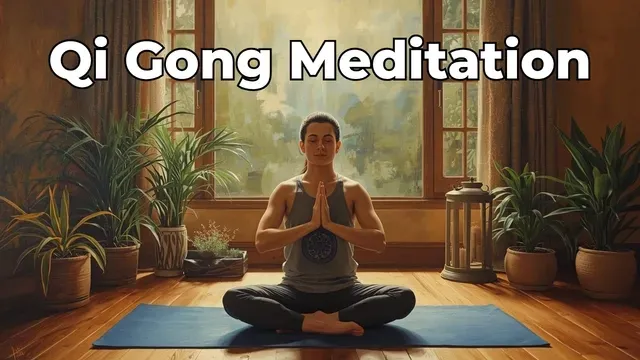
Qi Gong Meditation: A Beginner’s Guide to Stillness, Breath and Energy Flow
Qi Gong meditation is a simple and natural way to calm the mind, relax the body, and reconnect with your energy. Instead of forcing yourself to sit still, Qi Gong meditation uses breath, awareness, and gentle presence to guide you into a state of quiet focus.
For many people, traditional meditation can feel difficult. The mind wanders. The body becomes tense. Stillness can feel like something to achieve rather than something to experience. Qi Gong meditation offers a different path. It meets you where you are and helps you settle gradually.
At its core, Qi Gong meditation blends stillness, breath, and energy awareness. You may be standing, sitting, or gently moving, but the intention is the same. To return to a calm, centred state without pressure.
If you are new to this practice, it helps to first understand the wider foundation. What Is Qi Gong? Origins, Principles & Benefits explains how energy, breath, and awareness come together in a simple and accessible way.
From there, Qi Gong meditation becomes less about doing and more about allowing.
You begin to notice your breath. You soften your body.
You feel the quiet movement of energy within you.
“Qi Gong meditation is not about stopping your thoughts. It is about giving your body and breath enough space for stillness to arise naturally.”
Learn Qi Gong at home at the Bright Beings Academy
5 ⭐⭐⭐⭐⭐ Rating On Google Reviews
What Is Qi Gong Meditation?
Qi Gong meditation is a practice where breath, awareness, and subtle energy come together to create a calm and focused state of mind. It is often described as a form of meditation that does not rely on complete stillness, but instead allows stillness to emerge naturally through the body.
In this practice, your attention rests gently on three things:
Your breath, slow and steady
Your body, relaxed but upright
Your awareness, present and observing
Unlike more rigid forms of meditation, Qi Gong meditation does not ask you to control your thoughts. Instead, it gives your mind a soft anchor. This might be the rise and fall of your breath, the feeling of your hands, or the quiet sensation of energy moving through the body.
Breath plays a central role here. If you would like to explore this more deeply, Qi Gong Breathing Techniques: Unlock the Power of Your Breath explains how breathing supports both calm and energy flow within the practice.
Qi Gong meditation can be practised in different ways:
Standing meditation, where the body is still but alive with awareness
Seated meditation, where the breath and posture guide your focus
Gentle flowing meditation, where movement leads you into stillness
One of the most well-known forms is standing meditation. In Standing Meditation (Zhan Zhuang): Build Calm, Strength and Energy in 5 Minutes, you simply stand, breathe, and allow the body to settle into a quiet, grounded state.
Over time, this practice becomes less about technique and more about feeling. You begin to sense when your body is tense, when your breath is shallow, and when your mind is restless. And just as naturally, you begin to return to balance.
“Qi Gong meditation is not something you force. It is something you allow—through breath, awareness, and a gentle return to your body.”
Why Choose Qi Gong Meditation?
Qi Gong meditation offers a gentle and practical way to enter a meditative state without strain. Instead of trying to control the mind, it works through the body and breath, allowing calm to arise more naturally.
For many people, this makes the practice feel more accessible and sustainable.
It is easier to begin
You do not need to force stillness. The combination of breath and awareness gives your mind something soft to rest on.It relaxes the body first
Tension in the body often keeps the mind active. Qi Gong meditation helps the body soften, which in turn quiets the mind.It supports natural breathing
Breath becomes slower and deeper without effort, helping to regulate the nervous system and create a sense of safety.It builds steady focus
Rather than fighting distractions, you gently return to the breath or body, strengthening attention over time.It connects you to your energy
As the body settles, you may begin to feel subtle sensations of warmth, flow, or tingling. This is part of developing awareness of Qi.
This approach does not replace other forms of meditation. Instead, it often becomes a bridge. Many people find that once the body is calm through Qi Gong meditation, seated stillness becomes easier and more comfortable.
“Qi Gong meditation works with your body, not against it. As the body softens and the breath deepens, the mind follows naturally into stillness.”
The Benefits of Qi Gong Meditation
Qi Gong meditation supports both the mind and body by bringing them into a more balanced and relaxed state. Rather than forcing change, it creates the conditions where calm, clarity, and energy can return naturally.
With regular practice, you may begin to notice subtle but meaningful shifts.
A quieter mind
Thoughts begin to slow down. You may still notice them, but they feel less overwhelming and easier to step back from.Emotional steadiness
As the breath deepens and the body softens, emotional intensity often reduces. This creates more space between feeling and reaction.A deeper sense of presence
Attention becomes anchored in the body. You spend less time in past or future thinking and more time in what is actually happening now.Improved focus and clarity
By returning to breath and awareness again and again, the mind becomes more stable and less scattered.Better sleep and relaxation
Practising Qi Gong meditation, especially in the evening, can help settle the nervous system and prepare the body for rest.A growing awareness of energy
Over time, you may begin to feel gentle sensations within the body. Warmth, heaviness, or flow. These are early signs of developing sensitivity to Qi.
These benefits do not appear all at once. They build slowly through consistency. Even a few minutes each day can begin to shift how you feel.
“Qi Gong meditation does not create instant change. It creates the space where change can happen—quietly, steadily, and in a way your body can trust.”
What Happens in the Body During Qi Gong Meditation?
When you practise Qi Gong meditation, the changes are not just mental. There are subtle but important shifts happening within your body.
As your breath slows and your attention settles, your nervous system begins to move out of a stress response and into a more relaxed state.
Your breathing becomes deeper and more regular
This signals to the body that it is safe to relax. Over time, the breath naturally slows without effort. If you would like to understand this more deeply, Qi Gong Breathing Techniques: Unlock the Power of Your Breath explains how breath supports this shift.Your heart rate begins to steady
As the body softens, the heart no longer needs to work as hard. This creates a feeling of calm and stability.The nervous system starts to regulate
The body shifts away from “fight or flight” and towards a more restful, balanced state. This is where recovery and repair processes are supported.Muscle tension gradually releases
You may notice areas of tightness softening, especially in the shoulders, jaw, and lower back. This helps reduce the physical load carried by the body.Awareness moves from the head into the body
Instead of being caught in constant thinking, your attention begins to settle into physical sensation. This creates a stronger sense of presence.
These changes do not need to be forced. They happen as a natural response to slower breathing, gentle awareness, and allowing the body to settle.
Over time, this becomes familiar. You begin to recognise the feeling of your body returning to balance, and it becomes easier to access it whenever you need.
“Qi Gong meditation supports the body in remembering how to relax, regulate, and return to a natural state of balance.”
A Simple Qi Gong Meditation Practice (15 Minutes)
This short practice is designed to guide you gently into a meditative state using breath, awareness, and stillness. There is no need to force anything. Move slowly, breathe naturally, and allow the experience to unfold.
1. Centring Breath (3 Minutes)
Stand or sit comfortably with your spine upright. Place your hands over your lower abdomen.
Breathe in slowly through your nose.
Breathe out gently through your mouth or nose.
Feel your belly expand as you inhale and soften as you exhale. Let your shoulders drop. Let your jaw relax.
There is nothing to control here. Simply notice the rhythm of your breath and allow it to settle.
“This first step helps you arrive. As the breath slows, the body begins to feel safe, and the mind starts to quiet.”
2. Gentle Body Awareness (3 Minutes)
Bring your attention into your body.
Notice your feet on the ground.
Feel the weight of your body.
Sense where you may be holding tension.
As you breathe out, imagine that tension softening. Not forcing it away, just allowing it to release.
Stay with simple awareness. Breath and body together.
“This stage grounds your awareness. Instead of being in your thoughts, you begin to feel present inside your body.”
3. Subtle Energy Awareness (4 Minutes)
Now bring your attention to your hands or your lower abdomen.
You may begin to notice small sensations. Warmth, tingling, heaviness, or gentle movement. There is no need to search for anything. Just stay open and aware.
Let your breath remain slow and natural.
If your mind wanders, gently return your focus to the feeling in your hands or your centre.
“This is where Qi Gong meditation begins to deepen. Awareness shifts from thinking to feeling.”
4. Standing or Seated Stillness (5 Minutes)
Allow your body to become still.
Keep your posture relaxed but upright.
Let your breathing be natural.
Rest your awareness in the body.
There is nothing to do now.
Thoughts may come and go. Let them pass without following them. Each time you notice you have drifted, gently return to your breath or your body.
“This is the heart of Qi Gong meditation. Stillness is not forced. It appears as the body and breath settle together.”
This simple structure can be practised daily. Over time, it becomes less about following steps and more about recognising the feeling of calm, centred awareness.
“Qi Gong meditation begins as a practice, but gradually becomes a state you can return to at any moment.”
The Emotional and Inner Experience of Qi Gong Meditation
As you continue with Qi Gong meditation, the experience often becomes quieter and more subtle. It is not about dramatic shifts. It is about small, steady changes in how you feel within yourself.
At first, you may simply notice moments of calm between your thoughts. A slight softening in the body. A deeper breath than usual.
Over time, this begins to deepen.
Emotions feel less overwhelming
You may still feel everything, but there is more space around those feelings. They move through you rather than staying stuck.A sense of inner steadiness grows
Instead of reacting quickly, there is a natural pause. This pause allows you to respond more calmly and clearly.You feel more at home in your body
Awareness shifts away from constant thinking and into direct experience. This creates a quiet sense of grounding.Stillness becomes familiar
What once felt difficult or uncomfortable begins to feel natural. You recognise the feeling of inner quiet and can return to it more easily.A gentle connection to something deeper
Not in a forced or dramatic way, but as a quiet sense of being present, aware, and at ease.
This is not something you need to chase. In fact, trying to reach a certain state can often create tension. Qi Gong meditation works best when you allow whatever is present to be there, without resistance.
Some people find that gentle background tones or specific frequencies help them settle into meditation more easily and maintain their focus for longer periods. If this resonates with you, our Bio Photon Tone Generator provides a simple way to explore sound as part of your meditation practice.
“The deeper experience of Qi Gong meditation is not about becoming different. It is about becoming more at ease with what is already here.”
Final Thoughts
Qi Gong meditation offers a simple and steady way to return to yourself. Through breath, awareness, and gentle stillness, it creates space for the mind to settle and the body to soften.
There is no need to force the process or chase a particular experience. What matters most is consistency and a willingness to show up, even for a few quiet minutes each day.
Over time, what once felt like a practice begins to feel natural. The breath deepens more easily. The body relaxes more quickly. Stillness becomes something you recognise rather than something you try to create.
In this way, Qi Gong meditation becomes more than a technique. It becomes a place you can return to whenever you need to feel calm, centred, and present.
Next Steps
If you are new to Qi Gong meditation, begin with the Free 7-Day Online Qi Gong Course to experience simple movement, breath and awareness.
When you would like a more structured and supported way to continue, the 7-Day Qi Gong for Beginners Course will help you build a steady foundation without rushing the practice.
Below this section, you will also find the membership options. These offer a structured home for your practice, with ongoing sessions to support consistency, deepen your meditation, and help you stay connected to the work.
Take your time. Choose the next step that feels supportive and sustainable for you.
FAQs About Qi Gong Meditation
What is Qi Gong meditation?
Qi Gong meditation is a practice that combines breath, awareness, and stillness to create a calm and focused state of mind. It can be practised standing, sitting, or with gentle movement, but the intention is always the same. To return to a relaxed and centred state without forcing the mind to be quiet.
Is Qi Gong meditation the same as traditional meditation?
Not exactly. Traditional meditation often focuses on sitting still and observing the mind. Qi Gong meditation works through the body and breath first, allowing stillness to arise more naturally. Many people find this makes meditation easier to access.
Can beginners practise Qi Gong meditation?
Yes. Qi Gong meditation is very suitable for beginners because it does not rely on strict posture or complete stillness. The focus on breath and gentle awareness makes it easier to begin, even if your mind feels busy.
Do I need to stand to practise Qi Gong meditation?
No. While standing meditation is common, Qi Gong meditation can also be practised sitting or even lying down. What matters most is your awareness of breath and your ability to stay gently present.
How long should I practise Qi Gong meditation?
A short daily practice is enough to begin. Around 10 to 15 minutes is ideal, but even a few minutes can help settle the mind and body. Consistency matters more than duration.
What should I feel during Qi Gong meditation?
You may notice a sense of calm, slower breathing, or a softening in the body. Some people also feel subtle sensations such as warmth or gentle movement within the body. There is no right or wrong experience. The practice is about allowing, not achieving.
Further Reading
These articles help the reader stay within the same lane of breath, stillness, and meditative awareness.
What Is Qi Gong? Origins, Principles & Benefits
A clear foundation for understanding how breath, awareness, and energy work together in practice.Qi Gong Breathing Techniques: Unlock the Power of Your Breath
Useful for readers who want to understand how breathing supports calm, focus, and energy flow during meditation.Standing Meditation (Zhan Zhuang): Build Calm, Strength and Energy in 5 Minutes
A natural next step for readers who want to explore stillness-based Qi Gong meditation through standing practice.
Scientific Research on Qi Gong Meditation
These papers are relevant to the article because they cover meditative movement, Qi Gong, stress, mood, and sleep rather than making unrelated medical claims.
Qigong Therapy for Stress Management: A Systematic Review of Randomized Controlled Trials
A 2024 systematic review suggesting that Qi Gong may help with stress management, while also noting that the evidence base still needs stronger standardisation and larger trials. (PubMed)Meditative Movement for Depression and Anxiety
A review of meditative movement practices, including Qi Gong, looking at their effects on anxiety, depression, and related emotional states. This is a good fit for a Qi Gong meditation article because it focuses on movement, breath, and attention together. (PubMed)The Effect of Mind-Body Therapies on Insomnia: A Systematic Review and Meta-Analysis
A review showing that mind-body therapies, including Qi Gong, were associated with improvements in sleep quality and insomnia severity. (PubMed)Qigong Exercise Alleviates Fatigue, Anxiety, and Depressive Symptoms, Improves Sleep Quality, and Shortens Sleep Latency in Persons with Chronic Fatigue Syndrome-Like Illness
A controlled trial often cited for showing improvements in sleep and emotional wellbeing with Baduanjin Qi Gong practice. (PubMed)
I look forward to connecting with you in the next post.
Until then, be well and keep shining.
Peter. :)