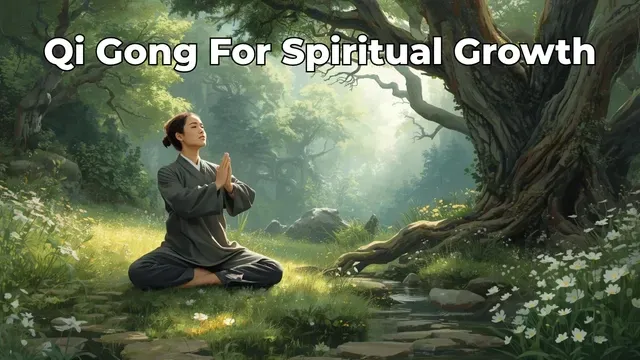
Qi Gong For Spiritual Growth: Awaken Inner Peace And Flow
Qi Gong for spiritual growth offers a gentle, grounded way to awaken inner peace and reconnect with the natural flow of life.
Spiritual growth is not something you need to chase. It is something you slowly return to through awareness, presence, and connection within the body.
Through movement, breath, and mindful attention, Qi Gong helps quiet the mind and soften emotional tension. As this happens, a deeper sense of clarity and calm begins to emerge naturally, rather than being forced.
Instead of trying to escape life, this practice brings you back into it with more steadiness and openness. Over time, you may notice that stillness arises more easily, your awareness deepens, and your sense of connection becomes more consistent.
If you are new to this path, it can help to understand the foundations first through What Is Qi Gong? Origins, Principles & Benefits. This creates a stable base for exploring the deeper spiritual aspects of the practice.
“Qi Gong for spiritual growth begins by calming the body and mind, allowing awareness and connection to unfold naturally.”
Learn Qi Gong at home at the Bright Beings Academy
5 ⭐⭐⭐⭐⭐ Rating On Google Reviews

How Qi Gong Supports Spiritual Growth
Qi Gong supports spiritual growth by working with the body first, rather than trying to control the mind.
When the body begins to relax and the breath becomes steady, the mind naturally follows. This creates space for awareness to deepen without effort or force.
One of the first changes many people notice is a quieter mind. As the constant stream of thoughts begins to settle, it becomes easier to observe rather than react. This simple shift allows a deeper sense of presence to emerge.
At the same time, gentle movement and breathing help release stored emotional tension. As these layers soften, the heart begins to open, often bringing a greater sense of compassion, both for yourself and for others.
Qi Gong also reconnects you with your body. Instead of feeling separate from yourself, you begin to experience a sense of wholeness. This is where spiritual growth becomes something lived, rather than something thought about.
Over time, this leads to a feeling of flow. Life feels less forced, and more aligned. You begin to move with your energy, rather than against it.
“Qi Gong supports spiritual growth by calming the body, softening the mind, and allowing awareness to deepen naturally.”
The Three Levels Of Spiritual Growth In Qi Gong
Spiritual growth in Qi Gong tends to unfold in stages, not through effort, but through consistent, gentle practice.
1. Body Awareness
The first stage is reconnecting with the body.
Through slow movement and breath, you begin to notice tension, posture, and subtle sensations that may have been ignored for years. This brings you out of overthinking and back into presence.
Practices such as Qi Gong Meditation: A Beginner’s Guide to Stillness, Breath and Energy Flow can support this stage by helping you settle your attention into the body more easily.
2. Energy Awareness
As awareness deepens, you may begin to feel the movement of Qi within the body.
This can show up as warmth, tingling, or a sense of flow. At this stage, your connection to your internal energy becomes clearer, and intuition often begins to strengthen.
Principles like Water Up, Fire Down Qi Gong: Calm the Mind, Strengthen the Body become especially important here, helping to balance energy between the mind and body, so awareness can remain steady.
3. Unity Awareness
With continued practice, a deeper sense of connection begins to emerge.
You may start to feel less separate from others, from nature, and from life itself. This is where compassion, clarity, and inner peace begin to arise more naturally, without needing to be forced.
At this stage, the practice becomes less about doing and more about being. The movements, breath, and awareness begin to feel like one continuous experience.
“Spiritual growth in Qi Gong moves from awareness of the body, to awareness of energy, and finally into a deeper sense of connection and unity.”
A Simple Qi Gong Routine For Spiritual Growth
(15 Minutes)
You do not need long or complex practices to begin experiencing the spiritual benefits of Qi Gong.
A short, consistent routine can gently guide you into a deeper state of awareness, helping you feel more grounded, open, and connected.
1. Centring Breath (3 Minutes)
Stand with your feet shoulder-width apart and your knees softly bent.
Place your hands on your lower abdomen and begin to breathe slowly. Allow your breath to settle into a natural rhythm, feeling the body soften with each exhale.
This step helps bring your awareness down into the body, creating a stable foundation for the rest of the practice.
2. Opening The Heart (4 Minutes)
As you inhale, gently open your arms wide. As you exhale, bring your palms together in front of your chest.
Move slowly and with awareness, allowing the breath to guide the movement. You may begin to feel a sense of openness across the chest and a softening of emotional tension.
This stage supports emotional release and begins to deepen your connection to the heart space.
3. Connecting Heaven And Earth (4 Minutes)
Raise one hand slowly upward while the other lowers toward the ground. As you breathe out, switch sides in a smooth, flowing motion.
This simple movement helps you feel connected both upwards and downwards, creating a sense of balance between expansion and grounding.
It also reflects the internal balance described in Water Up, Fire Down Qi Gong: Calm the Mind, Strengthen the Body, supporting a calm mind and steady body.
4. Gathering Energy (4 Minutes)
Bring your hands in front of your lower abdomen and begin to circle them slowly.
Inhale as your hands rise, exhale as they fall. Imagine you are gently gathering energy into your centre, allowing it to settle and store within the body.
This final step helps integrate the practice, leaving you feeling calm, centred, and quietly energised.
“A simple, consistent Qi Gong routine creates the space for spiritual growth to unfold naturally, without pressure or complexity.”
Emotional And Spiritual Healing Through Qi Gong
Spiritual growth often begins with emotional healing, even if we do not realise it at first.
Many people carry layers of unprocessed emotion in the body—tension, grief, frustration, or fear. These can quietly shape how we think, feel, and experience the world. Qi Gong offers a gentle way to begin releasing these layers without needing to analyse or force anything.
Through slow movement and steady breathing, the nervous system begins to settle. As this happens, emotions that were held beneath the surface can start to soften and move. This is where a deeper sense of inner space begins to open.
Practices explored in The Healing Power of Qi Gong: Ancient Practice, Modern Benefits show how this process is not just emotional, but physical and energetic as well. The body, mind, and energy system begin to come back into balance together.
At the same time, combining movement with stillness, as guided in Qi Gong Meditation: A Beginner’s Guide to Stillness, Breath and Energy Flow, allows you to stay present with these shifts without becoming overwhelmed.
Over time, this creates a sense of safety within yourself. From that place, compassion begins to grow more naturally, and the need to constantly control or resist your experience begins to soften.
This is where spiritual growth becomes real—not something abstract, but something you can feel in your body, your breath, and your daily life.
“Emotional healing through Qi Gong creates the inner space where spiritual growth can unfold with more ease and stability.”
Spiritual Benefits Students Often Notice
As you continue practising Qi Gong for spiritual growth, the changes are often subtle at first, but deeply meaningful over time.
Rather than dramatic shifts, most people notice a steady unfolding. A quiet sense that something within them is becoming more settled, more open, and more connected.
One of the most common experiences is a greater sense of inner peace. Situations that once felt overwhelming may begin to feel more manageable, not because life has changed, but because your response to it has softened.
Many also notice a stronger sense of connection. This can be a connection to themselves, to others, or to something larger than individual experience. It often feels like moving from separation into a quiet sense of belonging.
Clarity is another key shift. As the mind becomes less crowded, decisions can feel simpler and more aligned. You may find that intuition becomes easier to recognise and trust.
There is also often a natural increase in compassion. As you become more aware of your own internal experience, it becomes easier to understand others without judgement.
All of these changes are supported by consistent practice and the principles explored in Water Up, Fire Down Qi Gong: Calm the Mind, Strengthen the Body, which help stabilise the mind and bring energy back into the body where it can be felt and integrated.
Over time, what begins as a simple practice can start to feel like a quiet anchor in your day. Something you return to, not out of discipline, but because it brings you back to yourself.
“The spiritual benefits of Qi Gong are often gentle but profound, unfolding as a deeper sense of peace, clarity, and connection in everyday life.”
Final Thoughts
Qi Gong for spiritual growth is not about striving for a higher state or reaching a distant goal.
It is about returning, again and again, to a quieter place within yourself.
Through simple movement, breath, and awareness, you begin to soften what has been held, calm what has been busy, and reconnect with something steady beneath it all. Over time, this becomes less of a practice you do, and more of a way you experience life.
There is no need to rush this process. In fact, the more gently you approach it, the more naturally it unfolds.
Consistency matters far more than intensity. A few minutes each day, done with presence, can begin to shift how you feel, think, and relate to yourself and the world around you.
And slowly, without force, you may begin to notice something simple but profound.
You feel more like yourself.
“Spiritual growth through Qi Gong is not about becoming something new, but about gently returning to who you already are.”
Next Steps
You can begin with the Free 7-Day Online Qi Gong Course as a gentle first step.
When you are ready for a clearer structure, the 7-Day Qi Gong for Beginners Course gives you a simple, steady path to follow, helping you build a daily rhythm with movement, breath and awareness.
Below this section, you will also find the membership options at Bright Beings Academy.
These give you access to guided classes, on-demand sessions, and deeper practices to support your ongoing journey. If you feel ready to continue, this is a natural next step to help you stay connected and supported.
Start gently. Stay consistent. Let the practice meet you where you are.
“The next step is simply to begin—one small, steady practice at a time.”
FAQs About Qi Gong For Spiritual Growth
Do I need to be spiritual to practise Qi Gong for spiritual growth?
No. Qi Gong works through the body first. As you practise, a deeper sense of awareness and connection may develop naturally, without needing to follow any belief system.
How long does it take to feel spiritual benefits from Qi Gong?
Some people feel calmer after their first session. Deeper changes tend to build gradually through consistent, gentle practice over time.
Can Qi Gong replace meditation?
Qi Gong is often described as a form of moving meditation. It can stand on its own or support seated meditation by helping you settle into stillness more easily.
Is Qi Gong linked to a religion?
No. Qi Gong comes from Chinese traditions but is not a religion. It can be practised alongside any belief system, or none at all.
What is the best time to practise Qi Gong for spiritual growth?
There is no strict rule. Many people prefer mornings for clarity or evenings for relaxation. The most important factor is consistency rather than timing.
Further Reading
The Healing Power of Qi Gong: Ancient Practice, Modern Benefits
Explore how Qi Gong supports healing on physical, emotional, and spiritual levels, with deeper insight into why the practice works.
Qi Gong Meditation: A Beginner’s Guide to Stillness, Breath and Energy Flow
Learn how to combine movement and stillness to deepen awareness and create a more consistent sense of inner calm.
Water Up, Fire Down Qi Gong: Calm the Mind, Strengthen the Body
Understand one of the core principles of Qi Gong and how balancing energy can support both mental clarity and spiritual growth.
Scientific Studies On Qi Gong
Effects of Qigong Exercise on Physical and Psychological Health among African Americans
An eight‑week pilot study explored Qigong in middle‑aged and older African Americans and found significant improvements in physical function, repeat chair stands, and spiritual well‑being, with effect sizes ranging from 0.45 to 0.87. Over half of the 15 participants also showed improved depression scores, gait speed, and standing balance, and no adverse events were reported. These findings suggest that a short, gentle Qigong practice can enhance both physical vitality and spiritual connection, encouraging readers to start simply and notice gradual shifts.
From Body to Mind and Spirit: Qigong Exercise for Bereaved Persons with Chronic Fatigue Syndrome‑Like Illness
This study compared bereaved and non‑bereaved participants and delivered 10 group Qigong sessions over five weeks. After three months, the intervention group experienced significant declines in mental (–8 vs. –4) and physical fatigue (–10 vs. –5) and reported increased spirituality (14 vs. –2) and psychological quality of life. For those moving through grief or exhaustion, this research shows how mindful movement and breath can soften fatigue and open the heart to a renewed sense of connection.
The effects of Qigong on anxiety, depression, and psychological well‑being: A systematic review and meta‑analysis
A systematic review of 15 studies assessed Qigong’s impact on anxiety, depression, and psychological well‑being. Meta‑analysis of three homogeneous studies involving chronic illness found Qigong effective in reducing depression and anxiety and improving psychological well‑being (effect sizes –0.29 to –0.58). The authors noted that while existing studies have methodological limitations, preliminary evidence supports Qigong’s positive psychological effects. This reinforces that gentle, consistent practice can support emotional balance and create space for deeper spiritual growth.
Qigong: What You Need To Know — National Center for Complementary and Integrative Health
The U.S. National Institutes of Health explains that Qigong, developed within traditional Chinese medicine, uses exercises to optimize energy within the body, mind, and spirit, aiming to improve health and well‑being. Slow, deep breathing, gentle movements and mindful attention help regulate the mind, breath and body. For beginners, this authoritative description highlights that Qigong nourishes the body and spirit together, inviting readers to explore the practice without needing special beliefs or equipment.
The Health Benefits of Tai Chi (includes Qigong breathing)
Harvard Health Publishing notes that Qigong—translated as “breath work” or “energy work”—involves a few minutes of gentle breathing combined with movement to relax the mind and mobilize the body’s energy, and can be practised standing, sitting, or lying down. The article places Qigong alongside Tai Chi as a safe, adaptable practice that emphasises breathing and meditation. This practical guidance reminds readers that Qigong is accessible to people of all abilities and can become a nurturing daily ritual to foster calmness and inner balance.
I look forward to connecting with you in my next post.
Until then, be well and keep shining.
Peter. :)