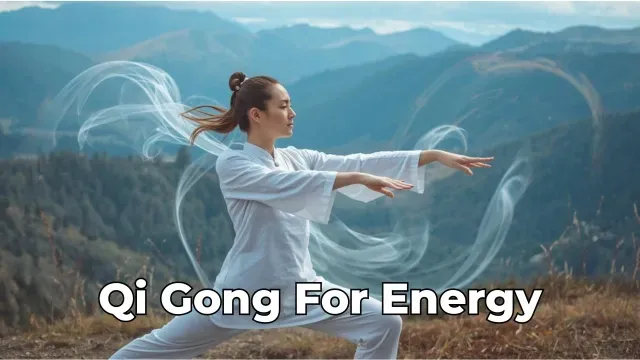
Qi Gong for Energy: Boost Vitality Naturally
Qi Gong for energy is a gentle and effective way to reduce fatigue, clear mental fog, restore natural vitality and boost your energy naturally, without relying on stimulants, strain or even force.
This makes Qi Gong for energy not just a quick fix, but a long-term way to rebuild your vitality.
If you often feel tired, sluggish, or mentally drained even after rest, you are not alone. Modern life places constant demands on your nervous system. Stress, screen time, and overthinking quietly deplete your energy throughout the day. While coffee or sugar may offer a temporary lift, they often leave you feeling more exhausted later.
Qi Gong takes a different approach.
Through slow movement, deep breathing, and mindful awareness, it helps your body generate energy rather than borrow it. Over time, this builds a steady, reliable sense of strength and clarity that supports both body and mind.
If you are new to the practice, you may find it helpful to begin with a clear foundation in What Is Qi Gong? Origins, Principles & Benefits, where the core principles and philosophy are explained simply.
You can also explore a step-by-step introduction in Qi Gong for Beginners: The Complete Guide to Energy, Health, and Inner Balance, which will help you build a safe and consistent practice from the very beginning.
Learn Qi Gong at home at the Bright Beings Academy
5 ⭐⭐⭐⭐⭐ Rating On Google Reviews

Why You Feel Low Energy (And How Qi Gong Helps)
Feeling low in energy is not usually a sign that something is wrong with you. More often, it reflects how modern life pulls you away from your body’s natural rhythm.
Energy is often drained in small, repeated ways throughout the day.
Chronic stress keeps your nervous system in a constant state of alert. Instead of restoring energy, your body is always preparing for the next demand, which slowly depletes your reserves.
Shallow breathing limits oxygen delivery to your cells. When breath stays in the chest, the body remains tense, and energy cannot circulate fully.
Physical tension in the shoulders, spine, and hips restricts flow. When the body tightens, energy becomes stagnant rather than moving freely.
Overthinking consumes a surprising amount of energy. Constant mental activity keeps you in your head, draining focus and leaving the body feeling depleted.
Disconnection from the body means you may not notice when energy is dropping. You push through fatigue instead of responding to it, which deepens exhaustion over time.
Qi Gong gently restores what has been lost.
Through slow, intentional movement and deep, relaxed breathing, it calms the nervous system and brings the body back into balance. As tension softens and posture opens, energy begins to move again.
If you want to understand how this calming effect supports both mind and body, you can explore Qi Gong for Anxiety: Calm Your Mind with Gentle Movement, which looks more deeply at how Qi Gong regulates the nervous system.
Over time, energy does not return through effort, but through restoring flow.
Energy does not always require a full practice session. Sometimes a few minutes of movement can make a noticeable difference. See Desk Qigong Office Breaks: Simple Ways to Reset Tension During the Workday for practical workplace-friendly exercises.
How Qi Gong for Energy Works in the Body
Qi Gong for energy works by restoring the body’s natural ability to generate, circulate, and store energy. Rather than forcing the body, it supports what is already designed to happen when the system is balanced.
There are four key ways this happens.
1. Breath restores energy at a cellular level
Qi Gong teaches slow, deep abdominal breathing. This allows more oxygen to reach your cells, supporting energy production throughout the body.
At the same time, the breath signals safety to the nervous system. As the body relaxes, less energy is wasted on stress responses, and more becomes available for healing and vitality.
If you would like to explore this in more depth, you can read Qi Gong Breathing Techniques: Unlock the Power of Your Breath, which offers a simple way to begin.
2. Movement releases tension and improves circulation
Gentle, flowing movements help open the body.
As stiffness in the joints and muscles softens, blood flow improves and oxygen moves more freely. This reduces the feeling of heaviness and fatigue that builds from long periods of sitting or tension.
Unlike intense exercise, Qi Gong does not drain your energy. It restores it by removing blockages and allowing the body to function more efficiently.
3. Mindfulness reduces energy loss
A large amount of energy is lost through constant thinking.
Qi Gong brings your attention back into the body. As awareness settles into movement and breath, mental activity begins to quiet. This creates space for clarity, focus, and a more stable sense of energy.
4. Energy is stored in the lower Dahn Jon (Dan Tian)
In traditional practice, the lower abdomen is seen as the body’s energy centre, known as the Dahn Jon (Dan Tian).
This area acts like a reservoir.
Through consistent practice, Qi Gong helps you gather and store energy here rather than constantly using it up. Over time, this builds a deeper sense of strength, stability, and inner power.
If you would like to understand how this connects to long-term health and vitality, you can explore The Healing Power of Qi Gong: Ancient Practice, Modern Benefits, which explains how energy cultivation supports the whole system.
When these four elements come together—breath, movement, awareness, and energy storage—you begin to feel a different kind of energy.
Not a temporary boost, but a steady, grounded vitality that supports you throughout the day.
12-Minute Qi Gong for Energy Routine (Beginner-Friendly)
This short Qi Gong for energy routine is designed to gently awaken the body, clear fatigue, and restore focus. You can practise it in the morning, during an afternoon slump, or whenever your energy feels low.
Move slowly. Breathe naturally. There is no need to force anything.
This Qi Gong for energy routine is suitable for beginners and can be adapted to your pace.
1. Wake-Up Breath (2 minutes)
Stand with your feet shoulder-width apart and your body relaxed.
As you inhale, slowly raise your arms overhead.
As you exhale, gently lower them back down.
Let the breath lead the movement.
This begins to open the chest, deepen the breath, and signal the body to shift out of fatigue.
2. Shaking to Release Fatigue (2 minutes)
Begin to gently shake your arms, shoulders, and legs.
Keep your jaw soft and allow your breath to flow naturally.
If it feels right, let out a soft sigh on the exhale.
Imagine tiredness leaving the body with each movement.
This helps release tension and wakes up circulation.
3. Swinging Arms (3 minutes)
Stand relaxed with soft knees and begin to swing your arms forward and back.
Allow the movement to be loose and natural.
Let your torso gently rotate as the arms swing.
This stimulates blood flow and helps clear stagnant energy from the body.
4. Gathering Energy in the Dahn Jon (3 minutes)
Bring your hands in front of your lower abdomen.
Slowly circle your hands—lifting on the inhale, lowering on the exhale.
Bring your awareness to the Dahn Jon (Dan Tian), just below the navel.
Sense energy gently collecting and settling in this area.
This is where energy begins to stabilise and store.
This is why Qi Gong is often described as a practice of energy cultivation rather than energy consumption, as explained in The Healing Power of Qi Gong: Ancient Practice, Modern Benefits.
5. Closing Breath (2 minutes)
Place your hands softly over your lower abdomen.
Take three slow, deep breaths.
Allow your body to settle.
Notice any warmth, calm, or subtle sense of strength within.
This helps seal the practice and integrate the energy you have built.
If you would like a structured way to build this into your daily life, you can explore Morning Qi Gong Routine: Start Your Day with Energy and Clarity, which offers a simple rhythm to follow.
Key Benefits of Qi Gong for Energy in Daily Life
The benefits of Qi Gong for energy build gradually and support both body and mind.
Practising Qi Gong for energy is not about quick bursts of motivation. It is about creating a steady, reliable sense of vitality that supports you throughout your day.
Over time, small, consistent practice begins to shift how your energy feels and how you move through life.
Gently Reduce Fatigue Throughout the Day
Many people notice that their energy no longer drops as sharply in the afternoon.
Instead of reaching for stimulants, a short Qi Gong practice can help your body reset naturally. Even a few minutes of movement and breath can restore a sense of lightness and ease.
Improve Focus and Mental Clarity
When energy flows more freely, the mind begins to settle.
You may find it easier to concentrate, think clearly, and stay present with what you are doing. This is not about forcing focus, but allowing it to return as the body relaxes.
Stabilise Mood and Emotional Energy
Energy is closely linked to how you feel.
As tension releases and the nervous system calms, emotional fluctuations often soften. You may feel more balanced, less reactive, and better able to respond to challenges with steadiness.
If you would like to explore this connection more deeply, you can read Qi Gong for Anxiety: Calm Your Mind with Gentle Movement, which looks at how emotional energy is regulated through practice.
Build Long-Term Stamina Without Strain
Unlike high-intensity exercise, Qi Gong builds energy without exhausting the body.
With regular practice, your baseline energy begins to rise. You may notice that daily tasks feel easier, and your body feels more supported rather than depleted.
Reconnect with a Natural Sense of Vitality
Perhaps most importantly, Qi Gong helps you reconnect with your body’s natural rhythm.
Energy begins to feel less like something you chase, and more like something you return to.
If you are interested in how this supports long-term health and vitality, you can explore Qi Gong for Seniors: Gentle Exercises for Longevity and Vitality, which shows how energy can be sustained gently over time.
Emotional and Spiritual Energy in Qi Gong
When we speak about Qi Gong for energy, it is easy to focus only on the physical body. But energy is not just physical. It also moves through your emotions, your thoughts, and your sense of connection to life.
This is often why fatigue feels deeper than tiredness.
Emotional Energy: Releasing What We Carry
Emotional tension can quietly drain your energy.
Stress, worry, and unresolved feelings create a kind of internal pressure. Even if you are not fully aware of it, your body is holding and managing this weight throughout the day.
Qi Gong creates space for this to soften.
Through gentle movement and breath, the body begins to release what it has been holding. As tension eases, emotional energy becomes lighter and more fluid. This often brings a sense of relief that is felt not just physically, but internally.
If you would like to explore this more directly, you can read Qi Gong for Emotional Healing: Move, Breathe, Release, which looks at how stored emotions affect your energy.
Spiritual Energy: Reconnecting with Inner Stillness
There is also a quieter form of energy that many people feel they have lost.
This is not about belief or philosophy. It is the simple experience of feeling connected, present, and at ease within yourself.
Qi Gong supports this by bringing your awareness inward.
As your breath slows and your body relaxes, the constant noise of the mind begins to settle. In that space, a different kind of energy emerges—one that feels calm, steady, and quietly alive.
If you feel drawn to explore this deeper connection, you can read Qi Gong for Spiritual Growth: Awakening Inner Peace and Flow, which expands on this aspect of the practice.
A More Complete Sense of Energy
Over time, these layers begin to come together.
Physical energy becomes steadier.
Emotional energy becomes lighter.
Mental energy becomes clearer.
And underneath it all, there is a growing sense of calm strength.
This is what makes Qi Gong for energy different.
It does not just help you feel more awake. It helps you feel more like yourself again.
Final Thoughts
Energy is not something you need to chase or force.
More often, it is something that returns when the body is given the space to relax, breathe, and move in a natural way.
Qi Gong offers a simple path back to that state.
Through gentle, consistent practice, you begin to notice small shifts. Your breath deepens. Your body softens. Your mind becomes quieter. And over time, your energy feels steadier and more reliable.
There is no need to do everything at once.
Even a few minutes each day can begin to restore what has been gradually depleted. The key is not intensity, but consistency.
With patience, your energy becomes something you can trust again.
Next Steps
If you are completely new, begin with the Free 7-Day Online Qi Gong Course as a simple foundation.
When you are ready for more structure, the 7-Day Qi Gong for Beginners Course offers a clear, supportive path to help you build confidence and consistency.
Choose the path that feels most natural for you. The important thing is to begin gently and allow your energy to rebuild in a way that feels sustainable.
FAQs About Qi Gong for Energy
1. Does Qi Gong really help increase energy?
Yes, Qi Gong for energy works by improving breathing, circulation, and nervous system balance. Many people feel a gentle boost after one session, with more stable energy developing through regular practice.
2. How quickly can Qi Gong improve low energy levels?
Some people notice a shift straight away, especially in clarity and lightness. However, the deeper benefit of Qi Gong for energy comes from consistent daily practice, which builds long-term vitality.
3. Can Qi Gong help with chronic fatigue or burnout?
Qi Gong can support recovery from fatigue by calming the nervous system and restoring energy gradually. It is a gentle practice, making it suitable for those who feel depleted, but it should be approached slowly and with care.
4. Is Qi Gong better than coffee for energy?
Qi Gong provides a natural and steady form of energy without the highs and crashes associated with stimulants. Rather than masking fatigue, it helps restore the body’s ability to generate energy.
5. How often should I practise Qi Gong for energy?
Short, regular sessions are most effective. Even 5–10 minutes daily can begin to improve energy levels, while longer or more consistent practice builds deeper and more stable vitality over time.
6. Can I practise Qi Gong for energy at work?
Yes, Qi Gong can be adapted to short breaks during the day. Gentle breathing and simple movements can help reset your energy and improve focus without needing a full session.
Further Reading on Qi Gong for Energy
The Healing Power of Qi Gong: Ancient Practice, Modern Benefits
Understand how Qi Gong builds energy, supports healing, and restores balance across the whole body.Qi Gong Breathing Techniques: Unlock the Power of Your Breath
Learn how breath directly affects your energy levels and how to use simple techniques to restore vitality.Morning Qi Gong Routine: Start Your Day with Energy and Clarity
A simple daily routine to help you build consistent energy and begin your day feeling clear and focused.Qi Gong for Anxiety: Calm Your Mind with Gentle Movement
Explore how calming the nervous system reduces energy drain and supports a more stable sense of vitality.
I look forward to connecting with you in my next post.
Until then, be well and keep shining.
Peter. :)