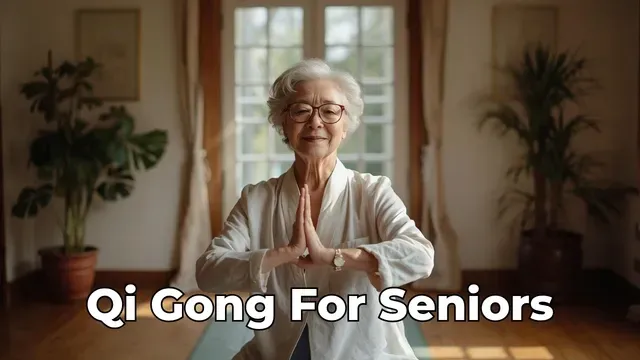
Qi Gong for Seniors: 3 Gentle Exercises, Benefits and Safety
Qi Gong for seniors is a gentle, low-impact practice that uses slow movement, relaxed breathing and mindful awareness to support balance, mobility, joint comfort and steady energy. It can be practised standing or seated, making it accessible for many people over 60 and older adults with different levels of strength, flexibility and confidence.
Qigong, also written as Qi Gong or Chi Gong, is not about pushing the body or trying to keep up with a demanding exercise routine. Instead, it helps you move within a comfortable range while becoming more aware of your posture, breathing and balance.
As we grow older, the body naturally changes. Joints may feel stiffer, balance may become less dependable, and energy levels can vary from day to day. Qi Gong works with these changes rather than asking the body to fight against them.
A simple and consistent Qi Gong practice may help you:
Support balance and confidence when moving.
Maintain mobility and a comfortable range of movement.
Gently exercise stiff joints without unnecessary strain.
Improve posture and body awareness.
Calm the nervous system through slower breathing.
Build energy without leaving the body exhausted.
Many simple Qi Gong exercises for seniors can also be adapted for a chair, reduced in size or practised for only a few minutes at a time. This makes it easier to shape the practice around how your body feels on any particular day.
If you are completely new to the practice, What Is Qi Gong? Origins, Principles & Benefits explains how Qi Gong brings movement, breathing and awareness together.
In this guide, you will discover the main benefits of Qi Gong for seniors, three simple exercises you can begin safely, and practical ways to adapt the movements for your own mobility and energy levels.
“The most helpful Qi Gong practice is not the most demanding one. It is the one your body feels safe and comfortable returning to.”
My Experience Teaching Qi Gong for Seniors
I began my career as a Qi Gong instructor at the Longmead Centre in Epsom, a community centre supporting older people.
When I first started teaching there, around six people attended the class regularly. The group was small, but the people who came began to experience the value of moving, breathing and practising together in a calm and supportive environment.
As word spread through the centre, the class quickly grew. Before long, it was full every week.
What stayed with me most was the feedback from the centre manager. They told me that there was a tangible difference within the wider community each time I taught a class.
That experience showed me that Qi Gong for seniors can offer far more than gentle physical exercise. A regular class can become a steady point of connection, helping people feel more present, more confident in their bodies and more connected with those around them.
It also shaped the way I continue to teach today. Older adults do not need pressure, complicated routines or movements that ask too much of the body. They need clear guidance, adaptable exercises and the freedom to practise at a pace that feels safe and appropriate.
The simple Qigong exercises for seniors in this guide follow that approach. Each one can be adjusted to suit different levels of balance, mobility and energy, including seated practice when standing is not comfortable.
“My early experience at the Longmead Centre taught me that gentle movement can support not only the individual, but the atmosphere of an entire community.”
Benefits of Qi Gong for Seniors and Older Adults
The benefits of Qi Gong for seniors come from its gentle, adaptable approach. Slow movements, relaxed breathing and mindful attention help older adults remain active without relying on speed, impact or physical intensity. Qi Gong can also be written as Qigong or Chi Gong.
Supports Balance and Confidence
Many Qi Gong exercises for seniors use slow weight shifting and controlled changes in posture. These movements encourage greater awareness of how the body is positioned and how weight is distributed through the feet.
Regular practice may help standing, turning and walking feel steadier and more confident.
Encourages Comfortable Mobility
Gentle Qi Gong allows the joints to move through a comfortable range without forcing or bouncing.
Small arm movements, soft knee bends and relaxed changes in posture can help the body feel less restricted. The movements can also be reduced in size or practised while seated when standing feels difficult.
Improves Posture and Body Awareness
Qi Gong encourages an upright but relaxed posture. The shoulders soften, the spine lengthens gently and the knees remain unlocked.
This can help older adults notice habits such as leaning to one side, holding tension in the shoulders or placing too much weight through one leg.
Builds Energy Without Exhaustion
A short Qi Gong practice can support movement and circulation without demanding intense effort.
Five or ten minutes may help the body feel calmer, clearer and more awake, making it suitable for people who find more strenuous exercise tiring.
Supports Calm and Wellbeing
Coordinating movement with the breath helps bring attention back to the body and the present moment.
For many older adults, this slower pace supports not only physical movement, but also a greater sense of calm, steadiness and connection.
The best form of exercise is one that matches your current health, mobility and energy and that you can practise consistently. What Is the Best Exercise to Boost the Immune System? looks at how walking, strength work, aerobic activity and gentler practices such as Qi Gong can all contribute to immune health without assuming that harder exercise is always better.
“The benefits of Qi Gong for seniors develop through gentle, regular practice that supports the whole person without overwhelming the body.”
How to Practise Qi Gong for Seniors Safely
Qi Gong for seniors should feel calm, comfortable and appropriate for the body you have today. The aim is not to perform every movement perfectly, but to practise in a way that feels steady enough to continue regularly.
Begin Standing or Seated
You can practise standing, sitting or using a chair for support.
When standing, keep your feet comfortably apart, your knees soft and your shoulders relaxed. When seated, choose a stable chair without wheels and place both feet flat on the floor.
Keeping a wall or chair nearby can provide reassurance if balance feels uncertain.
Allow the Breath to Settle
Take a few moments to notice your breathing before you begin moving.
Breathe naturally through the nose and allow the abdomen to soften as you inhale and exhale. There is no need to force a deeper breath than feels comfortable.
A relaxed breath can help release unnecessary tension and make the movements feel smoother.
Keep Movements Small and Controlled
Qi Gong movements do not need to be large to be effective.
Stay within a comfortable range and reduce the movement if you notice strain, wobbling, dizziness or unusual discomfort. Move slowly when turning, standing up or shifting your weight between the feet.
Pain is not a sign that the exercise is working more effectively.
Use Support When Needed
Holding a chair or practising near a wall does not reduce the value of the exercise.
Support may help you feel safer and more relaxed, allowing you to move with greater control. There is no need to practise without assistance unless it feels appropriate.
Keep Sessions Short
Five to ten minutes is enough when you are beginning.
A simple practice might include three gentle movements followed by a few minutes of relaxed breathing. You can gradually extend the session as your confidence and familiarity grow.
Consistency is more important than completing occasional long routines.
Adapt the Practice Each Day
Energy, balance and mobility can change from one day to the next.
On lower-energy days, practise while seated, make the movements smaller or focus mainly on breathing. Adapting the practice is not a step backwards. It is part of listening to the body.
Speak with a healthcare professional before beginning if you have recently had surgery, experience unexplained dizziness or live with a condition that affects your ability to exercise safely.
“Safe Qi Gong practice begins with moving slowly, using support when needed and allowing the practice to meet your body as it is today.”
3 Simple Qi Gong Exercises for Seniors
These simple Qi Gong exercises for seniors can support balance, mobility and calm without requiring a long routine. Each movement can be adapted to suit your energy, flexibility and confidence.
Move slowly, stay within a comfortable range and use a stable chair for support whenever needed. There is a video that shows you these exercises below this explanation if you prefer.
1. Lifting the Sky
Lifting the Sky encourages upright posture, relaxed breathing and gentle movement through the shoulders and upper body.
How to practise
Stand with your feet comfortably apart, or sit upright in a stable chair.
Place your hands in front of your lower abdomen.
Slowly raise your arms as you breathe in.
Turn the palms upwards as the hands reach chest or shoulder height.
Continue only as far as feels comfortable.
Lower the arms slowly as you breathe out.
Repeat three to five times.
Keep the elbows soft and make the movement smaller if the shoulders feel stiff.
2. Gentle Weight Shifting
This exercise supports balance and helps you become more aware of how your weight moves between the feet.
How to practise
Stand with your feet slightly wider than hip-width apart.
Keep your knees soft and hold a stable chair if needed.
Slowly shift your weight towards your right foot.
Return to the centre.
Shift gently towards your left foot.
Continue for one minute.
Keep both feet on the floor and avoid leaning too far. The aim is to move smoothly and steadily.
3. Lower-Abdomen Breathing
Lower-abdomen breathing can be practised sitting or standing, making it suitable for days when energy or mobility is limited.
How to practise
Place both hands over your lower abdomen.
Relax your shoulders and jaw.
Breathe in gently through your nose.
Notice the abdomen expanding slightly.
Breathe out slowly and allow the body to soften.
Continue for two to five minutes.
Do not force the breath. Let it remain quiet and comfortable.
A Simple Five-Minute Routine
You can combine the three exercises into a short daily practice:
Lifting the Sky for three to five repetitions.
Gentle weight shifting for one minute.
Lower-abdomen breathing for two to three minutes.
On days when standing feels difficult, practise Lifting the Sky and lower-abdomen breathing from a chair.
For more structured support with stiffness, reduced mobility or joint discomfort, explore the Qi Gong for Healthy Joints course.
“A few simple Qi Gong exercises practised regularly can be more helpful than a long routine that feels difficult to maintain.”
Is Qi Gong Safe for Seniors and Older Adults?
Qi Gong is generally a gentle, low-impact form of movement for seniors when it is practised slowly and adapted to the individual.
The exercises do not usually involve jumping, sudden movements or heavy strain on the joints. They can also be practised standing, seated or with the support of a stable chair.
A safe practice should feel:
Calm and controlled.
Comfortable through the joints.
Steady rather than rushed.
Supportive rather than exhausting.
Stop and rest if you experience pain, dizziness, unusual breathlessness or instability. Reduce the movement, practise while seated or seek appropriate guidance before continuing.
Speak with a healthcare professional before beginning if you have recently had surgery, experience unexplained dizziness, have significant balance difficulties or live with a condition that affects safe movement.
Qi Gong can support general movement and wellbeing, but it should complement rather than replace medical care.
“Qi Gong is safest when it is adapted to your body, practised without strain and allowed to develop gradually.”
Final Thoughts
Qi Gong for seniors offers a gentle way to keep moving, support balance and maintain a stronger connection with the body as it changes over time.
The practice does not need to be complicated. A few simple movements, steady breathing and a willingness to practise regularly can be enough to create meaningful benefits.
Some days, you may feel able to stand and move through a fuller routine. On other days, a seated practice or a few minutes of breathing may be more appropriate. Both are valid forms of Qi Gong.
What matters most is not how much you do, but whether the practice feels safe, manageable and supportive enough to return to.
Progress may appear gradually. You may notice that standing feels steadier, the joints feel less restricted or the body settles more easily after a difficult day. These small changes are worth recognising.
There is no need to rush. Let the practice meet you where you are and develop through patience, awareness and gentle consistency.
Next Steps
For most older adults who are new to Qi Gong, the gentlest place to begin is the Free 7-Day Online Qi Gong Course included within the Choboja membership.
It allows you to explore simple movements, breathing and energy awareness at home, without pressure and at a pace that feels comfortable for your body.
When you feel ready for a more structured daily pathway, the 7-Day Qi Gong for Beginners Course offers additional guidance to help you build a safe and consistent practice.
The membership options below allow you to choose the level of support that feels right for you, whether you prefer to begin with free on-demand lessons, join live online classes or receive more personalised guidance.
“Start with the level of support that feels right for your body today, and let your practice grow gently from there.”
Find Your Qi Gong Starting Point
Qi Gong can be a gentle and enjoyable way to stay active, whatever your age or previous experience.
If you would like to continue exploring, Bright Beings Academy offers different ways to learn and practise from the comfort of your own home.
You may prefer to follow a course independently at your own pace, enjoy the encouragement of regular live online classes or appreciate more personal guidance.
Our short Find Your Qi Gong Starting Point quiz can help you discover which learning pathway may suit your preferences.
There is no right or wrong answer. Simply choose the approach that feels most comfortable and appealing to you.
Frequently Asked Questions About Qi Gong for Seniors
Is Qi Gong safe for seniors over 60?
Qi Gong is generally a gentle, low-impact form of movement that can be suitable for many people over 60.
The exercises can be adapted to different levels of balance, mobility and energy. Movements may be practised standing, seated or with the support of a stable chair.
Anyone recovering from surgery, experiencing unexplained dizziness or living with a condition that affects safe movement should speak with an appropriate healthcare professional before beginning.
Is Qi Gong suitable for complete beginners?
Yes. Qi Gong for seniors does not require previous experience, unusual flexibility or a high level of fitness.
Beginners can start with simple movements, natural breathing and short practice sessions. The most important thing is to move slowly and stay within a comfortable range.
How often should seniors practise Qi Gong?
A short daily practice is often more manageable than a longer session completed occasionally.
A helpful starting point is:
Five to ten minutes each day.
Three or four simple exercises.
Additional rest whenever it is needed.
Consistency is more important than the length of each session.
Can Qi Gong help improve balance in older adults?
Many Qi Gong exercises use slow weight shifting, controlled stepping and greater awareness of posture.
Regular practice may help older adults feel more aware of how their weight is distributed and more confident when standing, turning or walking.
Anyone with significant balance difficulties should practise near a stable chair or wall and seek professional guidance where appropriate.
Can Qi Gong for seniors be practised sitting down?
Yes. Many Qi Gong movements can be adapted for a seated position.
Seated Qi Gong can include:
Gentle arm and shoulder movements.
Relaxed breathing.
Upper-body rotations.
Movements through the hands, feet and ankles.
Quiet awareness of posture and the body.
A stable chair without wheels is usually the safest choice.
How long should a Qi Gong session for seniors last?
There is no required session length.
Five minutes may be enough when you are beginning or when energy is low. As the practice becomes more familiar, you may gradually extend the session to ten, fifteen or twenty minutes.
The session should finish before the body feels strained or exhausted.
What are the best Qi Gong exercises for seniors?
The most suitable exercises are usually simple movements that can be repeated safely and adapted easily.
Good starting practices include:
Lifting the Sky.
Gentle weight shifting.
Lower-abdomen breathing.
Slow arm circles.
Seated shoulder and ankle movements.
The best exercise is the one that feels comfortable enough to practise consistently.
Can Qi Gong help seniors who feel stiff or have limited mobility?
Gentle Qi Gong movements may help maintain mobility and encourage the joints to move through a comfortable range.
The movements should remain small and controlled. There is no need to force a stretch or move through pain.
People who need a more structured practice for stiffness and reduced joint mobility may find the Qi Gong for Healthy Joints course helpful.
How long does it take to notice the benefits of Qi Gong?
Some people notice greater calm, warmth or relaxation during their first few sessions.
Changes in balance, mobility and confidence usually develop more gradually through regular practice. The pace will vary according to the individual’s health, movement history and consistency.
It is often helpful to notice small changes rather than waiting for a dramatic result.
Further Reading: Qi Gong for Seniors
Continue Your Practice
If you would like to deepen your understanding of Qi Gong for seniors, these related guides explore balance, joint comfort, circulation and seated practice in greater detail.
Qi Gong for Balance and Falls Prevention: Daily Stability
Discover slow, controlled practices that can support stability, coordination and greater confidence in everyday movement.
Qi Gong for Arthritis and Joint Pain: Gentle Relief
Explore adaptable movements that support joint mobility without forcing the body through uncomfortable ranges.
Qi Gong for Blood Pressure: A Natural Support Guide
Learn how gentle movement, relaxed breathing and consistent practice may complement medical care for healthy circulation and heart wellbeing.
Seated Qi Gong: Gentle Movements for Calm, Mobility and Daily Energy
Find accessible seated practices for days when standing feels tiring, uncomfortable or less stable.
Scientific Research on Qi Gong for Seniors
Scientific research specifically examining Qi Gong for seniors is still developing. Studies use different styles of Qigong, programme lengths and participant groups, which makes broad conclusions difficult.
However, research involving older adults suggests that regular, appropriately adapted Qi Gong practice may support balance, mobility, quality of life and confidence in movement. Studies also indicate that low-intensity Qigong can be practical and well tolerated within community and rehabilitation settings.
Balance, Gait and Confidence in Movement
A 2020 controlled study examined a 12-week Medical Qigong programme for older adults. The researchers reported improvements in balance and gait, alongside a more modest improvement in participants’ confidence in their balance.
The authors suggested that Medical Qigong may offer a useful approach for older adults who are at increased risk of falls, although larger and more rigorous studies are still needed.
Stahl, Belisle and Zhao — Medical Qigong for Mobility and Balance Self-Confidence in Older Adults (PubMed)
Quality of Life During Rehabilitation
A randomised controlled trial studied 58 adults aged 50 and over who were receiving rehabilitation within an intermediate-care unit.
Participants who received four weeks of structured Qigong alongside their usual care experienced a greater improvement in reported quality of life than those receiving usual care alone. Pain and depressive symptoms improved in both groups, and the researchers reported no adverse events connected with the programme.
Martínez and colleagues — Impact of Qigong on Quality of Life, Pain and Depressive Symptoms in Older Adults (PubMed)
Physical and Emotional Wellbeing in Older Adults
A 2019 systematic review and meta-analysis examined studies of Qigong exercise involving older adults.
The review found encouraging evidence relating to physical ability, everyday functioning, balance, depression and anxiety. However, the researchers also noted that stronger results were often found in lower-quality studies and that the overall findings were not consistently statistically significant.
This means the evidence is promising, but further high-quality trials are needed before firm conclusions can be made.
Chang and colleagues — Physical and Psychological Health Outcomes of Qigong Exercise in Older Adults (PubMed)
Safety and Suitability for Frail Older Adults
A 2024 randomised controlled trial examined a 16-week community-based Baduanjin Qigong programme involving older adults with varying levels of frailty.
The programme had a high attendance rate and was described as safe, feasible and acceptable. No major adverse events were reported. However, the study did not find significant differences between the Qigong and control groups across its main physical and psychological outcomes.
This is an important reminder that Qi Gong may provide an accessible form of movement without producing the same measurable results for every person.
Tou and colleagues — Community-Based Baduanjin Exercise for Older Adults With Varying Frailty (PubMed)
A Balanced View of the Evidence
Taken together, the research suggests that Qi Gong may offer older adults a gentle way to support movement, balance and general wellbeing. It also appears adaptable enough to be used within community, rehabilitation and lower-mobility settings.
However, Qi Gong should be viewed as a supportive practice rather than a treatment or guaranteed way to prevent falls or manage a medical condition. Results will vary according to the individual, the style of Qigong practised and the consistency and quality of the instruction.
For a wider overview of the research, including the strengths and limitations of the current evidence, read Qi Gong Evidence: What Research Says About Mental Health, HRV and Heart Health.
“Research into Qi Gong for seniors is encouraging, particularly for balance, movement and quality of life, but the practice should remain gentle, individualised and complementary to appropriate healthcare.”
I look forward to connecting with you in my next post.
Until then, be well and keep shining.
Peter. :)