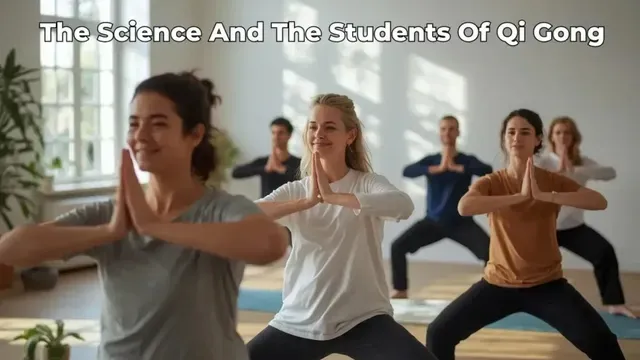
The Science Behind Qi Gong: Research, Results and Real Student Experiences
Qi Gong is often described as gentle movement, but the science behind Qi Gong shows something much deeper — a practice that supports the nervous system, improves balance, and helps the body return to a more natural state of calm.
Modern research continues to explore how slow, mindful movement and breathwork influence everything from heart rate variability to stress hormones and brain function. If you are new to the practice, it may help to first understand the foundations in What Is Qi Gong? Origins, Principles & Benefits, where the core principles are explained in simple terms.
At the same time, evidence alone does not tell the full story. The science behind Qi Gong becomes far more meaningful when you see how it translates into real life — calmer days, better sleep, improved mobility, and a quiet sense of balance that builds over time.
This article brings both sides together. You will see what research says, where its strengths and limits lie, and how real students are experiencing these changes in their own bodies and lives.
"Research into Qi Gong suggests it may support wellbeing in a variety of ways, while the real value of the practice emerges through consistent, lived experience."
Learn Qi Gong at home at the Bright Beings Academy
5 ⭐⭐⭐⭐⭐ Rating On Google Reviews

What Does The Science Behind Qi Gong Actually Show?
When people first explore Qi Gong, a natural question arises: does it really work?
Research into Qi Gong has produced encouraging findings across a range of populations, particularly in areas such as stress regulation, sleep quality, balance, and cognitive function. Studies across different populations show improvements in areas that are closely linked to long-term health, including stress levels, sleep quality, balance, and cognitive function.
A key part of this comes from how Qi Gong combines slow movement, breathing, and attention. This combination appears to calm the nervous system, helping the body shift away from chronic stress and into a more balanced state. Over time, this can support better recovery, clearer thinking, and a greater sense of stability in daily life.
For a deeper and more detailed breakdown of the research, you can explore Qi Gong Evidence: What Research Says About Mental Health, HRV and Heart Health (2025–2026 Update), which brings together the latest findings in one place.
It is also important to approach this with balance. While results are promising, Qi Gong is not a quick fix or a replacement for medical care. A grounded perspective is explored in Medical Qi Gong: Evidence, Hype and Limits, helping you understand where the evidence is strong and where expectations need to stay realistic.
“The science behind Qi Gong consistently points to one simple truth: gentle, regular practice can create meaningful changes in how the body regulates stress, movement, and overall wellbeing.”
How Qi Gong Affects The Nervous System And Stress Response
One of the most important insights from the science behind Qi Gong is how directly it works with the nervous system.
Many people live in a constant state of low-level stress without realising it. The body stays slightly tense, the breath becomes shallow, and the mind remains active even at rest. Over time, this creates a feeling of being “wired but tired” — exhausted, yet unable to fully settle.
Qi Gong offers a different pathway.
Through slow, rhythmic movement and steady breathing, the body begins to shift out of this pattern. Heart rate softens, breathing deepens, and the mind gradually quietens. This is not something that needs to be forced. It emerges when the body feels safe enough to release tension.
Research into practices like this shows improvements in heart rate variability (HRV), a key marker of how well the body adapts to stress. When this system becomes more flexible, people often notice they recover more quickly from pressure and feel steadier in everyday life.
If you would like to explore this further, The Healing Power of Qi Gong: Ancient Practice, Modern Benefits explains how these changes appear across both traditional understanding and modern research.
What makes this especially supportive is how accessible it is. Even gentle, seated practice can begin to create a shift, without strain or effort.
“When the body is given space to slow down, it naturally begins to rebalance, restoring a sense of calm and steadiness over time.”
What The Research Says About Sleep, Balance And Long-Term Health
As research into Qi Gong has grown, a clear pattern has begun to emerge. The benefits tend to show up most strongly in areas that affect everyday quality of life — sleep, balance, energy, and long-term resilience.
Sleep is one of the most consistent findings. Studies suggest that regular practice can help people fall asleep more easily and experience deeper, more restorative rest. This is especially noticeable in those who struggle with stress-related sleep issues, where calming the body becomes more important than trying to “switch off” the mind.
Balance and stability are another key area. Gentle, controlled movements help strengthen the legs and improve coordination, which is particularly valuable as people age or recover from periods of inactivity. Over time, this can reduce the risk of falls and support greater confidence in movement.
There is also growing interest in how this type of practice supports cognitive function. Early research suggests potential improvements in memory, attention, and overall mental clarity, particularly in older adults or those experiencing mild cognitive decline.
If you would like to explore a more detailed breakdown of these findings, Qi Gong Evidence: What Research Says About Mental Health, HRV and Heart Health (2025–2026 Update) brings together the latest research across these areas in a clear and accessible way.
What stands out across all of this is consistency. The benefits are not coming from intensity, but from gentle, repeated practice that supports the body over time.
“Small, steady improvements in sleep, movement, and clarity can quietly reshape how the body feels and functions day to day.”
Where The Limits Of The Research Still Exist
While the science behind Qi Gong is encouraging, it is important to approach it with clarity and honesty.
Not all studies are equal in quality. Some involve small groups, short timeframes, or variations in how Qi Gong is practised. This makes it harder to draw absolute conclusions, especially when comparing it directly with other forms of exercise or therapy.
There is also variation in how outcomes are measured. For example, improvements in wellbeing, stress, or energy are often self-reported. These experiences are real and meaningful, but they can be more difficult to standardise in scientific terms.
Another important point is expectation. Qi Gong supports the body’s natural regulation, but it is not a replacement for medical treatment. It works best as a complementary practice, alongside appropriate care where needed.
If you would like a grounded and balanced perspective on this, Medical Qi Gong: Evidence, Hype and Limits explores where the research is strong, where it is still developing, and how to approach it responsibly.
This kind of balanced view does not weaken the practice. In many ways, it strengthens it. It allows people to engage with Qi Gong in a way that is realistic, steady, and sustainable.
Research into Qi Gong covers a range of health outcomes, but immune-related findings need to be interpreted on their own rather than assumed from broader wellbeing studies. Can Qi Gong Help Boost My Immune System? looks specifically at what the evidence suggests about Qi Gong and immune function, including where the findings are promising and where uncertainty remains.
“Understanding both the strengths and the limits of the research helps create a more grounded and trustworthy relationship with the practice.”
What Our Students Experience In Real Life
Research offers reassurance, but lived experience is often what helps something truly land.
Many of our students come to Qi Gong without clear expectations. Some are simply looking for a gentle way to move. Others are hoping to feel less overwhelmed, sleep more easily, or reconnect with a sense of calm they feel they have lost.
What they often notice first is something subtle.
A quieter mind at the end of the day. A sense of ease in the body that was not there before. A small but meaningful shift in how they respond to stress. These changes are not dramatic or forced. They build naturally through regular practice.
Over time, these small shifts begin to deepen. Students describe feeling more balanced, more energised, and more connected to themselves. Physical changes often follow too — improved flexibility, reduced stiffness, and a greater sense of confidence in movement.
What stands out most is not just the outcome, but the way it happens. There is no pressure to perform or push. The practice meets people where they are, allowing progress to unfold at a pace that feels safe and sustainable.
You have already seen this reflected in the testimonials shared throughout this article. They are not isolated experiences. They point to a consistent pattern: when people show up gently and regularly, meaningful change begins to take shape.
“Real change often begins quietly, with small shifts that gradually restore a sense of balance, ease, and connection in everyday life.”
Student Testimonials
I have been taking part in Peter’s classes for a few months now. I have found them to be easy to follow, informative throughout of what we are doing and why which I find helps with motivation and believe it is helping in my overall well-being. I would highly recommend them.
Julia Wardhaugh: 5⭐⭐⭐⭐⭐ Google Review
I have been taking part in Peter’s classes for a few months now. I have found them to be easy to follow, informative throughout of what we are doing and why which I find helps with motivation and believe it is helping in my overall well-being. I would highly recommend them.
Lisa Tawfiq: 5⭐⭐⭐⭐⭐ Google Review
When I joined Peter's class a few months ago, I didn't really know what Qi Gong was. I was just looking for a replacement for a fitness class that I'd had to give up; Well lucky me!... I'm learning that the classes are about so much more than just 'physical' fitness.
I've been slightly surprised by my experiences since starting Qi Gong. The following were not outcomes I was specifically seeking, but since attending I just seem to be more focused, calm and on top of things.
I seem to have so much more energy and my general mood is much more peaceful and balanced. I've also quite suddenly realised that problematic and worsening knee pain has just 'disappeared'. We spend so much time dealing with daily pressure and focusing on endless material problems – I like the feeling Qi Gong gives me of stepping off the daily grind, taking some time for myself, performing the Qi Gong exercises and focusing on more spiritual connection and well being.
I enjoy Peter's humour, gentle teaching style and his enthusiasm. Qi Kong has so far turned out to be so different to anything I might have assumed it was. I do feel I'm still very much a beginner, but I'm looking forward to gaining a deeper understanding through Peter's classes and his extensive knowledge.
Linda Pini: 5⭐⭐⭐⭐⭐ Google Review
I am so glad I discovered Bright Beings Academy. I have noticed many positive changes in my health since beginning Ki gong, in a short space of time. Peter shows care and consideration and teaches in a relatable manner. He has so much knowledge he willingly shares with the aim of helping everyone shine. Fully recommend the academy.
Sharon Fucci: 5⭐⭐⭐⭐⭐ Google Review
“We really enjoyed all the sessions. It has really helped to improve our health.”
— Rekha Patel
“We really enjoyed the whole time. I have been to all the sessions and my body is now flexible.”
— Kokile Patel
“Thank you so much. I had not heard of Ki Gong. Thank you for introducing me to it. I have really enjoyed the classes and feel totally energised by them.”
— Qamer Khan
“These classes are really good for myself. I feel better, calmer in everyday life and feel more flexible.”
— Margreet Kikstra
“Thank you ever so much for these amazing Ki Gong exercise classes. I have thoroughly enjoyed the sessions and feel more energetic and flexible.”
— Shamsun Khan
Stories from the Brighter Living Impact Report
Our charity work with Brighter Living showed how accessible Qi Gong can transform lives.
Chandra’s story: After multiple strokes, she began practising Qi Gong from a wheelchair as part of her wider recovery journey. Over time, she experienced significant improvements in mobility and now walks with a stick.
Other participants: Reported improved balance, reduced stiffness, more energy, and a renewed sense of confidence in daily life.
These aren’t abstract claims — they are real lives touched by simple, consistent practice.
See the Brighter Living Impact Report Here
Final Thoughts
Qi Gong does not ask you to become someone new. It invites you to return to a state your body already understands.
The research shows that gentle, consistent practice can support sleep, balance, and emotional steadiness. The experiences shared by students show how these changes begin to take shape in real life — often quietly, and often sooner than expected.
There is no need to force progress or chase outcomes. What matters most is showing up in a way that feels manageable, allowing the body to respond in its own time.
Over time, this creates something deeper than short-term results. It builds a sense of trust — in your body, your energy, and your ability to find balance again.
Next Steps
If you are new to Qi Gong, the Free 7-Day Online Qi Gong Course is a gentle place to begin.
If you would like a clearer structure after that, the Qi Gong for Beginners Course gives you a more complete foundation in the practice.

Below, you will also find our membership options. These give you ongoing guidance, live sessions, and a supportive space to deepen your practice at your own pace.
Whether you choose to start with the course or explore the membership, the key is the same: small, regular steps that gradually build into something meaningful.
FAQs About The Science Behind Qi Gong
Is there real scientific evidence behind Qi Gong?
Yes. Research shows that regular practice can support areas such as stress reduction, sleep quality, balance, and cognitive function. While not every study is perfect, the overall direction of evidence is positive and continues to grow.
How quickly do people notice results?
Some people feel a sense of calm or clarity after a single session. More noticeable changes, such as improved sleep or flexibility, usually develop over a few weeks of consistent practice.
Does Qi Gong work the same way for everyone?
No single practice works the same way for everyone. Qi Gong supports the body’s natural regulation, so results can vary depending on the individual, their consistency, and their overall health.
Can Qi Gong replace medical treatment?
No. Qi Gong is best used as a supportive practice alongside appropriate medical care. It can help improve overall wellbeing, but it is not a substitute for professional treatment where needed.
Why do both science and student experience matter?
Research provides a level of trust and understanding, while real-life experiences show how those benefits feel in everyday life. Together, they offer a more complete picture of what the practice can offer.
Further Reading On The Science Behind Qi Gong
Qi Gong Evidence: What Research Says About Mental Health, HRV and Heart Health (2025–2026 Update)
A deeper look at the latest research, including clinical findings on stress, heart rate variability, and mental wellbeing.
Medical Qi Gong: Evidence, Hype and Limits
A balanced exploration of what the science supports, where the limits are, and how to approach the practice responsibly.
The Healing Power of Qi Gong: Ancient Practice, Modern Benefits
An overview of how traditional wisdom and modern research come together to explain the benefits of Qi Gong.
What Is Qi Gong? Origins, Principles & Benefits
A clear introduction to the foundations of Qi Gong, ideal if you want to understand how the practice works at its core.
Scientific Studies
Effects of 3‑Month Qi Gong Exercise on Heart Rate Variability and Respiration in Anxious College Students
In this 2024 randomised trial, 37 anxious college students practised Qi Gong for twelve weeks while a similar group carried on with their usual routines. Those who trained saw a significant drop in anxiety scores, deeper abdominal breathing and healthier heart‑rate variability, suggesting that gentle daily practice can improve how the nervous system responds to stress without medication or high‑intensity exercise.
“For anyone feeling constantly wired and anxious, this study hints that a simple, consistent Qi Gong routine could be a practical way to calm the mind and steady the heart.”
Effect of Tai Chi and Qi Gong on Heart Rate Variability: A Systematic Review and Meta‑Analysis
Researchers compiled fifteen controlled studies (543 participants) to see whether these slow‑movement practices affected heart health. Across the pooled data they found moderate improvements in heart‑rate variability, with the biggest gains occurring in people who already had reasonably balanced autonomic function. The analysis suggests that mindful movement and breathing may gently enhance cardiac resilience over time, especially when people stick with a simple routine.
“If your heart feels stressed from daily life, this large‑scale analysis suggests that regular Qi Gong may gently improve your heart’s ability to adapt and recover.”
Qi Gong for Mental Health and Sleep Quality in Postmenopausal Women: A Randomised Controlled Trial
This 2022 study involved 125 postmenopausal women practising a twelve‑week Ba Duan Jin Qi Gong programme. Compared with a non‑exercise group, those who participated experienced better sleep quality and notable reductions in anxiety and depressive symptoms. Improvements were seen in how long it took to fall asleep, how deeply participants slept and how refreshed they felt the next morning.
“For women navigating hormonal changes and restless nights, the findings suggest that a gentle Qi Gong routine may restore both mood and sleep without adding pressure.”
Tai Chi Qi Gong as a Means to Improve Night‑Time Sleep Quality among Older Adults with Cognitive Impairment: A Pilot Randomised Controlled Trial
In this 2016 pilot study, 52 older adults with cognitive impairment were assigned to either a Qi Gong‑based Tai Chi group or a control group for two months. The group practising twice‑weekly sessions reported significantly better night‑time sleep quality, longer sleep duration and improved mental health scores six months later. The trial suggests that gentle, rhythmic movement can be a safe, non‑pharmacological way to ease sleep difficulties in older adults with memory challenges.
“If you or someone you love struggles with sleep and cognitive decline, this research points to Qi Gong as a simple, compassionate practice that may bring easier nights and brighter days.”
I look forward to connecting with you in the next post.
Until then, be well and keep shining.
Peter. :)