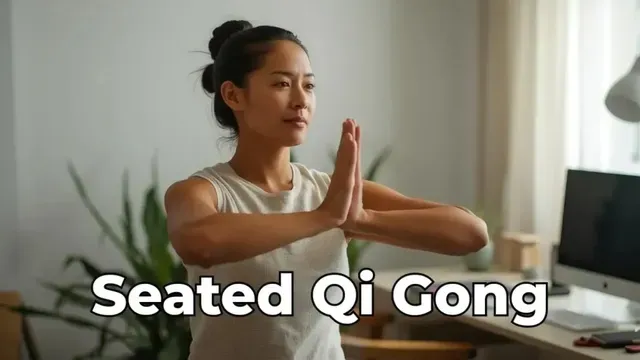
Seated Qi Gong: Gentle Movements for Calm, Mobility and Daily Energy
Seated Qi Gong is a gentle, chair-based practice that helps you build calm, mobility, and steady energy without strain. It is designed for real life—whether you feel stiff, tired, overwhelmed, or simply need a softer way to reconnect with your body.
Can’t stand for long? Tight hips? A restless or low-energy day? Seated Qi Gong meets you where you are. The movements are small, the breath is slow, and the focus is on ease rather than effort. Even a few quiet minutes can begin to release tension, deepen your breath, and settle your mind.
If you are new to the practice, it helps to first understand the foundations in What Is Qi Gong? Origins, Principles & Benefits, where the core ideas behind movement, breath, and energy are explained clearly.
In this guide, you will learn what seated Qi Gong is, who it supports, how to practise safely, and simple routines you can return to each day. The aim is not to do more, but to do less with greater awareness—and let that consistency gently reshape how you feel.
Practice Qi Gong at home at the Bright Beings Academy
5 ⭐⭐⭐⭐⭐ Rating On Google Reviews
More Details About Joining Below
What Is Seated Qi Gong?
Seated Qi Gong is a form of practice that uses gentle, controlled movements, slow breathing, and relaxed awareness while sitting on a stable chair. The movements are intentionally small, the pace is unhurried, and the focus is on calming the nervous system while gently awakening the body.
Rather than pushing for intensity, seated Qi Gong works by reducing effort. The shoulders soften, the breath deepens, and the body begins to release held tension. This makes it especially supportive for beginners, desk-based lifestyles, older adults, or anyone moving through fatigue, recovery, or low-energy periods.
Because the movements are subtle, your awareness becomes the main driver of the practice. Where your attention goes, your body begins to respond. Over time, this builds a quiet connection between breath, body, and mind.
You can think of seated Qi Gong as a daily reset. Even short sessions can help improve posture, ease tightness in the neck and shoulders, and bring a steady sense of calm back into the system.
In simple terms, seated Qi Gong is not about doing more. It is about doing less, with greater presence—and allowing small, consistent practice to create meaningful change.
"Seated Qi Gong is a gentle and accessible way to practise breath, movement, and awareness without needing to stand. Its strength lies in its simplicity, making it ideal for building calm, mobility, and consistency in everyday life."
Who Is Seated Qi Gong For (and When to Be Cautious)
Seated Qi Gong is designed to meet you where you are, not where you feel you “should” be. It is especially supportive for those who need a gentler way to move, breathe, and reconnect with their body.
It can be particularly helpful for beginners, desk-based workers, older adults, and anyone experiencing low energy, stiffness, or reduced mobility. It is also a supportive option during recovery periods, fatigue, or days when standing practice feels like too much.
Because the movements are small and controlled, seated Qi Gong allows you to build confidence slowly. You can explore movement without pressure, and begin to trust your body again at a pace that feels safe.
That said, there are times when extra care is needed. If you are recovering from recent surgery, experiencing acute pain, severe dizziness, or managing uncontrolled blood pressure, it is important to move gently and seek appropriate guidance. If you live with trauma or panic sensitivity, keep your eyes softly open, make movements very small, and prioritise a longer, calming exhale.
If at any point you feel sharp pain, distress, or instability, it is always best to stop, rest, and seek support where needed. This practice is not about pushing through discomfort, but about listening and responding with care.
"Seated Qi Gong is suitable for most people, especially those needing a gentle and accessible practice. The key is to move slowly, stay within your comfort, and allow the practice to support you rather than challenge you."
Seated Qi Gong Safety: Read This Before You Begin
Creating a safe foundation allows your practice to feel calm, steady, and sustainable. A few simple adjustments can make a significant difference to how your body responds.
Begin with a stable, straight-backed chair without wheels. Sit towards the front edge so your feet can rest fully on the floor, with your hips slightly higher than your knees. This helps the spine lengthen naturally without strain.
Allow a gentle softness through the body. Keep a small bend in the elbows, relax the shoulders, and let the neck feel long rather than held. There is no need to sit rigidly—ease supports better movement than tension.
Your breath should remain light and quiet, ideally through the nose, with a slightly longer exhale. This longer out-breath signals safety to the body and helps settle the nervous system.
Pay attention to how your body responds. Pain, strain, or a sense of overwhelm are clear signals to pause or reduce the range of movement. Smaller movements are not a step back—they are often the most effective way to build trust and stability.
If you begin to feel dizzy or unsettled, bring your awareness down into your feet, lower your hands, and gently lengthen your exhale. Let the body settle before continuing.
Approach the practice with patience rather than pressure. The aim is not to achieve a perfect posture, but to create a space where your body feels supported and safe enough to soften.
"Safety in seated Qi Gong comes from simplicity—stable posture, gentle movement, and a calm, steady breath. When you prioritise ease over effort, the body naturally begins to respond in a more balanced and relaxed way."
Seated Qi Gong Chair Set-Up: A Simple 60-Second Checklist
Your set-up shapes how your body feels during practice. A few small adjustments can help you move with greater ease, stability, and comfort.
Feet flat on the floor, about hip-width apart
Sit towards the front edge of the chair
Hips slightly higher than your knees
Sit bones grounded without slumping or bracing
Spine naturally long, not rigid
Chin slightly tucked, crown gently lifting
Shoulders relaxed and heavy
Hands resting softly on your thighs
Once you are in position, bring your attention to your breath. Inhale gently for a count of 3–4, and exhale slowly for 6–8. Let the breath guide the body into a more settled and connected state.
There is no need to force alignment. The aim is to feel supported, balanced, and at ease in your body before you begin moving.
"A simple and stable chair set-up creates the foundation for everything that follows. When your posture feels supported, your breath and movement can flow more naturally and comfortably."
10-Minute Seated Qi Gong Routine for Daily Energy and Calm
This simple seated Qi Gong routine is designed to help you release tension, deepen your breath, and restore a steady sense of calm. Move slowly, keep everything small, and let your breath guide each movement.
0:00–1:00 | Arrive and Lengthen the Exhale
Inhale gently through the nose for 3–4. Exhale slowly for 6–8. Soften your jaw, brow, and shoulders. Allow your body to settle.
1:00–2:00 | Neck Ease
Make tiny nodding movements, as if saying yes. Then slowly explore small side-to-side turns. Keep everything within a comfortable range and stay with your breath.
2:00–3:30 | Shoulder Rolls
Inhale as the shoulders lift slightly. Exhale as they roll down and back. Move slowly for 6–8 circles, then gently reverse the direction.
3:30–5:00 | Seated Spinal Wave
Place your hands on your thighs. Inhale as you tilt the pelvis forward and gently open the chest. Exhale as you tilt slightly back, softening through the belly. Keep the movement smooth and small.
5:00–6:30 | Seated Cloud Hands
Let your hands float side to side at chest height. Allow a subtle shift of weight between your sit bones. Match each movement with a slow, steady breath.
6:30–8:00 | Open and Close the Chest
Inhale as the arms gently open. Exhale as the arms round forward, as if holding a soft ball. Keep the shoulders relaxed and the movement effortless.
8:00–9:15 | Gentle Forward Hinges
Slide your hands down your thighs as you hinge forward slightly. Exhale as you fold a little. Inhale to return upright. Keep your spine long and movement minimal.
9:15–10:00 | Belly Breathing Close
Place one hand below the navel. Take three slow, easy breaths. Allow warmth and stillness to settle in the body. Finish with a small, natural bow.
Move more slowly than you think you need to. Ease is more effective than depth.
"In essence, this seated Qi Gong routine works by combining gentle movement with steady breathing. When practised regularly, even for a few minutes, it can help release tension, improve mobility, and bring a calm, grounded feeling back into your day."
Seated Qi Gong for Busy Days: A Simple 6-Minute Reset
On busier days, it can feel difficult to find time for a full practice. This shorter seated Qi Gong reset gives you a way to pause, breathe, and reconnect without needing to step away from your day.
Set yourself up in your chair as before. Keep your movements small, your breath steady, and your attention soft.
Arrive (45 seconds)
Inhale for 3, exhale for 6. Let your shoulders drop and your body settle.
Neck Release (45 seconds)
Gently nod and make small, comfortable movements. Keep everything slow and easeful.
Seated Cloud Hands (90 seconds)
Move your hands slowly from side to side. Let your breath guide the rhythm of the movement.
Seated Spinal Wave (90 seconds)
Tilt forward slightly on the inhale and soften back on the exhale. Keep the motion smooth and subtle.
Closing Breath (60 seconds)
Place your hands below your navel. Take three slow, longer exhales and allow your body to settle.
This short sequence can be used between meetings, after long periods of sitting, or as a gentle transition into rest in the evening.
You do not need long sessions to feel a shift. Small, consistent pauses throughout the day can help regulate your energy and bring you back into balance.
"In short, this 6-minute seated Qi Gong reset offers a simple way to restore calm and clarity during busy days. Even brief moments of mindful movement and breath can create meaningful change when practised regularly."
Seated Qi Gong Breathing: Simple Patterns That Work
Breathing is at the heart of seated Qi Gong. It guides the movement, settles the mind, and helps the body shift from tension into a more relaxed and balanced state.
The key is not to force the breath, but to gently lengthen and soften it. A slightly longer exhale signals safety to the body and encourages the nervous system to settle.
Here are a few simple breathing patterns you can use:
Calming Breath
Inhale for 3–4, exhale for 6–8
This is the most balanced option and works well for most situations.Evening or Wind-Down Breath
Inhale for 4, exhale for 8
This can support deeper relaxation, especially in the evening or before sleep.Sensitive or Low-Energy Days
Inhale for 3, exhale for 5–6
A gentler ratio that keeps the breath smooth without strain.
Let the breath stay quiet and natural, ideally through the nose. If it begins to feel forced or uneven, simply shorten the exhale slightly and return to a pace that feels comfortable.
Over time, your breath will deepen naturally. There is no need to push it. Consistency will do more than effort ever could.
"In essence, seated Qi Gong breathing works by gently extending the exhale and calming the nervous system. When the breath softens, the body follows—bringing a steady sense of ease and balance."
Common Seated Qi Gong Mistakes (and Simple Fixes)
It is completely normal to feel unsure when you begin. Seated Qi Gong is simple, but that simplicity can feel unfamiliar at first. Small adjustments often make the biggest difference.
“My back feels tense.”
Reduce the range of movement and soften your posture slightly. Think of length rather than stiffness. Let your spine feel supported, not held.
“My neck feels tight or uncomfortable.”
Make your movements much smaller. Let your eyes guide the direction first, and allow the head to follow gently without forcing the range.
“I don’t feel anything happening.”
This is very common. Instead of looking for strong sensations, notice subtle changes—warmer hands, a softer jaw, or a steadier breath. These are signs the practice is working.
“I feel restless or slightly wired.”
Slow everything down. Focus more on your exhale and bring your hands to your lower abdomen. Practising earlier in the day can also help.
“My knees or hips feel uncomfortable.”
Adjust your position. Move your feet slightly forward and ensure your hips are higher than your knees. Keep movements small and supported.
Remember, seated Qi Gong is not about getting it right. It is about staying within a range that feels safe and manageable for your body.
"In short, most challenges in seated Qi Gong come from doing too much rather than too little. When you make the movements smaller and the breath softer, the practice becomes more effective and more comfortable."
A Gentle 4-Week Seated Qi Gong Plan for Consistency
Consistency is where seated Qi Gong begins to create real change. This simple four-week plan helps you build the habit gradually, without pressure or overwhelm.
Week 1 — Learn the Movements
Practise for 6–8 minutes on most days. Focus on learning the shapes and keeping your movements small. Keep your eyes softly open and stop before you feel tired.
Week 2 — Build a Rhythm
Extend your practice to 8–10 minutes, around five days a week. Begin to match each movement with your breath. Add one minute of quiet breathing at the end.
Week 3 — Create Ease and Flow
Practise for 10–12 minutes, five to six days a week. Repeat the movements that feel most natural to you. Notice small changes in your posture, breath, and overall calm.
Week 4 — Personalise Your Practice
Continue with 10–12 minutes. On lower-energy days, return to the shorter reset. On better days, add a minute or two of stillness at the end. Let your practice adapt to how you feel.
There is no need to do everything perfectly. What matters most is showing up regularly, even for a few minutes.
Over time, these small sessions begin to shift your baseline—your breath becomes steadier, your body more at ease, and your mind less reactive.
"In essence, this 4-week seated Qi Gong plan helps you build consistency in a gentle and sustainable way. Small, regular practice is what creates lasting change—not intensity or effort."
Seated Qi Gong for Daily Life: A Simple Desk Routine
One of the greatest strengths of seated Qi Gong is that it fits naturally into your day. You do not need to set aside large blocks of time. You can return to the practice in small, supportive moments throughout your routine.
Here is a simple way to weave it into a typical day:
Morning (before starting work)
Begin with the 6-minute reset. This helps settle your breath and prepares your body and mind for the day ahead.
Midday (during a break)
Spend 3 minutes with Seated Cloud Hands, followed by 2 minutes of the spinal wave. This can help release tension from sitting and restore your focus.
Late Afternoon (energy dip)
Practise Open and Close the Chest for 3–4 minutes, followed by 2 minutes of gentle breathing. This can help lift your energy without overstimulation.
Evening (wind down)
Return to the full 10-minute seated Qi Gong routine or a shorter version if needed. Let this become part of your transition into rest.
This approach removes the pressure of “finding time” to practise. Instead, seated Qi Gong becomes something that supports you throughout your day, in small and manageable ways.
Over time, these short sessions begin to build a sense of rhythm. Your body starts to recognise the signals of slowing down, breathing, and releasing tension.
"In short, seated Qi Gong works best when it becomes part of your daily life rather than something separate from it. Small, regular moments of practice can gently restore balance, focus, and calm throughout the day."
Final Thoughts
Seated Qi Gong offers a quiet, supportive way to return to your body without pressure or strain. It meets you where you are, whether you feel tired, stiff, overwhelmed, or simply in need of a pause.
The strength of this practice lies in its simplicity. Small movements, steady breathing, and gentle awareness can begin to shift how you feel—physically, mentally, and emotionally—without needing intensity or effort.
You do not need long sessions or perfect form. What matters is consistency. A few minutes each day, practised with care and attention, can gradually restore a sense of ease, balance, and connection within yourself.
Over time, these small moments begin to add up. Your breath becomes steadier, your body more open, and your mind a little quieter.
There is nothing to force here. Just a gentle return, again and again.
Next Steps
If you are new to Qi Gong or would like a more structured path, begin with the Free 7-Day Online Qi Gong Course.
When you are ready to continue, the 7-Day Qi Gong for Beginners Course will guide you step by step, helping you build confidence with movement, breath and body awareness in a way that can be adapted for seated or standing practice.
Find Your Qi Gong Starting Point
Seated Qi Gong can be a gentle and accessible way to begin, especially when you prefer smaller movements or a more comfortable pace.
As you continue exploring, you may find that you enjoy learning independently, joining regular live online classes or receiving more personal guidance.
Bright Beings Academy offers different ways to support your practice, wherever you are starting from.
Take our short Find Your Qi Gong Starting Point quiz below to discover which learning pathway may suit you best.
There is no right or wrong answer. Simply choose what feels most appropriate for you.
If you feel ready for ongoing support, the Bright Beings Academy offers a deeper home for your practice. Inside, you will find guided seated Qi Gong sessions, structured pathways, and live classes that help you stay consistent and connected.
You do not need to figure everything out on your own. Having a supportive space can make the journey feel steadier and more natural.
Membership options are available just below, where you can choose the path that feels right for you.
FAQs — Seated Qi Gong
What is seated Qi Gong?
Seated Qi Gong is a gentle form of Qi Gong practised while sitting on a chair. It uses small movements, slow breathing, and relaxed awareness to support calm, mobility, and energy without strain.
Is seated Qi Gong effective compared to standing practice?
Seated Qi Gong is different, but not less effective. It is especially beneficial for improving breath, posture, and nervous system regulation. Many people begin with seated practice and later expand into standing forms.
Who is seated Qi Gong suitable for?
Seated Qi Gong is suitable for beginners, older adults, people with limited mobility, desk workers, and anyone needing a gentle and accessible way to practise.
Can I practise seated Qi Gong every day?
Yes. Seated Qi Gong is designed for regular use. Short daily sessions of 6–10 minutes are often more beneficial than occasional longer practices.
Do I need any special equipment for seated Qi Gong?
No special equipment is needed. A stable chair without wheels and enough space to move your arms comfortably is all you require.
Can seated Qi Gong help with tension and stiffness?
Yes. The gentle movements and breathing patterns can help release common areas of tension, particularly in the neck, shoulders, and lower back when practised consistently.
Further Reading
Internal (Deepen Your Practice)
Qi Gong for Beginners: The Complete Guide to Energy, Health, and Inner Balance
A clear starting point if you want to understand the foundations of Qi Gong, including breath, posture, and energy awareness.
Chair Qi Gong for Office Workers
Short, practical sequences designed for desk-based lifestyles. Ideal for integrating seated Qi Gong into your working day.
Qi Gong for Seniors
A gentle approach to building mobility, balance, and confidence through slower, accessible movements. (Link not added as it is not currently in the link bank—add once confirmed.)
Scientific (Evidence and Research)
Qi Gong and Tai Chi for Health Promotion and Disease Prevention
https://www.ncbi.nlm.nih.gov/pmc/articles/PMC3085832/
This review highlights how gentle, low-impact practices like Qi Gong can support balance, mobility, and overall wellbeing, particularly in older adults.
The Effect of Qigong on Depressive and Anxiety Symptoms: A Systematic Review and Meta-Analysis
https://www.ncbi.nlm.nih.gov/pmc/articles/PMC3917559/
Findings suggest Qi Gong may help reduce stress, anxiety, and depressive symptoms through breath regulation and mindful movement.
Health Benefits of Qigong or Tai Chi for Older Adults: A Systematic Review and Meta-Analysis
https://www.ncbi.nlm.nih.gov/pmc/articles/PMC5412607/
This study shows improvements in balance, flexibility, and physical function—key benefits that seated Qi Gong can begin to support.
Qi Gong Exercise and Fatigue, Sleep Quality, and Depression in Older Adults
https://pubmed.ncbi.nlm.nih.gov/27384760/
Regular Qi Gong practice was associated with improved sleep and reduced fatigue, reinforcing the value of consistent, gentle practice.
I look forward to connecting with you in my next post.
Until then, be well and keep shining.
Peter. :)