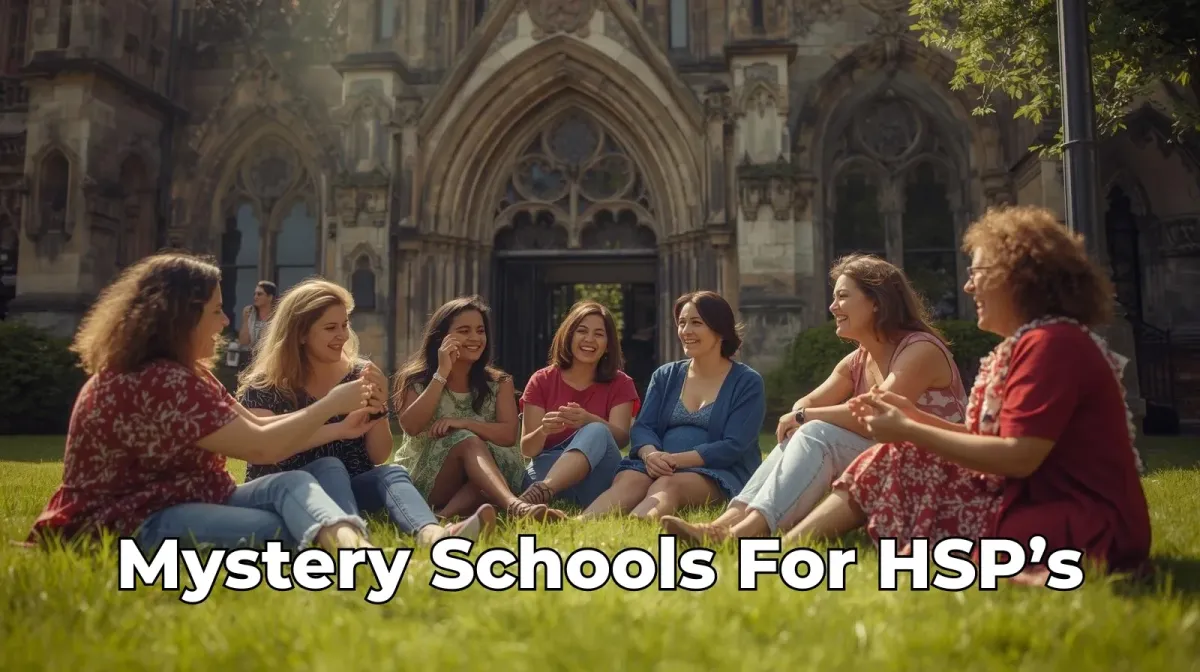
Modern Mystery Schools for Highly Sensitive People: What to Look For
If you’re a highly sensitive person, the idea of joining a mystery school can feel both irresistible and terrifying. You long for deep meaning, symbol, ritual and real inner transformation. At the same time, your nervous system already runs “hot”, and you may have past experiences of overwhelm, people-pleasing or burnout in spiritual groups.
This article is here to help you find HSP-friendly, trauma-aware mystery school paths that honour both your depth and your limits. We’ll explore why sensitivity is a gift in this work, where the risks are, and the specific green flags to look for before you commit.
New to mystery schools? Start with our overview article “What Are Mystery Schools?” and then visit the Mystery School hub for classes, courses and next steps.
Why highly sensitive people are drawn to mystery schools
If you’re highly sensitive, you probably:
Feel things deeply and notice subtle shifts in energy
See patterns, symbols and connections that others miss
Have a strong inner life and rich imagination
Care about truth, integrity and the “why” behind everything
Mystery school teachings often feel like “home” to HSPs because they:
Take symbols, dreams and synchronicities seriously
Offer maps for inner transformation, not just surface fixes
Connect your personal story to a wider, sacred picture
That’s the beautiful side of the story. But there’s another side we need to name honestly.
The risks for HSPs in intense spiritual containers
Highly sensitive people can also be:
Prone to overwhelm in long, intense rituals or Zoom calls
Vulnerable to people-pleasing and over-giving in groups
More likely to freeze or fawn when something feels wrong
Deeply affected by language around karma, initiation and “worthiness”
In the wrong container, this can lead to:
Burnout from trying to “keep up” with practices
Taking on group emotions and trauma as if it were yours
Ignoring your own boundaries to stay “spiritual” or “loyal”
Staying in unhealthy dynamics because you don’t want to hurt anyone
The core question for you as an HSP is not “Is this school powerful?” but “Is this school powerful in a way my nervous system can actually hold?”
If you want a gentle introduction to the HSP trait itself, you may also find What Is a Highly Sensitive Person? A Gentle Guide helpful alongside this article.
What an HSP-friendly mystery school looks like
Let’s get practical. Here are specific things to look for if you’re highly sensitive and exploring modern mystery schools online.
1) Clear pacing and “small bites”
An HSP-friendly school will:
Break teachings into clear modules and short lessons
Suggest realistic practice times (e.g. 10–20 minutes, not hours a day)
Normalise moving slowly and revisiting material
You’ll often see language like “take your time”, “work at your own pace”, and “listen to your body”. That matters more than impressive branding.
For highly sensitive people, ethical teaching matters deeply, so it is worth reading about money, power and promises in modern mystery schools before choosing where to study.
2) Built-in regulation and grounding
Instead of just throwing high-voltage practices at you, HSP-aware schools:
Offer grounding and regulation tools (breathwork, Qi Gong, gentle movement)
Encourage breaks, water and rest after deeper processes
Remind you that integration is as important as peak experiences
At Bright Beings Academy, for example, we weave in Qi Gong and simple nervous-system practices from the start, so the Mystery School work has an embodied foundation rather than floating in your head.
If you’d like to build that foundation, 7-Day Qi Gong for Beginners Course is a gentle way to support your body before or alongside mystery school study.
3) Consent-based language and options
Look for language like:
“You are invited to…” rather than “You must…”
“If this feels too much today, you can…”
“Here are alternatives if you have trauma history or health concerns.”
That’s different from:
“If you resist this practice, it’s your ego.”
“If you stop now, you’ll block your ascension.”
An HSP-friendly school treats your “no” as intelligent information, not a problem to fix.
4) Modest, grounded promises
Highly sensitive people often take words very literally. So wild promises can cut deeply.
Healthy promises look like:
“You may notice more clarity, intuition and peace with steady practice.”
“Many students report gentler reactions and more self-trust over time.”
Unhealthy promises sound like:
“Guaranteed full third-eye opening in 21 days.”
“You’ll never feel anxiety or doubt again.”
You deserve teaching that respects your complexity, not marketing that plays on your longing.
5) Community culture that feels kind, not intense
Notice the atmosphere in any community space, even if you only glimpse it in testimonials or public events. HSP-friendly spaces tend to involve:
Warm, calm, inclusive language
Clear boundaries around sharing trauma
Respect for different backgrounds, neurotypes and beliefs
Be cautious if you sense:
Constant emotional “highs” with little grounding
Competitive spirituality (“who’s had the biggest activation?”)
Subtle pressure to overshare in order to belong
6) Encouragement to keep outside support
A healthy school will:
Encourage you to keep your therapist, coach or other support
Remind you that courses aren’t a substitute for medical or psychological care
Welcome you bringing insights from therapy into your spiritual practice
For HSPs especially, an integrated support team is a strength, not a sign of weakness.
Listening to your body: a simple HSP check-in
Before you join, and again after a few weeks, try this short body-based check.
Ask yourself:
When I read or listen to this teacher, do I feel my breath deepen or tighten?
Do I feel expanded and grounded, or buzzy and slightly unhinged?
Do I sense permission to be myself, or pressure to become their ideal student?
You don’t have to get it perfect. Your body might still be nervous in a good container, especially if you’re stretching your comfort zone. The key is to notice the overall trend: more regulated and clear, or more scrambled and trapped?
If you’d like more structure around this kind of self-check, you might enjoy articles like Trauma-Informed Living (UK): Everyday Basics on the coaching side of Peter’s work.
If you are highly sensitive and have had a difficult experience in a spiritual group before, Healing After a Harmful Spiritual Group may help you reconnect with your own pace and inner guidance.
How this sits in your Mystery School and HSP map
This article is designed as a bridge between the Mystery School teachings at Bright Beings Academy and the Highly Sensitive People work at PeterPaulParker.co.uk.
For the Mystery School side:
Foundations:
What Are Mystery Schools? Ancient Wisdom TodaySafety and discernment:
Online Mystery Schools: 7 Red Flags and 7 Green Flags
Mystery School vs Cult: How to Tell the Difference (Gently)
How to Vet a Mystery School: Ethics, Fees, Promises & Red Flags
For the HSP side:
Understanding your trait:
What Is a Highly Sensitive Person? A Gentle GuideNervous-system basics and regulation:
HRV Breathing (0.1 Hz): A Kind Starter Guide
Polyvagal Basics for Sensitive People
At Bright Beings Academy, a natural first step for highly sensitive seekers is the Spiritual Wellness Class – a gentle, practical space that blends nervous-system care, simple energy practices and accessible spiritual teaching. From there, some people feel called to go deeper into mystery school work with Secrets of the Third Eye or 7 Hermetic Principles, always at their own pace.
Next Steps On Your Mystery School Path (HSP Edition)
If you recognise yourself as highly sensitive and still feel called to this work, that’s a beautiful sign. Your depth, empathy and intuition are strengths in the Mystery School journey – they just need the right container.
When you’re ready, you can:
Visit the Mystery School hub and simply notice which teachings feel warm and inviting rather than intense or pushy.
Start with the Spiritual Wellness Class if you’d like a soft, supportive introduction that honours your nervous system as much as your spirit.
Build an embodied base with 7-Day Qi Gong for Beginners Course so your body feels more resourced before you open deeper doors.
If you are exploring mystery school teachings and would like gentle support to find the right next step, you are welcome to complete the Free Soul Reconnection Call / Meraki Guide Questionnaire.
You might also like to keep exploring with:
Choose the next step that feels kindest. Your sensitivity is not something to “toughen up” out of. It’s an instrument to tune and honour as you walk your path.

FAQs — Modern Mystery Schools for Highly Sensitive People: What to Look For
Q1) Can highly sensitive people safely join a mystery school?
Yes, many highly sensitive people thrive in the right mystery school setting. The key is to choose containers that respect pacing, offer grounding tools, and encourage clear boundaries rather than pushing you into constant intensity.
Q2) How do I know if a practice is too much for my nervous system?
Signs include: difficulty sleeping, persistent anxiety or dread before sessions, feeling spaced-out or numb for days, or noticing that you’re snapping at loved ones more often. Occasional wobble is normal; long-term dysregulation is a sign to slow down, simplify or pause.
Q3) Should I work on my sensitivity before joining a mystery school?
You don’t have to “fix” your sensitivity, but it does help to have some basic nervous-system tools in place. Gentle breathwork, Qi Gong, walks in nature and simple self-soothing practices can make any deeper work feel safer and more sustainable.
Q4) Is it better to study one-to-one or in a group as an HSP?
It depends on your history and capacity. Some HSPs feel safer in small groups where they realise they’re not alone. Others need one-to-one support first. In either case, look for guides who understand the HSP trait and can adapt their approach.
Q5) What if I start a course and then realise it’s too much?
You are always allowed to slow down, step back or stop altogether. Check the school’s refund or deferral policy, reach out honestly about your experience, and prioritise your wellbeing. A good teacher will respect your choice and help you land as gently as possible.
Educational note: This article is for learning and wellbeing. It is not a substitute for medical, psychological or legal advice. Please seek qualified support where needed.
I look forward to connecting with you in my next post.
Until then, be well and keep shining.
Peter. :)