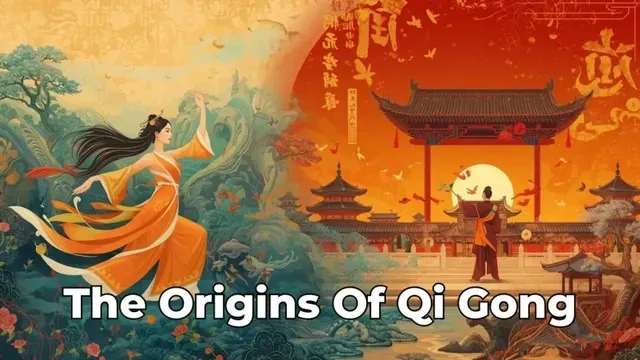
Qi Gong Origins: China, India, Buddhism and Shaolin Explained
Qi Gong origins are often misunderstood, especially when people hear stories linking India, Buddhism, and Shaolin. The truth is both simpler and more interesting: Qi Gong originates in ancient China, rooted in early health practices like daoyin (guided movement and breath), while later Buddhist transmission helped shape how it was refined and practised in temple settings.
So when we explore Qi Gong origins, we are not looking at a single starting point. We are looking at a foundation in Chinese culture, with meaningful influence from Indian meditation traditions carried through Buddhism over many centuries.
If you are new to this practice, it helps to first understand what Qi Gong actually is before going deeper into its history. You can begin here:
What Is Qi Gong? Origins, Principles & Benefits
And if you are looking for a gentle, structured way to experience it for yourself, this guide will support you step by step:
Qi Gong for Beginners: The Complete Guide to Energy, Health, and Inner Balance
"What we will do in this article is bring clarity to the story. We will separate what is historically grounded, what is likely influence, and what has grown through legend—so you can understand Qi Gong origins with both depth and confidence."
This means you do not have to choose between belief and scepticism. You can hold both clarity and curiosity as you read.
Learn Qi Gong at home at the Bright Beings Academy
5 ⭐⭐⭐⭐⭐ Rating On Google Reviews
Is Qi Gong Originally from China?
Qi Gong origins begin clearly in China. Long before Shaolin Temple or Buddhist influence, there were already established systems of movement, breath, and health cultivation known as daoyin and yangsheng—practices designed to nourish life and regulate the body.
Archaeological evidence supports this. The Mawangdui silk texts, dated to around the 2nd century BCE, show illustrated figures performing structured exercises for health and longevity. These are widely recognised as early forms of what would later be understood as Qi Gong.
This is important because it corrects a common misunderstanding. Qi Gong was not imported from India, and it did not suddenly appear in temples. It developed gradually within Chinese culture as part of a wider system of medicine, philosophy, and self-cultivation.
What Buddhism did—later on—was not create Qi Gong, but interact with it. As Buddhist practices entered China, they encountered an already rich tradition of breath and body training. This meeting point is where refinement, structure, and new interpretations began to emerge.
So the most grounded answer is this:
Qi Gong is Chinese in origin, with later influences shaping how it was practised and understood.
If you want a broader foundation of how these early principles evolved into modern practice, this article will deepen your understanding:
Qi Gong’s Evolution: Ancient Roots to Modern Wellness
These early roots matter because they remind us that Qi Gong was never just an exercise system. It began as a way of aligning body, breath, and awareness—a foundation that still carries through today.
While many discussions focus on specific influences, the broader story is explored in The History of Qi Gong: Ancient Roots, Living Practice
"Qi Gong began in ancient China through early health and movement systems like daoyin. Buddhist influence came later, shaping the practice—but not creating it."
How Did Buddhism Influence Qi Gong?
Buddhism played a meaningful role in shaping how Qi Gong developed, but not in the way it is often described. It did not create Qi Gong. Instead, it created a bridge where different approaches to breath, body, and awareness could meet.
As Buddhism travelled from India into China over many centuries, it brought with it deep meditation practices. These required long periods of stillness, focus, and internal awareness. For many monks, this created a very practical need: the body had to be strong, stable, and regulated to support the mind.
This is where the interaction begins.
Chinese practitioners already had systems like daoyin. Indian traditions carried ideas such as prana—a concept of life force closely linked to breath. While qi and prana are not identical, they point toward a similar understanding: that breath, energy, and awareness are deeply connected.
Within temple life, especially in Buddhist communities, these ideas likely began to overlap. Breathwork, posture, and simple movement practices would have been shared, adapted, and refined over time—not as a formal exchange, but as a natural part of living and practising together.
So rather than asking, “Did Buddhism create Qi Gong?”, a more accurate question is:
“How did Buddhist practice influence the way Qi Gong was organised and preserved?”
The answer is that it helped shape the environment in which Qi Gong could deepen - particularly in structured, disciplined settings like monasteries.
This perspective allows us to hold both clarity and openness. Qi Gong remains rooted in China, while Buddhist transmission helped refine how its principles were practised, taught, and carried forward.
"Buddhism did not create Qi Gong, but it influenced how it was practised—especially through meditation, breath awareness, and monastic life."
Shaolin Temple: Where Meditation Meets Movement
Shaolin Temple is often placed at the centre of Qi Gong origins, but its real role is more specific. It was not the birthplace of Qi Gong. It was a place where existing practices were refined, structured, and preserved within a disciplined environment.
Established around 495 CE during the Northern Wei dynasty, Shaolin became an important centre for Buddhist practice in China. Monks living there were committed to long periods of meditation, which required both physical stability and mental endurance.
This created a practical challenge.
Sitting for extended periods can place strain on the body. Without movement, circulation slows, posture collapses, and the mind becomes harder to steady. So alongside meditation, monks developed and maintained supportive physical practices—including stretching, breath regulation, and conditioning exercises.
This is where Qi Gong-like methods became especially valuable.
Rather than being separate from spiritual practice, movement became part of it. The body was not something to overcome, but something to train so that awareness could deepen without resistance.
Over time, Shaolin gained a reputation for combining meditation with physical discipline. This is also where martial arts began to develop alongside internal practices, further strengthening the connection between stillness and movement.
However, it is important to stay grounded here. Shaolin did not invent Qi Gong. It became a container where different elements—Chinese health practices and Buddhist discipline—could come together in a structured way.
If you want to see how these different strands continued to develop beyond temple life into modern practice, this article will guide you further:
Qi Gong’s Evolution: Ancient Roots to Modern Wellness
Understanding Shaolin in this way brings the story back into balance. It is not the starting point, but it is a powerful chapter in how Qi Gong was shaped and carried forward.
"Shaolin Temple did not create Qi Gong, but it provided a structured environment where movement, breath, and meditation were refined together."
Bodhidharma, Legend, and What We Can Actually Trust
Bodhidharma is one of the most well-known figures connected to Shaolin and Qi Gong origins. You will often hear that he travelled from India to China and taught monks exercises that later became the foundation of martial arts and internal training.
It is a compelling story. But it needs to be held carefully.
Historically, Bodhidharma is recognised as an important figure in the development of Chan (Zen) Buddhism. He is associated with bringing meditation teachings to China and influencing early monastic practice.
However, when it comes to physical training systems, the evidence becomes less certain.
Many sources describe him as being “credited with” helping monks strengthen their bodies for meditation. That phrasing is important. It tells us that his influence is part of tradition and lineage storytelling, rather than something firmly documented in the way modern readers might expect.
The idea that Bodhidharma directly created Shaolin martial arts or specific Qi Gong systems is widely debated. Some texts linked to him, such as the Yijin Jing (Muscle-Tendon Changing Classic), are now understood to have been written much later, with authorship that is not clearly tied to him.
So what can we say with confidence?
We can say that Bodhidharma represents something meaningful. He symbolises the integration of deep meditation with a strong, stable body. Whether or not he personally created specific practices, his story reflects a real need within monastic life: the body must support the mind.
This is why the legend has endured.
Rather than dismissing it or taking it literally, it is more useful to understand it as a teaching story—one that carries the principle that inner development and physical cultivation are not separate paths.
This approach allows you to stay grounded without losing depth. You are not relying on myth, but you are also not stripping away the meaning behind it.
"Bodhidharma is an important historical and symbolic figure, but claims that he created Qi Gong or Shaolin martial arts are debated and should be treated with care."
India, Prana, and the Deeper Connection
When people explore Qi Gong origins, the connection to India often comes through one word: prana.
In Indian traditions, prana refers to life force—the subtle energy that flows through the body and is closely linked to breath. In Chinese traditions, qi carries a similar meaning. While these concepts are not identical, they reflect a shared human observation: breath, energy, and awareness are deeply connected.
This is where the real connection lies.
It is not that Qi Gong came from India, but that both cultures developed systems for working with the same inner experience. Over time, as Buddhism travelled between India and China, these ideas likely influenced how practitioners understood and described their internal training.
This influence was not a single event. It was gradual.
Monks, translators, and travellers moved between regions over centuries. Within temples and learning environments, practices would have been shared in practical ways—how to sit comfortably, how to breathe steadily, how to maintain focus over long periods.
So rather than imagining a direct transfer, it is more accurate to see this as a meeting of traditions.
China already had daoyin and health cultivation systems. India had yogic and breath-based practices. Buddhism created a pathway where these approaches could interact, refine one another, and evolve within real communities of practice.
This is why the similarities feel so familiar to many people today.
They are not identical systems, but they point toward a common principle: the body, breath, and mind can be trained together in a way that supports both health and awareness.
Understanding this connection brings the story full circle. Qi Gong remains rooted in China, while India and Buddhism helped shape the language and environment through which it continued to develop.
"India did not give rise to Qi Gong, but shared ideas about breath and energy influenced how Qi Gong was understood through Buddhist transmission."
Final Thoughts
Qi Gong origins are not a single story. They are a gradual unfolding.
Rooted in ancient China, shaped through early movement and health practices, and later influenced by Buddhist transmission, Qi Gong developed through real people, real environments, and real needs. It was never created in one moment. It evolved over time.
What makes this history powerful is not just where Qi Gong came from, but how it was preserved. Across generations, practitioners refined a simple truth: when the body, breath, and awareness are aligned, something begins to settle.
And that is still available today.
You do not need to understand every detail of history to benefit from Qi Gong. But knowing where it comes from can deepen your appreciation. It reminds you that this is not a trend or a technique. It is a practice that has been shaped, tested, and carried forward for centuries.
And perhaps that is the most important part.
You are not starting something new.
You are stepping into something that has been quietly refined over time.
"Qi Gong developed gradually from Chinese roots, shaped by Buddhist influence and preserved through centuries of practice. Its depth comes from this steady evolution."
Next Steps
If you are ready to move beyond reading into practice, begin with the Free 7-Day Online Qi Gong Course.
When you would like a more structured introduction, the 7-Day Qi Gong for Beginners Course will help you explore the foundations of Qi Gong in a simple, steady and accessible way.
Inside the Bright Beings Academy, you will also find a growing library of practices, teachings, and guided sessions to support you at your own pace. Whether you are just starting or deepening your practice, there is a clear path you can follow.
You do not need to rush this.
A few minutes of consistent practice is enough to begin noticing a shift.
And from there, it builds naturally.
"Start with the beginner guide, then follow the 7-day Qi Gong for Beginners course for structure. The Academy offers a clear, supportive path to continue your practice."
FAQs About Qi Gong Origins
What are the true origins of Qi Gong?
Qi Gong origins can be traced back to ancient China, where early practices like daoyin and yangsheng were used to support health, breathing, and longevity. These systems existed long before Buddhist influence or Shaolin Temple.
Did Qi Gong come from India?
No, Qi Gong did not originate in India. It developed in China. However, as Buddhism travelled from India to China, ideas around breath, energy, and meditation likely influenced how Qi Gong was practised and understood in temple settings.
Is Shaolin Temple the birthplace of Qi Gong?
Shaolin Temple is not the origin of Qi Gong. It became a place where movement, breath, and meditation were practised together in a structured way, helping to refine and preserve existing methods.
Did Bodhidharma create Qi Gong?
There is no clear historical evidence that Bodhidharma created Qi Gong. He is an important figure in Buddhist tradition and is often credited with influencing monastic training, but many of the stories linked to him are considered legend rather than confirmed history.
Why do Qi and prana seem similar?
Qi (in Chinese tradition) and prana (in Indian tradition) both describe forms of life energy connected to breath and awareness. While they are not identical concepts, they reflect a shared understanding that the body, breath, and mind are closely linked.
"Qi Gong originates in China, with later Buddhist influence. Shaolin and Bodhidharma are important parts of the story, but not the starting point."
Further Reading
Internal Reading (Deepen Your Understanding)
What Is Qi Gong? Origins, Principles & Benefits
A clear foundational guide that explains what Qi Gong is, how it works, and why it has been practised for centuries.
Qi Gong for Beginners: The Complete Guide to Energy, Health, and Inner Balance
A structured introduction to Qi Gong, helping you move from understanding into gentle, consistent practice.
Qi Gong’s Evolution: Ancient Roots to Modern Wellness
Explores how Qi Gong developed over time, bridging ancient traditions with modern-day practice and understanding.
Scientific & Historical Sources
Hunan Museum — Mawangdui “Physical Exercise Chart”
An important historical source connected to the Daoyin Tu, the early exercise chart often used as evidence for ancient Chinese movement and breath practices that predate later Qi Gong systems. (chnmuseum.cn)
Encyclopædia Britannica — Shaolin Temple
A reliable overview of Shaolin Temple’s history, including its foundation in 495 CE and its significance within Chinese Buddhist tradition. (chnmuseum.cn)
Encyclopædia Britannica — Bodhidharma
Useful for grounding the Bodhidharma discussion more carefully, especially where tradition and later legend begin to overlap. (chnmuseum.cn)
Journal of Yoga Studies — Is There Such a Thing as Chinese Yoga? Indian Postural Therapies in Mediaeval China
A strong academic source exploring possible intersections between Indian bodily practices and Chinese daoyin traditions in medieval China. (Journal of Yoga Studies)
Courtauld Institute — Maritime Buddhism (PDF)
Helpful for supporting the idea that Buddhism travelled through maritime networks linking India, Southeast Asia, and China over many centuries. (Courtauld)
Oxford Research Encyclopedia — Maritime Buddhism
A more formal academic reference for the wider historical movement of Buddhism across maritime routes. (OUP Academic)
I look forward to connecting with you in my next post.
Until then, be well and keep shining.
Peter. :)