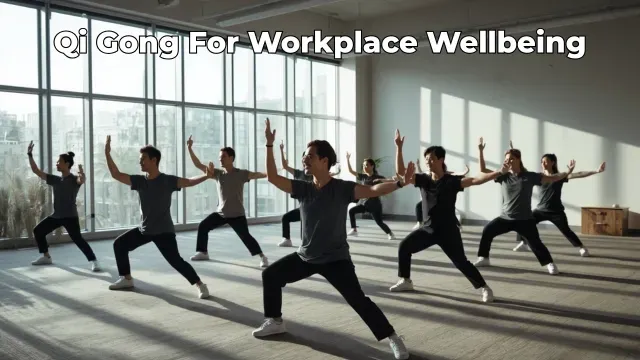
Qi Gong for Workplace Wellbeing: A Practical Guide
Qi Gong for workplace wellbeing is a practical approach that uses gentle movement, breathing exercises, and mindful awareness to support employee health, resilience, and stress management.
As organisations increasingly invest in workplace wellbeing, many are looking for approaches that go beyond awareness campaigns and provide employees with practical skills they can use throughout the working day.
Qi Gong is particularly well suited to workplace environments because it is accessible, adaptable, and easy to learn. The practice does not require specialist equipment, high levels of fitness, or large amounts of time. Simple exercises can be performed in offices, meeting rooms, home workspaces, or even while seated at a desk.
Unlike many workplace wellbeing initiatives that focus primarily on information, Qi Gong provides employees with direct experiences of movement, breathing, and relaxation that can be applied immediately in real working situations.
Many organisations now include body-based wellbeing approaches alongside wider wellbeing strategies. If you are new to workplace wellbeing, our Corporate Wellbeing hub provides a broader overview of how organisations can support employee wellbeing, while our Corporate Wellbeing Workshops page explores practical wellbeing solutions for modern workplaces.
In this guide, we will explore how Qi Gong supports workplace wellbeing, why it is becoming increasingly popular within organisations, and how businesses can integrate it into their wider wellbeing strategies.
"Qi Gong for workplace wellbeing helps transform wellbeing from something employees learn about into something they actively experience."
Explore Our Corporate Wellbeing Services
If your organisation is looking to strengthen resilience, improve wellbeing, reduce stress, and create a healthier workplace culture, explore our Corporate Wellbeing Hub.
From workshops and leadership development to nervous system regulation and team wellbeing programmes, you'll find practical solutions designed for modern organisations.
Explore the Corporate Wellbeing Hub

Why Qi Gong for Workplace Wellbeing Matters
Workplace wellbeing has become a priority for many organisations, yet employees continue to report high levels of stress, fatigue, and pressure.
One reason is that wellbeing is often treated as something separate from daily work. Employees may attend a workshop, read wellbeing resources, or complete training modules, but they are not always given practical techniques they can use when challenges arise.
Qi Gong for workplace wellbeing helps address this gap.
The practice combines movement, breathing, and awareness techniques that employees can use during the working day. Rather than requiring additional time outside work, many Qi Gong exercises can be incorporated into existing routines, helping employees build moments of recovery into their day.
This is particularly relevant in workplaces where employees spend long periods sitting, working at screens, attending meetings, or managing demanding workloads.
Qi Gong also aligns with many of the goals found within modern workplace wellbeing strategies. Organisations increasingly recognise that employee wellbeing is connected to engagement, resilience, productivity, communication, and overall workplace culture.
These themes are explored further in What Is Workplace Wellbeing? and What Is Employee Wellbeing and Why Does It Matter?, both of which highlight the importance of taking a holistic approach to wellbeing.
When employees have practical tools that support their wellbeing, organisations are often better positioned to create healthier and more sustainable working environments.
"Qi Gong for workplace wellbeing works best when wellbeing becomes part of everyday working life rather than an occasional activity."
How Qi Gong for Workplace Wellbeing Supports Employee Resilience
Resilience is often described as the ability to adapt, recover, and continue functioning effectively during periods of challenge and change.
In workplace settings, resilience is not simply about working harder or pushing through difficulties. Sustainable resilience involves having the skills and resources needed to recover from pressure while maintaining wellbeing and performance.
Qi Gong for workplace wellbeing can support this process by encouraging employees to develop greater awareness of their physical and mental state.
Through gentle movement and breathing exercises, employees learn to recognise early signs of tension, fatigue, and stress. This awareness creates opportunities to respond proactively rather than waiting until stress becomes overwhelming.
Many resilience programmes focus primarily on mindset and behaviour. While these areas are important, resilience is also influenced by what is happening within the body. This connection is explored in Workplace Resilience Starts in the Body and What Is Nervous System Regulation at Work?.
Qi Gong provides a practical way to support both physical and mental resilience. Employees are not simply learning about resilience in theory. They are practising skills that may help them feel more grounded, focused, and capable of responding effectively to workplace challenges.
Over time, these small practices can become part of a healthier approach to managing pressure and maintaining wellbeing.
"Qi Gong for workplace wellbeing helps employees build resilience by creating regular opportunities for recovery, awareness, and self-regulation."
The Connection Between Qi Gong for Workplace Wellbeing and Stress Management
Stress is one of the most common challenges affecting employee wellbeing today.
While a certain level of pressure can help people stay motivated and focused, ongoing stress without adequate recovery can affect concentration, decision-making, communication, energy levels, and overall wellbeing.
Many workplace stress management initiatives focus on helping employees understand stress. While education is important, employees also need practical tools they can use when stress is already present.
This is where Qi Gong for workplace wellbeing can be particularly valuable.
Qi Gong combines gentle movement and breathing practices that encourage employees to pause, slow down, and reconnect with the present moment. These techniques can be incorporated into the working day without disrupting productivity or requiring large amounts of time.
For example, a simple two-minute breathing exercise before a presentation or a short movement practice between meetings may help employees create a sense of reset during busy periods.
Qi Gong also complements broader workplace wellbeing approaches that address the underlying causes of stress. Organisations often combine Qi Gong with initiatives focused on emotional regulation, resilience, leadership wellbeing, and nervous system regulation.
These themes are explored further in Why Stress Management Often Fails in the Workplace and Breathwork for Workplace Stress: Simple Techniques for Busy Teams.
Rather than viewing stress management as something employees do only when they are overwhelmed, Qi Gong encourages the development of regular wellbeing habits that support ongoing recovery and resilience.
"Qi Gong for workplace wellbeing helps employees build simple daily habits that support stress management before pressure becomes overwhelming."
What Makes Qi Gong for Workplace Wellbeing Different from Traditional Workplace Wellness Activities?
Many workplace wellness activities focus on education, awareness campaigns, or short-term interventions. These can be useful, but they do not always provide employees with practical skills that can be applied during moments of pressure.
Qi Gong for workplace wellbeing takes a different approach.
Rather than simply teaching employees about wellbeing, Qi Gong allows them to experience it directly through movement, breathing, and awareness practices.
This practical element is one reason many organisations are beginning to explore body-based wellbeing approaches. Employees are not expected to remember complex information or follow lengthy wellbeing plans. Instead, they learn simple techniques that can be used before meetings, during breaks, after difficult conversations, or at the end of a demanding day.
Another advantage is accessibility.
Qi Gong for workplace wellbeing can be adapted for people of different ages, fitness levels, and physical abilities. Practices can be performed standing or seated, making them suitable for office workers, remote employees, leadership teams, and mixed workforce groups.
Unlike some workplace activities, Qi Gong does not require specialist clothing, gym facilities, or large amounts of space. This makes it relatively easy to introduce within a variety of workplace environments.
Many organisations also appreciate that Qi Gong complements rather than replaces existing wellbeing initiatives. It can sit alongside resilience programmes, leadership development, wellbeing strategies, and employee support services.
For organisations seeking practical wellbeing solutions, this flexibility makes Qi Gong an attractive addition to wider wellbeing efforts.
"Qi Gong for workplace wellbeing succeeds because it gives employees simple experiences they can turn into lasting wellbeing habits."
How Organisations Can Introduce Qi Gong for Workplace Wellbeing
Introducing Qi Gong for workplace wellbeing does not need to be complicated.
Many organisations begin with a single wellbeing event or introductory workshop to give employees an opportunity to experience the practice and understand how it can support their wellbeing.
This approach allows employees to engage with Qi Gong in a practical and accessible way without committing to a longer programme from the outset.
From there, organisations may choose to integrate Qi Gong into broader wellbeing initiatives. For example, workshops can be included within wellbeing weeks, leadership development programmes, resilience initiatives, or ongoing employee wellbeing support.
Some organisations also offer short Qi Gong sessions before team meetings, during lunch breaks, or as part of regular wellbeing activities. These shorter sessions can help reinforce learning and encourage employees to develop consistent wellbeing habits.
For organisations seeking a more strategic approach, Qi Gong can be incorporated into wider Corporate Wellbeing Programmes that address wellbeing at an organisational level rather than focusing solely on individual employees.
It can also complement services such as Leadership and Team Wellbeing and Nervous System Regulation at Work, creating a more integrated wellbeing offering.
The key is to make wellbeing accessible, practical, and relevant to the realities of the workplace. When employees can easily apply what they learn, wellbeing is more likely to become part of everyday working life.
"Qi Gong for workplace wellbeing is most effective when it becomes a practical part of workplace culture rather than a one-off wellbeing event."
What Are the Benefits of Qi Gong for Workplace Wellbeing?
Organisations invest in workplace wellbeing because healthier employees are better able to contribute, collaborate, and perform effectively.
Qi Gong for workplace wellbeing offers several potential benefits that align with many organisational wellbeing goals.
For employees, the practice may help create opportunities for physical movement, stress recovery, improved focus, and greater awareness of personal wellbeing. Many employees appreciate that the techniques are simple, practical, and easy to integrate into a busy working day.
For teams, Qi Gong workshops can provide a shared wellbeing experience that encourages positive conversations around health, resilience, and self-care. This can help support a culture where wellbeing is seen as an important part of workplace performance rather than an afterthought.
For organisations, Qi Gong may contribute to wider wellbeing objectives such as employee engagement, resilience, stress management, and workplace culture. While no single intervention can solve every wellbeing challenge, practical wellbeing tools can form an important part of a broader strategy.
Some commonly reported benefits of Qi Gong for workplace wellbeing include:
Improved awareness of stress and tension
Better focus and concentration
Increased opportunities for recovery during the working day
Greater resilience during periods of change
Improved engagement with wellbeing initiatives
Accessible wellbeing support for diverse workforce groups
These benefits align closely with the objectives discussed in How Do You Promote Wellbeing in the Workplace? and 15 Workplace Wellbeing Initiatives That Employees Actually Use.
The most significant benefit may simply be that employees leave with practical techniques they can continue using long after the workshop has finished.
"Qi Gong for workplace wellbeing provides employees with practical skills that can support wellbeing long after the learning session has ended."
Related Workplace Wellbeing Resources
If you would like to explore additional approaches that support workplace wellbeing, stress management, and employee resilience, these resources may be helpful:
Corporate Qi Gong Workshops for Employee Wellbeing — Discover how structured Qi Gong workshops can support employee wellbeing, resilience, and workplace culture.
Qi Gong for Workplace Stress and Employee Resilience — Explore how Qi Gong can help employees recover from pressure and develop greater resilience.
Desk-Based Qi Gong for Office Workers — Learn simple Qi Gong exercises that can be practised during the working day without leaving your desk.
Breathwork for Workplace Stress: Simple Techniques for Busy Teams — Discover practical breathing techniques that support calm, focus, and emotional regulation.
Workplace Resilience Starts in the Body — Learn why resilience is not only psychological but also physical and how body-based practices can support recovery.
How the Bright Beings Academy Supports Qi Gong for Workplace Wellbeing
At the Bright Beings Academy, we believe workplace wellbeing should be practical, accessible, and relevant to the challenges employees face every day.
Our approach to Qi Gong for workplace wellbeing focuses on helping employees develop simple skills that support resilience, focus, stress management, and overall wellbeing. Rather than adding another task to an already busy schedule, Qi Gong provides techniques that can be integrated into the flow of the working day.
We deliver workplace wellbeing support through a range of services that can be tailored to the needs of different organisations, teams, and leadership groups.
Many organisations begin with Corporate Wellbeing Workshops, where employees learn practical techniques they can use immediately.
Others choose to incorporate Qi Gong within wider Corporate Wellbeing Programmes that support long-term wellbeing culture and organisational development.
For leadership teams, our Leadership and Team Wellbeing services help managers and leaders understand how wellbeing, resilience, and emotional regulation influence workplace performance.
We also offer Nervous System Regulation at Work programmes that explore the connection between stress, recovery, resilience, and workplace wellbeing. These programmes complement Qi Gong particularly well because both approaches recognise the important role the body plays in wellbeing.
Whether delivered online or in person, our goal is to provide employees with practical tools that support wellbeing both inside and outside the workplace.
"Qi Gong for workplace wellbeing becomes most powerful when it forms part of a wider culture of wellbeing, resilience, and human development."
Final Thoughts
Qi Gong for workplace wellbeing offers organisations a practical and accessible way to support employee health, resilience, and performance.
As workplace wellbeing continues to evolve, many organisations are recognising that employees need more than information alone. They need practical skills they can apply during the pressures and challenges of everyday work.
Qi Gong provides exactly that.
Through gentle movement, breathing exercises, and mindful awareness, employees learn simple techniques that can support focus, recovery, emotional regulation, and stress management throughout the working day.
The practice is flexible enough to be used within offices, hybrid workplaces, leadership programmes, wellbeing initiatives, and employee development activities. It can complement existing wellbeing strategies while providing employees with practical tools they can continue using independently.
No single wellbeing intervention can solve every challenge facing modern workplaces. However, organisations that combine education, supportive leadership, healthy workplace cultures, and practical wellbeing skills are often best positioned to create sustainable change.
Qi Gong for workplace wellbeing is one way of helping employees move from simply understanding wellbeing to actively experiencing it.
"Qi Gong for workplace wellbeing helps employees build practical wellbeing skills that support resilience, performance, and sustainable workplace health."
Support Your Workplace Wellbeing Journey
Creating a healthier workplace starts with giving employees practical skills they can use every day.
At the Bright Beings Academy, we help organisations support employee wellbeing through evidence-informed, practical workplace wellbeing solutions that focus on resilience, stress management, emotional regulation, leadership wellbeing, and nervous system health.
If you would like to explore how Qi Gong for workplace wellbeing could support your organisation, these services provide an excellent place to start:
Corporate Wellbeing — Discover our overall approach to employee wellbeing, workplace resilience, and organisational wellbeing.
Corporate Wellbeing Workshops — Explore practical wellbeing workshops covering stress management, emotional wellbeing, breathwork, resilience, and Qi Gong.
Corporate Wellbeing Programmes — Learn how structured wellbeing programmes can help create long-term cultural and behavioural change.
Leadership and Team Wellbeing — Support leaders and teams with wellbeing strategies that improve resilience, communication, and performance.
Nervous System Regulation at Work — Understand the role of stress, recovery, and nervous system health in workplace wellbeing.
Whether you are planning a wellbeing day, leadership event, employee wellbeing initiative, or a long-term wellbeing programme, Qi Gong can become a practical and accessible part of your workplace wellbeing strategy.

Frequently Asked Questions About Qi Gong for Workplace Wellbeing
What is Qi Gong for workplace wellbeing?
Qi Gong for workplace wellbeing is a practice that combines gentle movement, breathing exercises, and mindful awareness to support employee wellbeing. It is often used within workplace wellbeing programmes to help employees manage stress, improve focus, and build resilience.
How does Qi Gong for workplace wellbeing help employees manage stress?
Qi Gong for workplace wellbeing helps employees develop practical techniques that may support stress management. Through simple breathing exercises and gentle movements, employees learn ways to recognise tension, create moments of recovery, and improve self-awareness during the working day.
Is Qi Gong for workplace wellbeing suitable for office workers?
Yes. Qi Gong for workplace wellbeing is particularly well suited to office environments. Many exercises can be performed in small spaces and some can even be adapted for employees who spend much of the day seated at a desk.
Can Qi Gong for workplace wellbeing be delivered to remote and hybrid teams?
Yes. Qi Gong for workplace wellbeing can be delivered both online and in person. This flexibility makes it suitable for office-based organisations, hybrid teams, and fully remote workforces.
How often should employees practise Qi Gong for workplace wellbeing?
Employees can benefit from short and regular practice sessions. Many organisations introduce brief daily or weekly practices alongside workshops and wellbeing programmes. Even a few minutes of practice can help employees develop greater awareness and consistency over time.
What are the benefits of Qi Gong for workplace wellbeing?
Qi Gong for workplace wellbeing may support focus, resilience, stress management, emotional regulation, and overall employee wellbeing. Many employees also find that it provides a practical way to create moments of calm during busy working days.
Can Qi Gong for workplace wellbeing be included in a workplace wellbeing strategy?
Absolutely. Qi Gong for workplace wellbeing works particularly well when integrated into wider wellbeing initiatives. It can complement resilience training, leadership development, wellbeing workshops, and organisational wellbeing programmes.
Is Qi Gong for workplace wellbeing suitable for leadership teams?
Yes. Many organisations use Qi Gong for workplace wellbeing as part of leadership wellbeing programmes. Leaders often benefit from learning practical techniques that support emotional regulation, resilience, self-awareness, and maintaining calm under pressure.
What makes Qi Gong for workplace wellbeing different from other workplace wellness activities?
Qi Gong for workplace wellbeing focuses on practical experience rather than information alone. Employees learn simple techniques they can apply immediately, helping them build wellbeing habits that fit naturally into their working day.
Can beginners learn Qi Gong for workplace wellbeing?
Yes. Qi Gong for workplace wellbeing is suitable for complete beginners. No previous experience, special clothing, or equipment is required, making it accessible to a wide range of employees and organisations.
Further Reading
What Is Workplace Wellbeing? A Complete Guide for Employers — Learn the foundations of workplace wellbeing and how it supports employee health, engagement, and organisational performance.
What Is Employee Wellbeing and Why Does It Matter? — Explore the key elements of employee wellbeing and why they matter to modern organisations.
What Should Be Included in a Workplace Wellbeing Strategy? — Discover how successful organisations build effective wellbeing strategies that create lasting impact.
How Do You Promote Wellbeing in the Workplace? — Explore practical ways to encourage wellbeing across teams and departments.
15 Workplace Wellbeing Initiatives That Employees Actually Use — Discover wellbeing initiatives that employees are more likely to engage with and maintain.
What Is Nervous System Regulation at Work? — Learn how nervous system health influences workplace resilience, wellbeing, and performance.
Why Stress Management Often Fails in the Workplace — Understand why practical skills are often more effective than awareness alone.
Workplace Resilience Starts in the Body — Explore the important connection between physical wellbeing and resilience.
Corporate Qi Gong Workshops for Employee Wellbeing — Learn how Qi Gong workshops can support employee wellbeing, resilience, and workplace culture.
Breathwork for Workplace Stress: Simple Techniques for Busy Teams — Discover practical breathing techniques that employees can use throughout the working day.
Evidence Sources
World Health Organization — International guidance on workplace health, employee wellbeing, and mental health promotion.
Health and Safety Executive — UK workplace guidance on stress management, employee wellbeing, and employer responsibilities.
Chartered Institute of Personnel and Development — Research and best practice guidance on workplace wellbeing, employee engagement, and organisational culture.
National Institute for Health and Care Excellence — Evidence-based recommendations relating to workplace health and wellbeing interventions.
UK Health Security Agency — Guidance and resources that support workplace health improvement and public health outcomes.
I look forward to connecting with you in my next post.
Until then, be well and keep shining.
Peter. :)